[We finished our tour in Burma in August and permanently departed. However, during our final couple of months in-country, there were a few additional posts I’d wanted to publish about various travels, life in Rangoon, a personal trip to Bangkok, and our packout. But unfortunately, between coverage in the office, my mom’s visit, unexpected consular cases popping up, dealing with the court process around my accident, and preparing to PCS, everything just got too hectic. Before I knew it, we were boarding the big plane with so many blog posts from my fifth tour left unfinished. So in the spirit of trying again to wrap up Burma posts before 2026 draws to a close, I’m flashing back a few months to this past June.]
After journeying to Bagan and Pyin Oo Lwin with my mom and her friend and co-worker J during their June visit to us in Rangoon, Burma, the last point in the quadrangle of our domestic travel schedule was a trip to Mandalay. I had planned the trip in fits and starts, across various nights after work in May, on a wing and a prayer. Between cancelled and rescheduled flights due to the jet fuel crisis and the ongoing civil war in Burma, I was only 50% convinced it would all work out in the end. Yet somehow, happily, it did.
It made sense that if my mom and J were going to come all that way and see something of Rangoon and Bagan, that Mandalay — one of the few other cities in Burma where it was safe and allowable for diplomats to visit — should also be on our list. I wanted them to experience as much of Burma as they could, and as many different places in Burma as they could, given how far they’d traveled to see us (and the likelihood that none of us may ever return).
I also really wanted to make it back up there; I’d barely made it out of my wheelchair and no longer needed my walker when I had been to Mandalay in February, for one night only, to visit an incarcerated U.S. citizen. A colleague and I had headed to Rangoon’s domestic airport before 4 a.m. to make a departure flight that ended up being delayed. Despite the compressed schedule, we still jammed in all our intended meetings with tourism police, schools, and other consular contacts once we were done at the prison. We’d also skipped dinner in favor of going to bed early from sheer exhaustion.
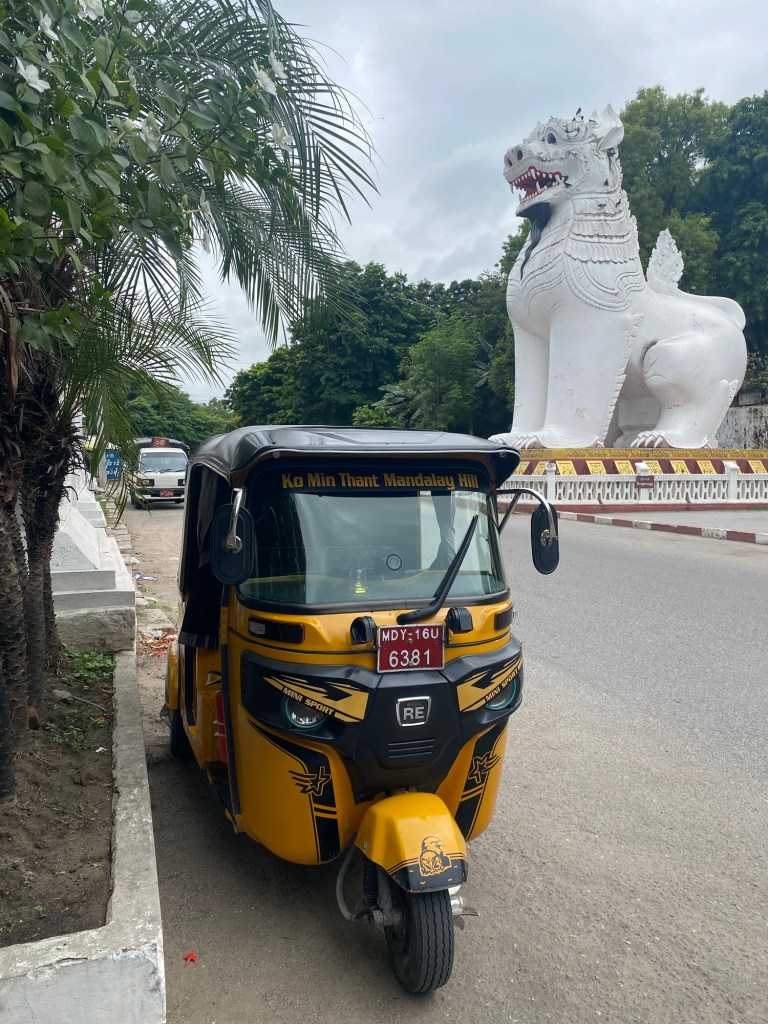
So I hadn’t seen hardly anything of the city in February, except for through the car window while rushing around town and at one roadside shop where we’d stopped hastily en route back to Mandalay airport to buy treats for the office.
Our citizen had since been released from prison and deported by Myanmar authorities. Safely back in the United States, and with no other American prisoners up there, we hadn’t yet had a pressing reason to make the return trip several hours north. But this time I would not only have the opportunity to see Mandalay, but also take the side trip to Pyin Oo Lwin on the front end as our guide suggested.
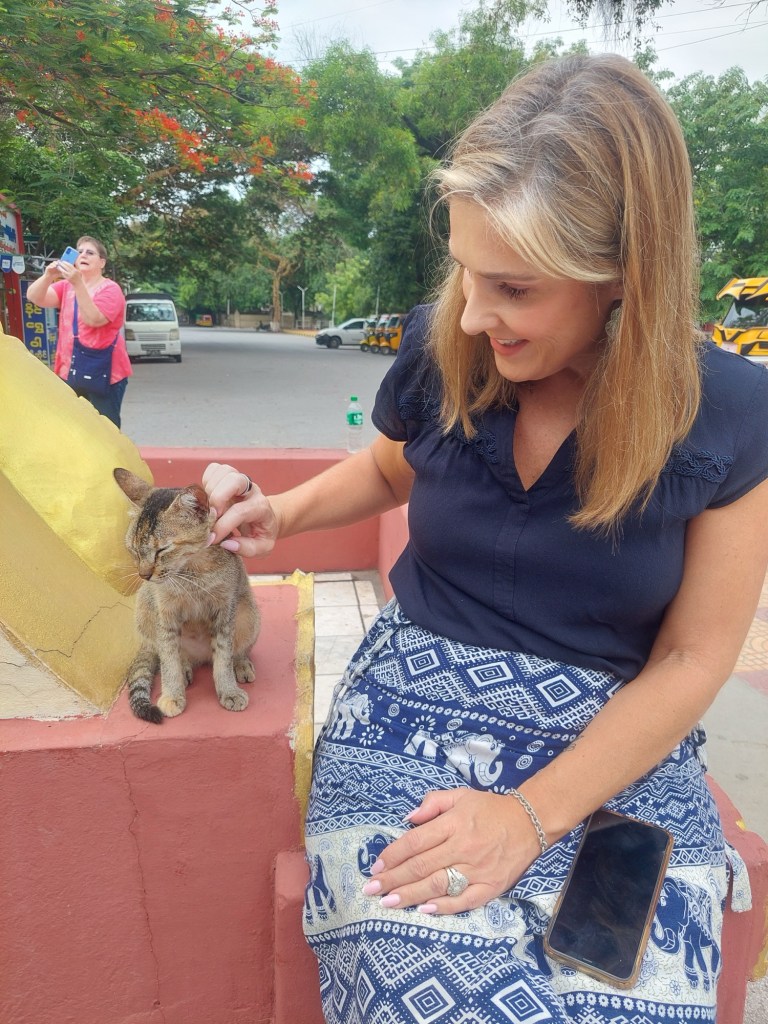
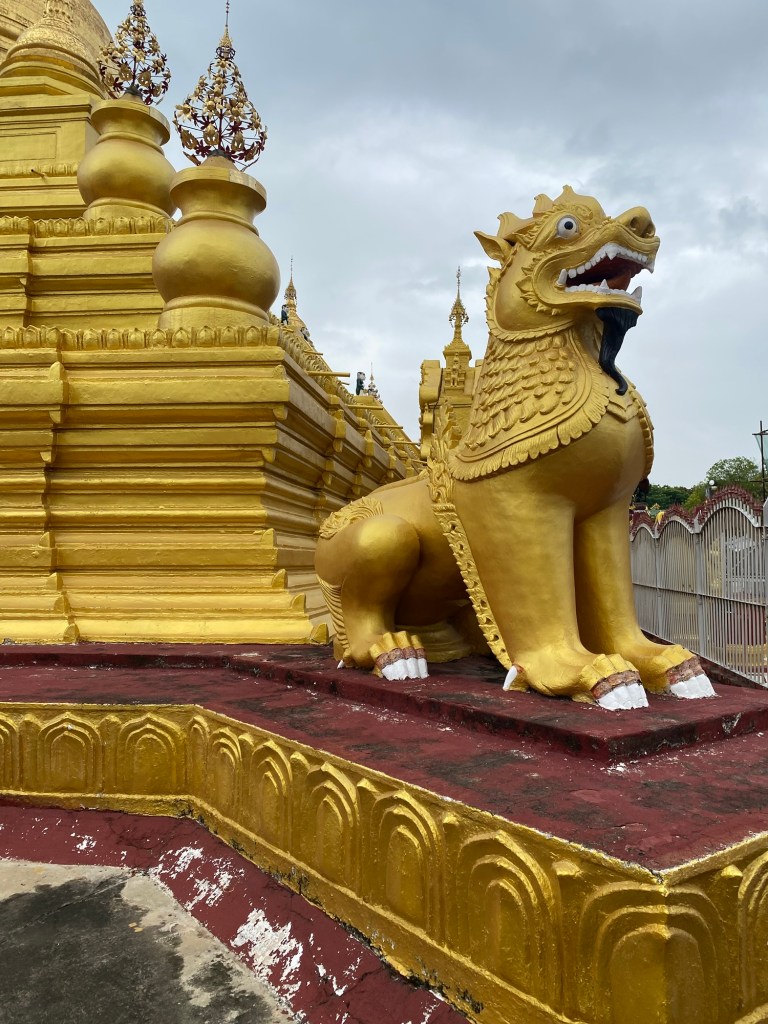
Mandalay has a particularly fascinating history because, unlike Rangoon (Yangon), it was purpose-built as the last royal capital of an independent Burmese kingdom.
The city is relatively young by Burmese standards, and the kingdom had lasted only a short time. King Mindon had been an important “modernizing” king. He attempted to reform the administration, taxation and legal system and sought to learn from technological and industrial developments in Europe.
In 1871, he held the Fifth Buddhist Council at Mandalay, after which the Buddhist scriptures were inscribed on 729 marble slabs at Kuthodaw Pagoda—the monument sometimes called “the world’s largest book.” He wanted to protect Buddhist teachings and keep them from becoming corrupted by setting them all down in stone. (Buddhism has no single equivalent of the Christian Bible; its teachings were initially passed down orally and eventually recorded in a diverse body of scriptures, which continue to vary across Buddhist traditions.)
Mandalay as a city therefore became much more than a royal residence. It was a major center of Burmese Buddhism, scholarship, arts, and culture.
After King Mindon died in 1878 he was succeeded by his son King Thibaw, the last king of Burma, in a bloody succession battle among prospective heirs to the throne. Only seven years later, in November 1885, British forces invaded Upper Burma during the Third Anglo-Burmese War and marched on Mandalay.
Thibaw surrendered, and he and Queen Supayalat were sent into exile in India. This brought the Konbaung dynasty—and independent Burmese monarchy—to an end. There is something particularly poignant about Mandalay because the monarchy ended suddenly, and the British didn’t conquer some ancient, fading capital—they captured a city that had been the royal capital for only about 26 years. The Brits converted the palace into Fort Dufferin, and Mandalay ceased to be the capital.
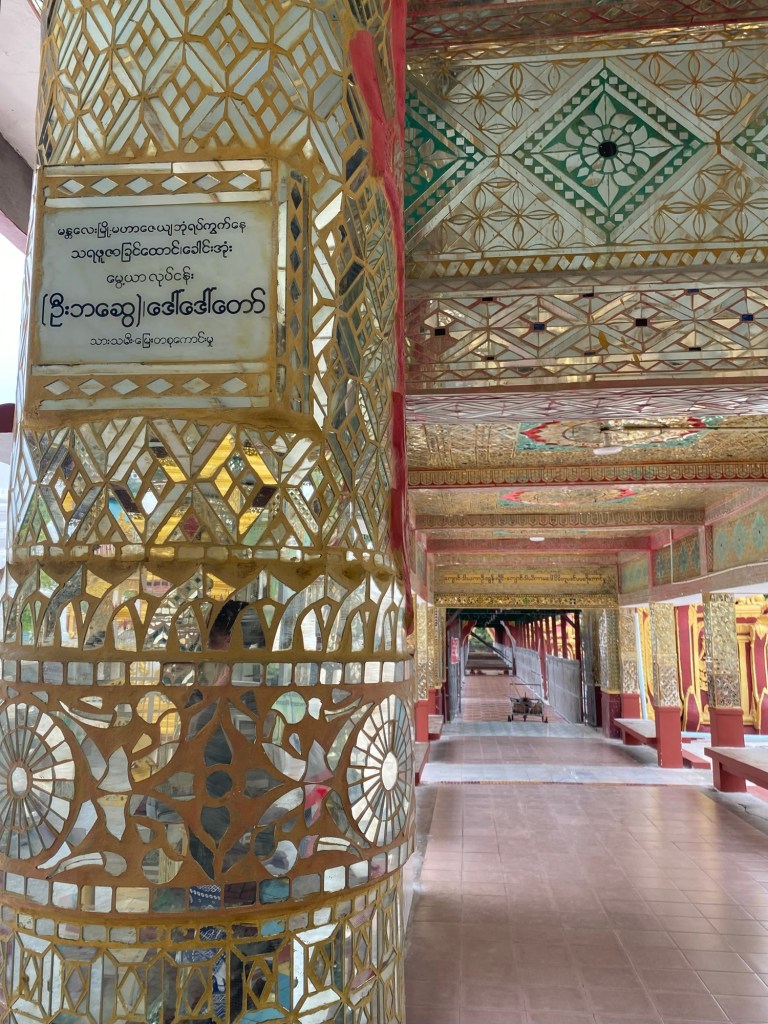
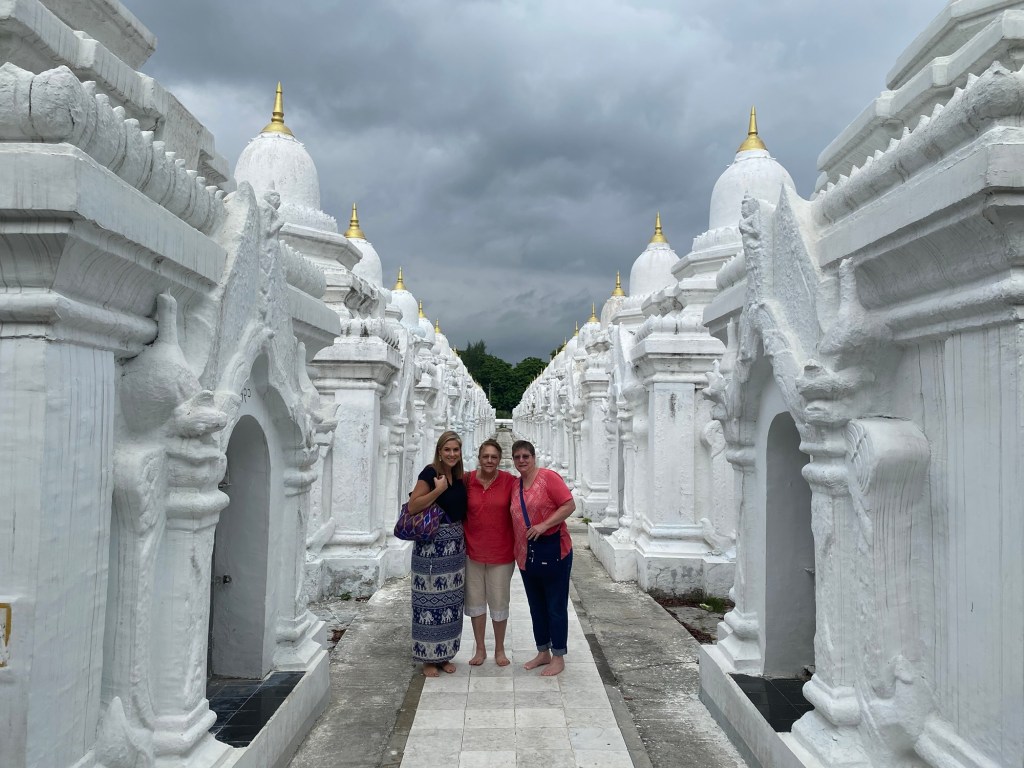
among the pages of the world’s largest book: the entire Pali Buddhist canon was inscribed on 729 enormous marble slabs beginning in 1857.
The British made Rangoon their administrative capital, but Mandalay remained the great cultural center of Upper Burma. It also became an important commercial city, particularly after the railway reached it in 1889.
British rule also brought substantial immigration from nearby India, changing the city’s demographic and commercial character. At the same time, because Mandalay had been the last royal capital, it became an important symbol of Burmese sovereignty and resistance to British rule. Maymyo (today known as Pyin Oo Lwin) was a place the British created for themselves; Mandalay was the place they conquered.
But the British weren’t the only ones who ever occupied Mandalay. The city suffered terribly during World War II. Japanese forces occupied Mandalay from 1942 to 1945, and Allied bombing caused enormous destruction. Much of the city was destroyed, and the palace itself was subsequently burned during Allied bombing after the Japanese had used the citadel as a supply depot. Only the royal mint and watchtower survived from the original palace complex; the palace visitors see today is largely a postwar reconstruction.
Another famous site we visited was U Bein Bridge, located in Amarapura about seven miles south of Mandalay. The bridge is one of Myanmar’s most iconic landmarks and is widely regarded as the world’s longest teak footbridge.
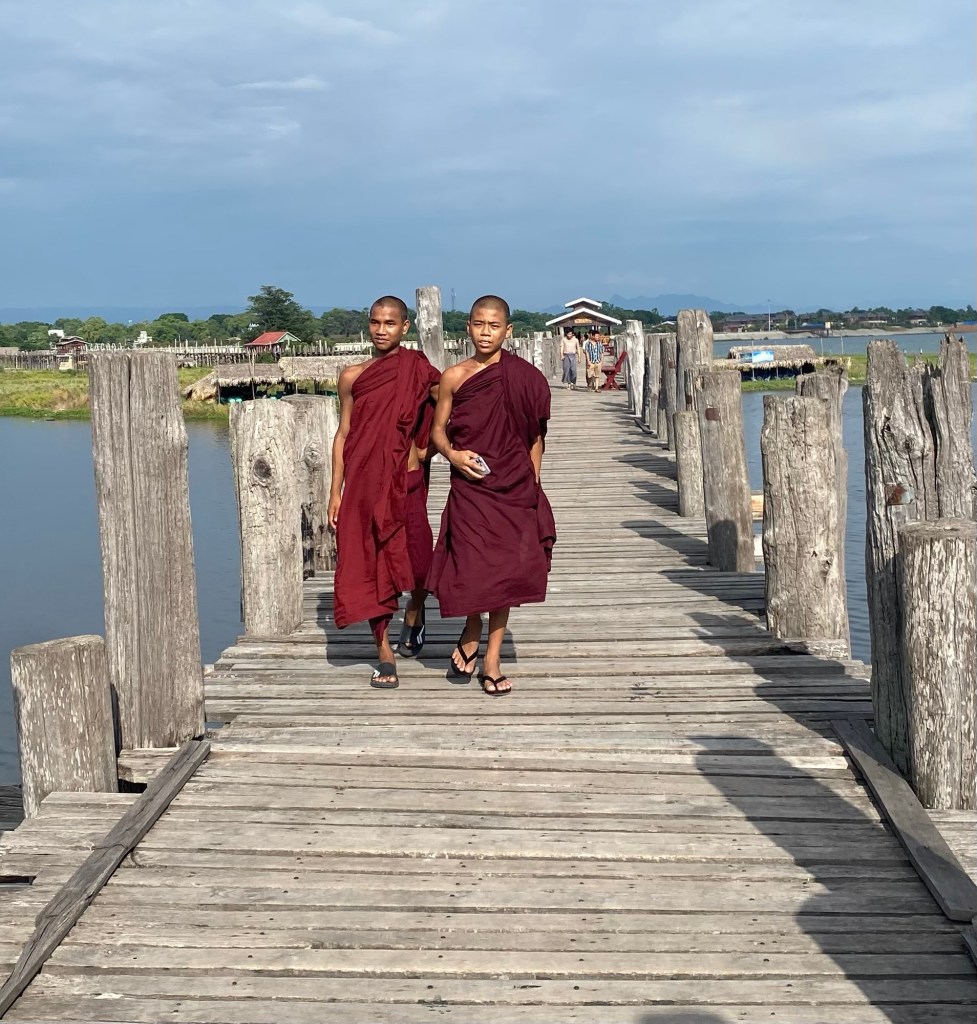
Stretching approximately three-quarters of a mile (or 1.2 kilometers) across Taungthaman Lake, the bridge is supported by more than 1,000 wooden posts and includes several covered pavilions where pedestrians can rest.
Built between 1849 and 1851 during the earlier reign of King Pagan Min, the bridge was named after U Bein, a local official who organized its construction. An especially interesting part of its history is that much of the teak used to build it is believed to have been salvaged from the former royal palace at Inwa (Ava), following the relocation of the capital to Amarapura.
For generations, it has served as an important everyday passageway for local residents, monks, farmers, and vendors, rather than simply a tourist attraction. It is particularly famous for its spectacular sunrise and sunset views, when the silhouettes of pedestrians and fishermen against the lake have made it one of the most photographed scenes in Burma.
Its age and continued use, however, have raised legitimate preservation and safety concerns. The bridge has experienced significant deterioration of its wooden supports. In October 2023, two sections collapsed under the weight of an unusually large holiday crowd, sending 23 people into the lake and injuring several visitors.
The damaged sections were reportedly repaired within days, but a subsequent engineering investigation following the devastating March 2025 earthquake also documented damage to some of the bridge’s piers. Visitors should therefore be mindful of potentially weakened or uneven sections, avoid overcrowding, and exercise particular caution when crossing.
Our guide T didn’t tell us any of this, but my mom and I felt sufficiently unsafe crossing parts of the rickety bridge to turn around before reaching the other side. All the locals around us seemed blissfully unbothered, but I felt strongly that I couldn’t risk a fall into the water below or any further injury.
Shwenandaw Monastery, also known as the Golden Palace Monastery, is one of Mandalay’s most remarkable historical landmarks. Originally part of King Mindon’s royal palace, the elaborate teak building was moved outside the palace grounds by his successor, King Thibaw, in 1880 and converted into a monastery. Its exterior and interior are covered in intricate hand-carved teak panels depicting Buddhist stories, mythical creatures, and floral motifs. Remarkably, it is the only major surviving structure from the original royal palace, making it an especially valuable glimpse into the artistry and craftsmanship of nineteenth-century Burma.
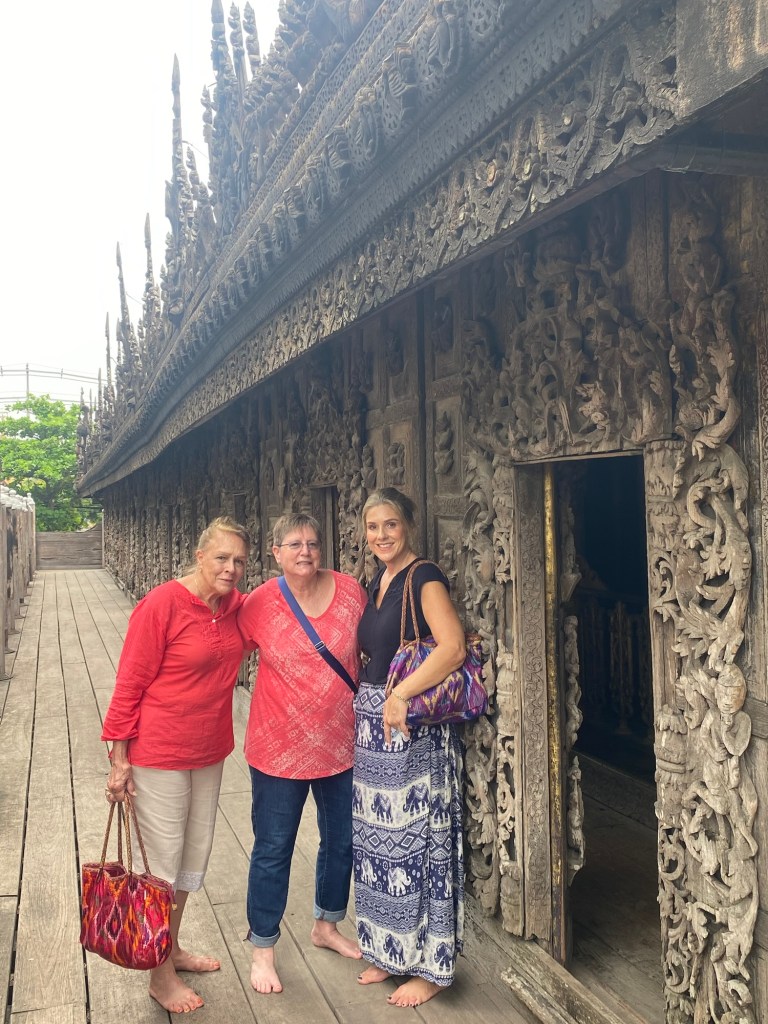
(ရွှေနန်းတော်ကျောင)
Making our way onward, perched atop Mandalay Hill, Sutaungpyai Pagoda, whose name translates roughly to “the fulfillment of wishes,” offered one of the most spectacular panoramic views of Mandalay and the surrounding countryside.
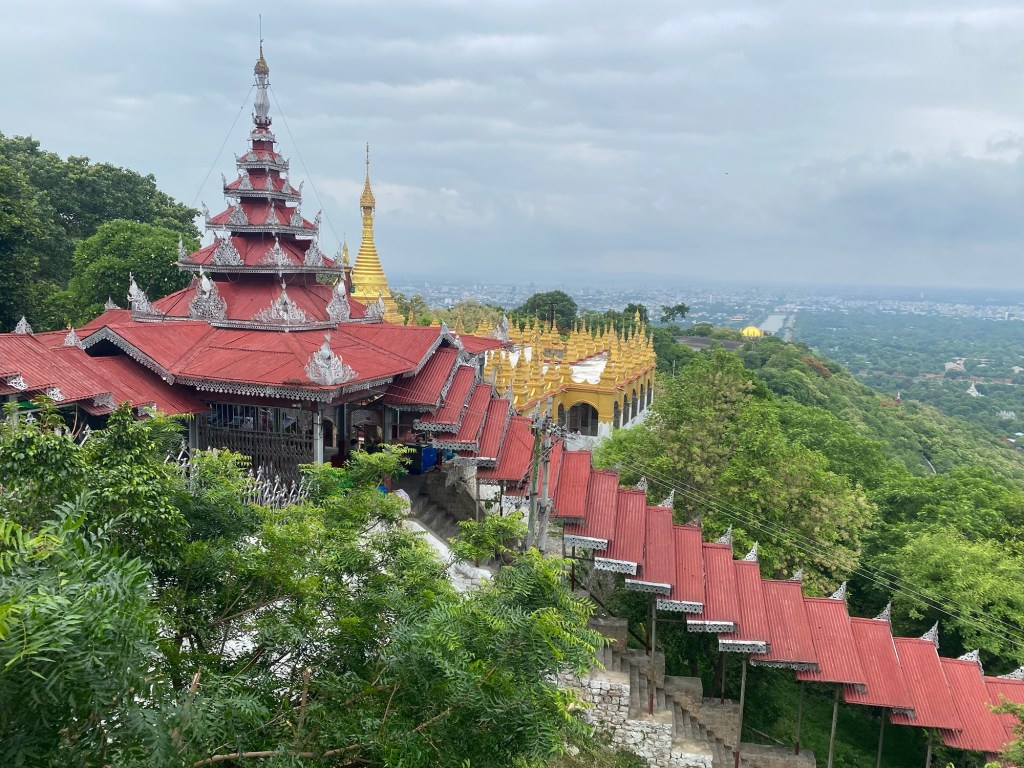
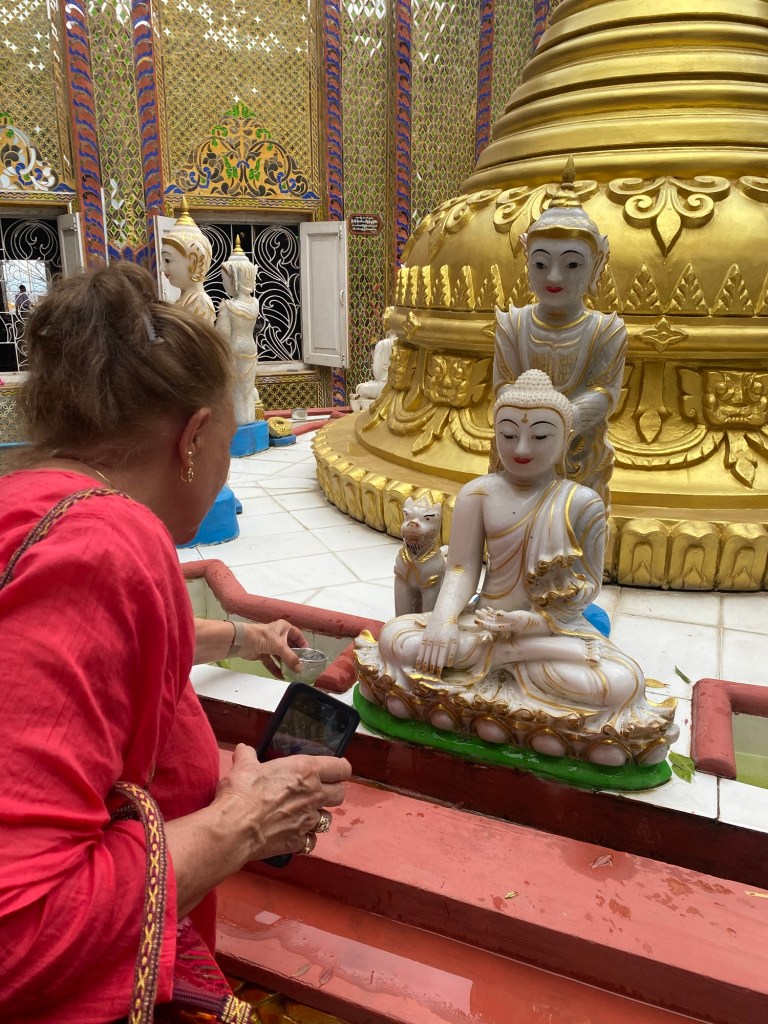
The hill has been a place of Buddhist pilgrimage for centuries, and according to legend, the Buddha himself visited it and prophesied the establishment of a great city at its foot. The pagoda complex features elaborate mirrored mosaics, intricate glasswork, golden Buddha images, and ornate pillars, making the summit as visually striking as the views beyond it. Visitors can reach the top by climbing the covered stairways traditionally used by pilgrims or by taking the road up the hill.
Sunset is apparently particularly popular, when the golden light stretches across the Irrawaddy River and the sprawling city below, offering a memorable perspective on Myanmar’s former royal capital.
In addition to the above locations, our tour guide T. also suggested we visit the Mandalay Jade Market, also known as Kyauk Sein Zay. I was expecting it to be a tourist market where vendors sell jade necklaces and souvenirs. But it was actually a working gemstone marketplace, with traders, brokers, cutters, wholesalers, and buyers conducting business — much of it online with partners in China — that can involve substantial sums of money.
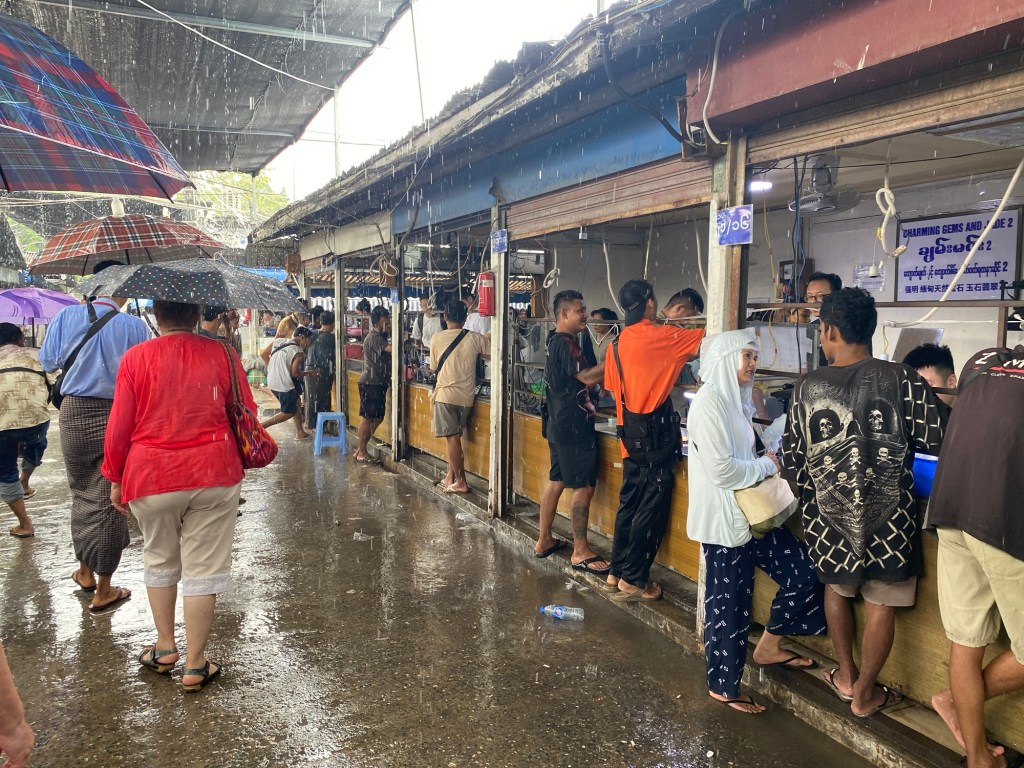
I would say the jade market was pretty uncomfortable to visit, mostly only because of the torrential rain and flooding everywhere we walked in the outdoor market, and the dubious hygiene situation that ensued. However, it was such a unique and interesting experience, we approached it gamely, including at the end when T and our driver had to navigate a narrow street filled with literally hundreds (thousands?) of small motorcycles to pick us up. We all agreed that it was cool to see and sparked a lot of questions for us.
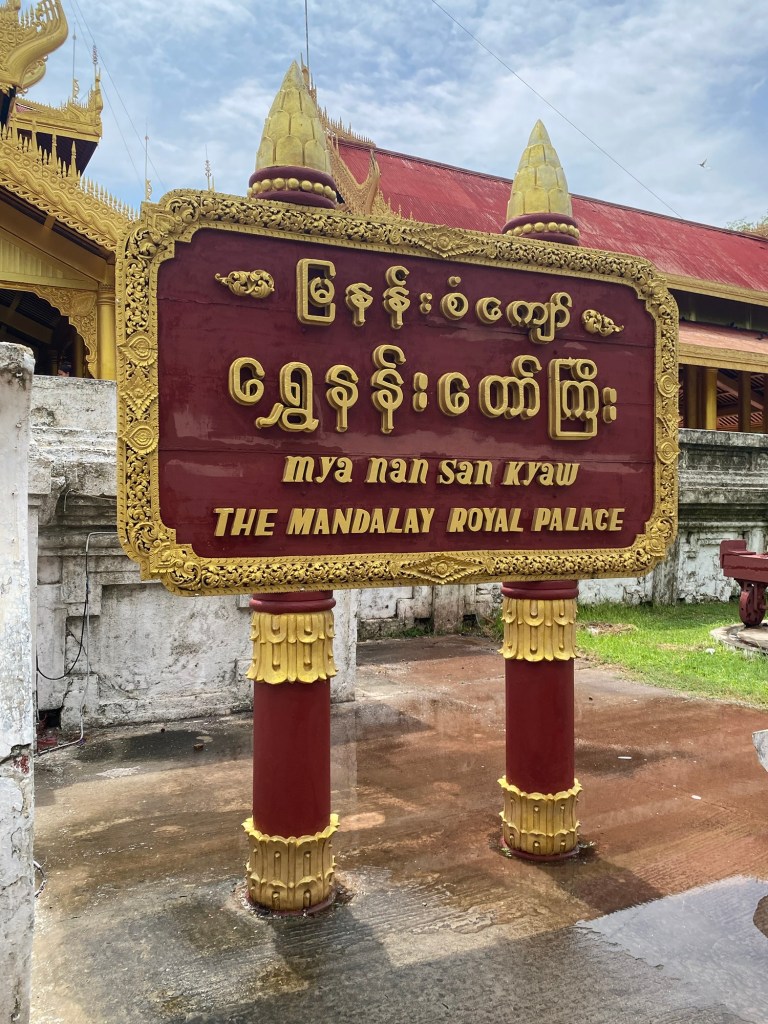
Afterwards, we went to the Mandalay Royal Palace, also known as Mya Nan San Kyaw — the last royal palace of the Burmese monarchy and one of the most important historical sites in Myanmar.
Built in the 1850s under King Mindon, who moved the royal capital from Amarapura to Mandalay in 1857, the palace became the political, administrative, and ceremonial heart of the Konbaung Dynasty. Its name, Mya Nan San Kyaw, is commonly translated as the Emerald Palace, and its elaborate wooden buildings, gilded roofs, ornate throne rooms, and protective moat reflected the wealth and cosmological authority of the Burmese monarchy.
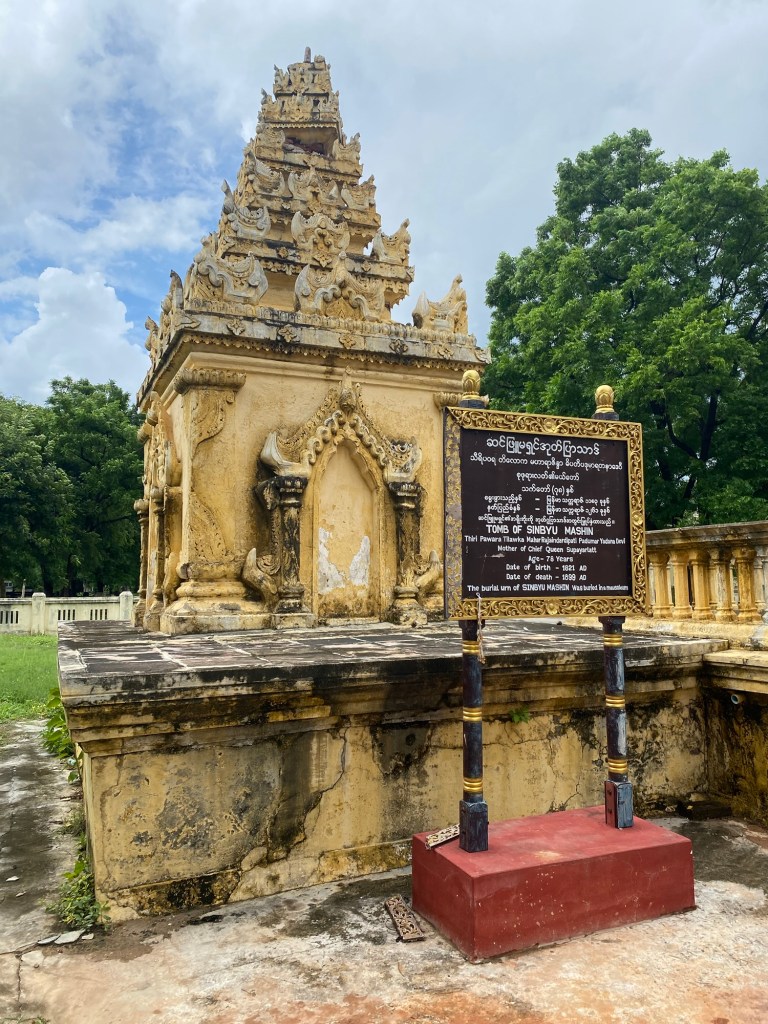
The original palace was largely destroyed by Allied bombing during World War II, and the buildings visitors see today are largely reconstructions completed in the 1990s. The surrounding brick walls and moat, however, remain important features of the original royal city. Thus, the Mandalay Royal Palace is significant not only as an architectural and historical landmark, but also as a powerful symbol of Burmese sovereignty, the end of the monarchy, and the country’s transition into the colonial era.
In addition, while in Mandalay we did a little souvenir shopping, visited with T. and his lovely spouse at a cafe, spent time trying (and failing) to comprehend the food and service options at our hotel, and enjoying eating out at some of the local restaurants that offered gluten-free options for J.
All in all, it was a great trip, even though, in retrospect, I sometimes worried that I had been a bit too negative along the way. I was definitely at the point in my tour when my nerves had become increasingly frayed by cross-cultural frustrations and inconveniences of all kinds, and Mandalay certainly provided plenty of opportunities to test my patience: from mosquitoes biting me 30 times on a single leg, to thoroughly incompetent customer service at restaurant after restaurant, to being accused by hotel staff of stealing a pair of used slippers after we had already checked out and boarded our airport shuttle (I wish I were kidding).
I tried to resist the urge to rant because I wanted my mom and J to form their own opinions about the experience without having to see everything through my perceptual lens. They were patient with me, but V and I ultimately agreed that, with only another six weeks or so left in my tour, I needed a break from Burma, however brief.
Fortunately, I did get one the weekend after my mom and J returned to California, with an impromptu and very special last visit (for now) to Bangkok…