Continuing with some posts I never had a chance to publish before we departed Rangoon in August… This past June, I flew with J and my mom to Mandalay, 400 miles north of our home in Rangoon, for a two-night visit. We had just spent a few days only slightly west of Mandalay in Bagan sightseeing with a guide and driver. We had arranged the same for Mandalay, hiring an established tour guide and known embassy contact who I’ll call T.
T’s company had taken me to Mandalay earlier in the year to conduct a prison visit with a U.S. citizen during an overnight trip I made with a member of my consular local staff. Unfortunately, between the consular access visit and meetings with schools and other local contacts, I hadn’t had a moment for sightseeing. I very much wanted the opportunity to return to Mandalay and actually see the city.
I was fortunate to be able to make this pair of trips to Bagan and Mandalay at all. It was the only opportunity I would have to be out of town again during the work week for the remainder of my tour, as my boss who had preceded me to post by a few weeks was already preparing to pack out. I would be right behind him.
Also, the logistics were a bit tough; despite the two towns’ proximity, there was no way to fly directly between Bagan and Mandalay without first returning for a night in Rangoon. Neither flight occurred daily. Also, the Bagan flight changed more than once, boxing us into a tight schedule if we were going to make it up to Mandalay and back in time for Mom and J’s departing international flight from Rangoon. As we settled into our first-class seats to Mandalay, I was relieved it had turned out well.
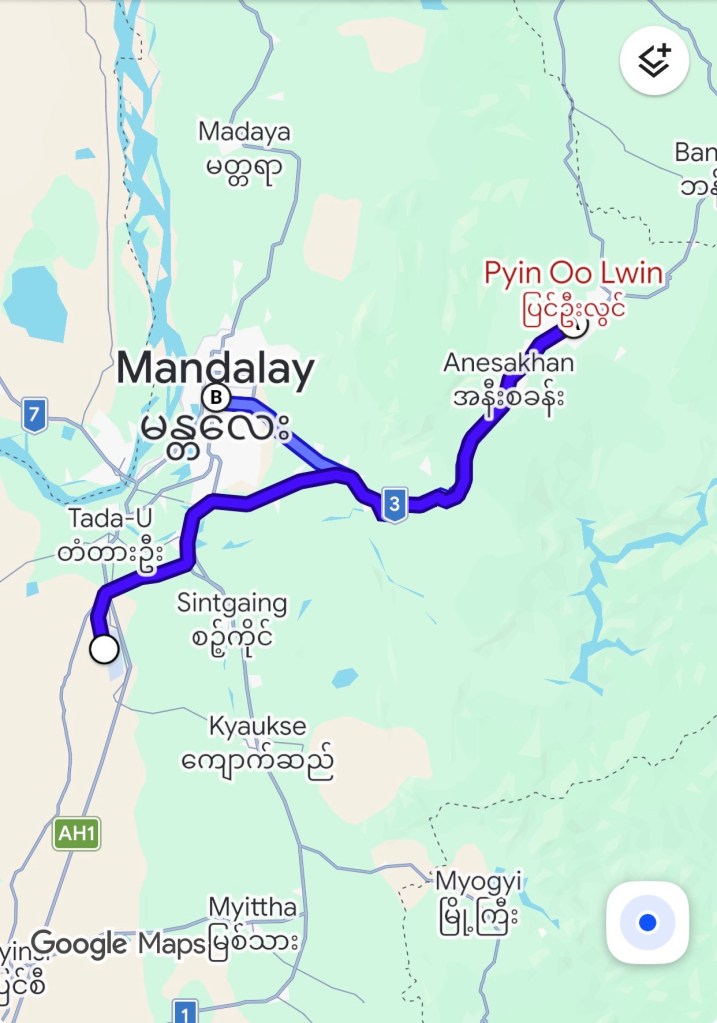
When planning the itinerary, T had suggested that after our airport pickup we actually make a day trip northeast to Pyin Oo Lwin on the way to Mandalay. Logistically it made sense.
T’s suggestion that we hike out to a waterfall made less sense once I told him about the age of my visitors and my own life-threatening accident not even seven months prior. So he quickly suggested we instead visit the Governor’s House, do some local shopping, and walk through the Kandawgyi National Gardens. That was more our speed for this journey!
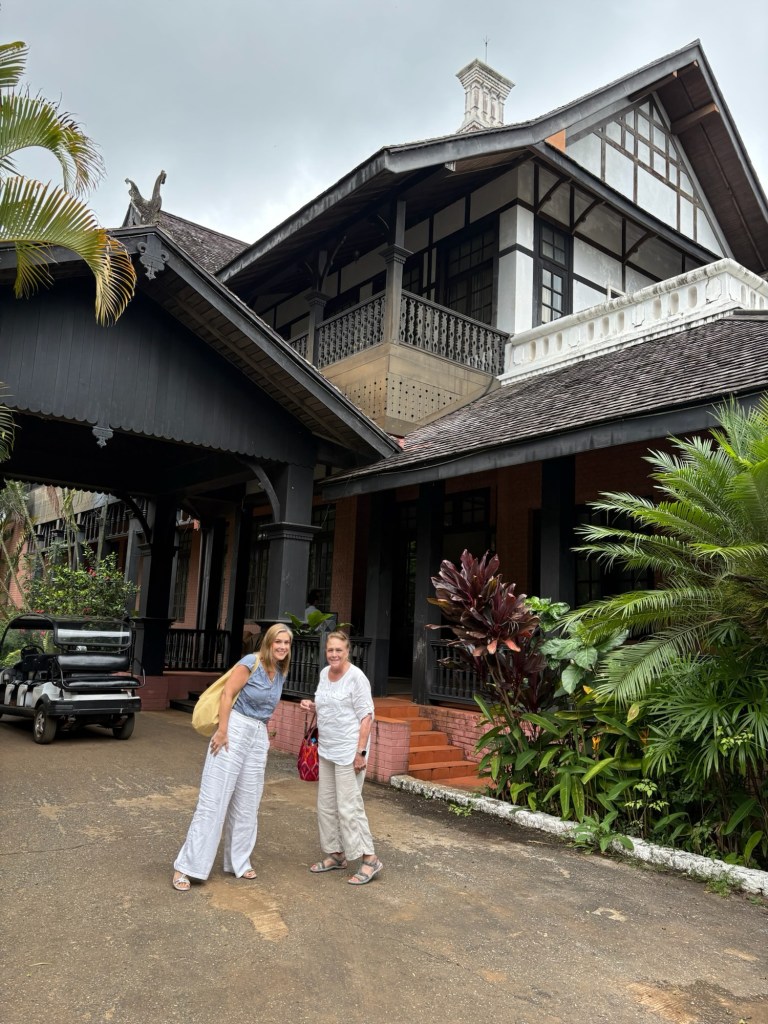
The British ruled Burma as a colonial power for over 120 years, and increasingly so from the 1820s until shortly after WWII. During the latter part of the conquests, Pyin Oo Lwin was known as Maymyo. Maymyo’s development as a British hill station belongs to the period after the British annexed Upper Burma in 1885.
The British built the Governor’s House in Maymyo as the summer residence of Burma’s British Governor during the heart of that colonial period, specifically between 1903 and 1905. Escaping the heat of Rangoon for the cooler locale suited the colonial administration, which likely found itself a bit out of its element and a bit out of sorts for much of the year. Maymyo became an important seasonal center of British administration. The temperature of Pyin Oo Lwin at its relatively higher altitude was several degrees cooler on any given day than Mandalay or Rangoon, providing some refuge.
The original house was later destroyed during World War II. However, it was reconstructed in 2005 following its original design and today offers a glimpse into the grand colonial architecture and complicated history of British Burma.
I was only a little surprised that there were no guests at the mansion. The upstairs bedrooms, clean and charmingly renovated with period furniture and decor, contrasted with the downstairs area, where a kitchen, dining room, and grand bar stood largely in disrepair. Mosquitos orbited around an oddly placed indoor pool full of stagnant water.
T and his hotel contact made quite a show of leading us around the empty property and pointing out details, including the tidily manicured but jungly backyard and a small museum full of wax figures depicting Burmese royalty and British colonial officials. Taken together, the museum exhibits told a compressed story of Burma’s political history: from the Burmese monarchy through British rule and the independence struggle. I found it a bit spooky, but I could see the appeal of the place.
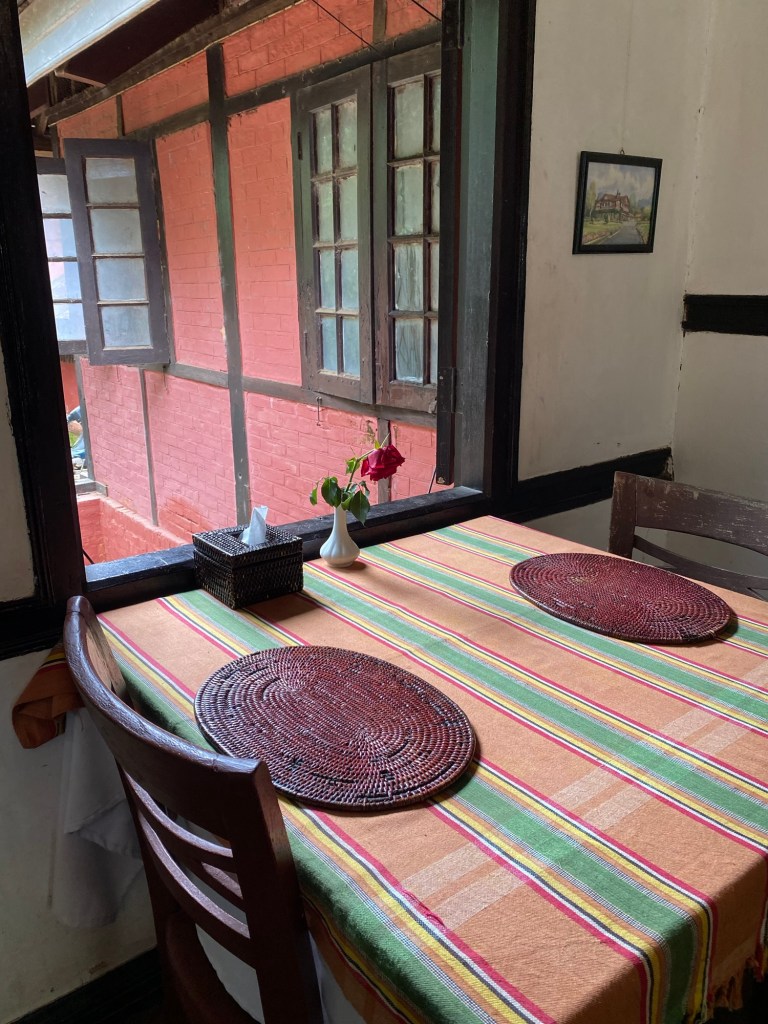
Afterwards we swung by the All Saints Anglican Church, enjoyed a tasty lunch on a hidden-away restaurant patio, and eventually trekked all around National Kandawgyi Gardens.
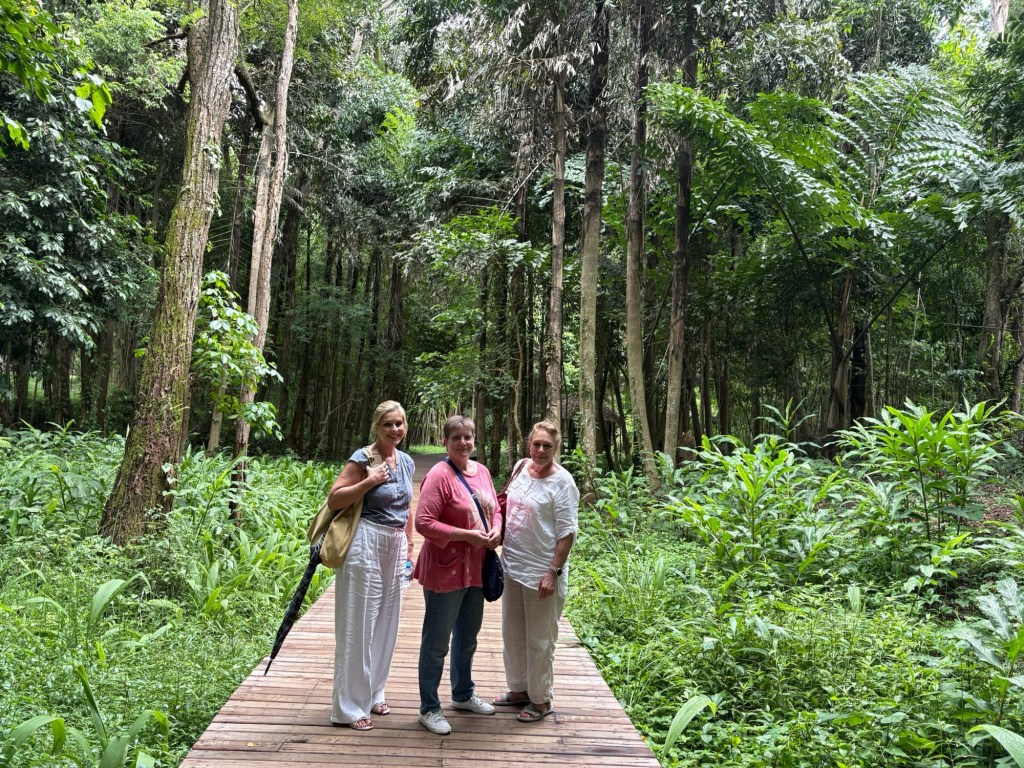
The Governor’s House and Kandawgyi Gardens tell two sides of the same Maymyo story. The Governor’s House represented the political and administrative world of the British hill station; the botanical gardens represented the cultivated, distinctly English landscape they created around it.
Established in 1915, their design was inspired by the Royal Botanic Gardens at Kew in England. It was another attempt to make the cool mountain retreat feel more familiar to the British officials who spent their summers there.
Today, the gardens cover almost 450 acres, including a large lake. They contain extensive collections of indigenous trees, bamboo, orchids, and other flowering plants, and serve as a center for conservation and research as well as a recreational park.
Other than the Burmese signage, as we strolled through, I had the distinct feeling that I was somewhere else—perhaps somewhere more like Singapore than Burma itself. There was no litter anywhere, nothing was broken, and there were plenty of benches where we could stop and take a break.
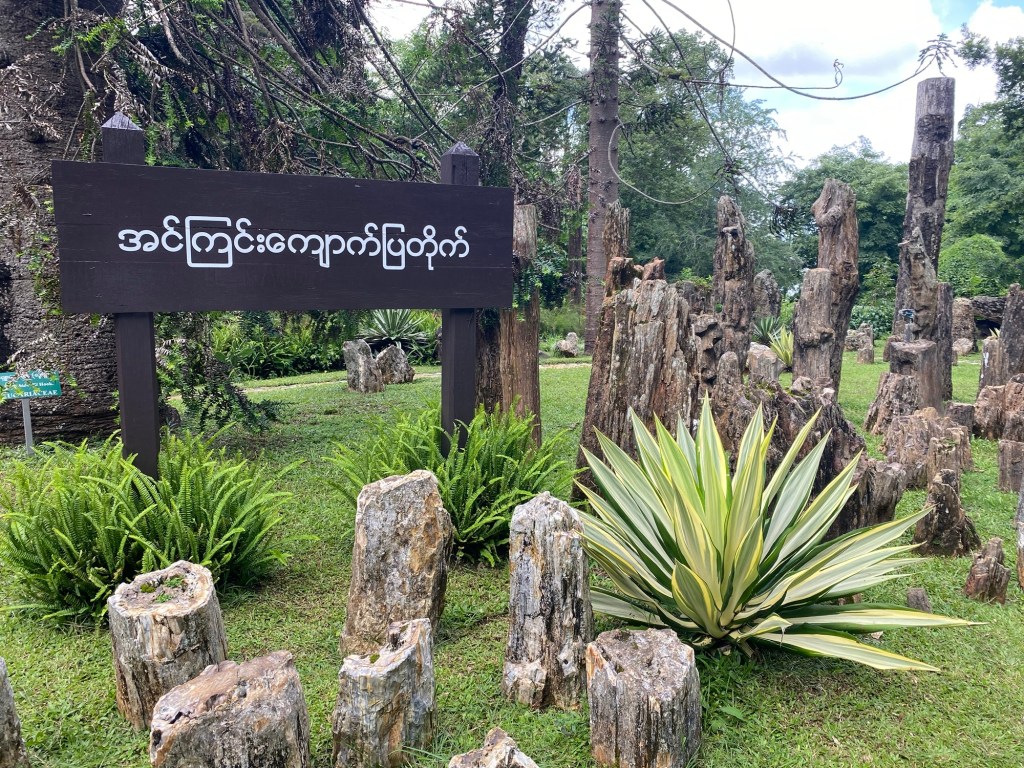
At least to me, parts of Pyin Oo Lwin as a town felt strangely unlike the rest of Burma, and I doubt it’s accidental. It’s original position as a summer capital meant it had not only colonial houses, English gardens, and military establishments, but also a population that included large Indian and Gurkha communities alongside Burmese and Anglo-Burmese residents.
Today, those layers have been joined by a reportedly substantial Chinese presence and by a newer identity as a weekend resort for Myanmar’s relatively affluent urban population. The result is a town that feels less traditionally Burmese than almost anywhere else in the country—a curious mixture of colonial hill station, military town, multicultural trading center and contemporary resort.
As we headed down the hill to Mandalay at the end of the day, we were tired but happy.

