
I arrived in Virginia on September 2 and joined V at the Airbnb where he’d been staying since we parted ways in Seoul—he’d continued on to the D.C. area to get back to work, while I’d headed to the west coast to see family on Congressionally mandated home leave.
As much as I wanted to rest once reaching Virginia after driving across the United States alone, I jumped actively into my to-do list. I stayed up late that first night to help V address an unexpected health issue, then arrived early in DC the next morning for my own 8:00 a.m. doctor’s visit. That launched a full Thursday and Friday of medical appointments, phone calls, and errands. My time during the business day was limited; after the Labor Day weekend, I would begin studying Bosnian, my fourth language course at FSI in 12 years.
FSOs who enter long-term language training (or even short-term tradecraft training) at FSI between overseas assignments are entitled to use the PCS Lodging Program. A housing allowance is literally written into our orders. The program assigns us furnished U.S. government housing—typically a corporate-style apartment in Arlington near FSI—for the duration of our training, with the cost billed directly to the Department.
We lived in PCS lodging while I was in Spanish training because I was between two overseas postings: Canberra and Ciudad Juárez. I wasn’t entitled to PCS lodging while studying Russian or Burmese because, during Russian, I was coming straight out of A-100 as a local hire while during Burmese, I was on domestic-to-overseas orders. Neither scenario qualifies, but overseas-to-overseas (post-to-post) orders do.
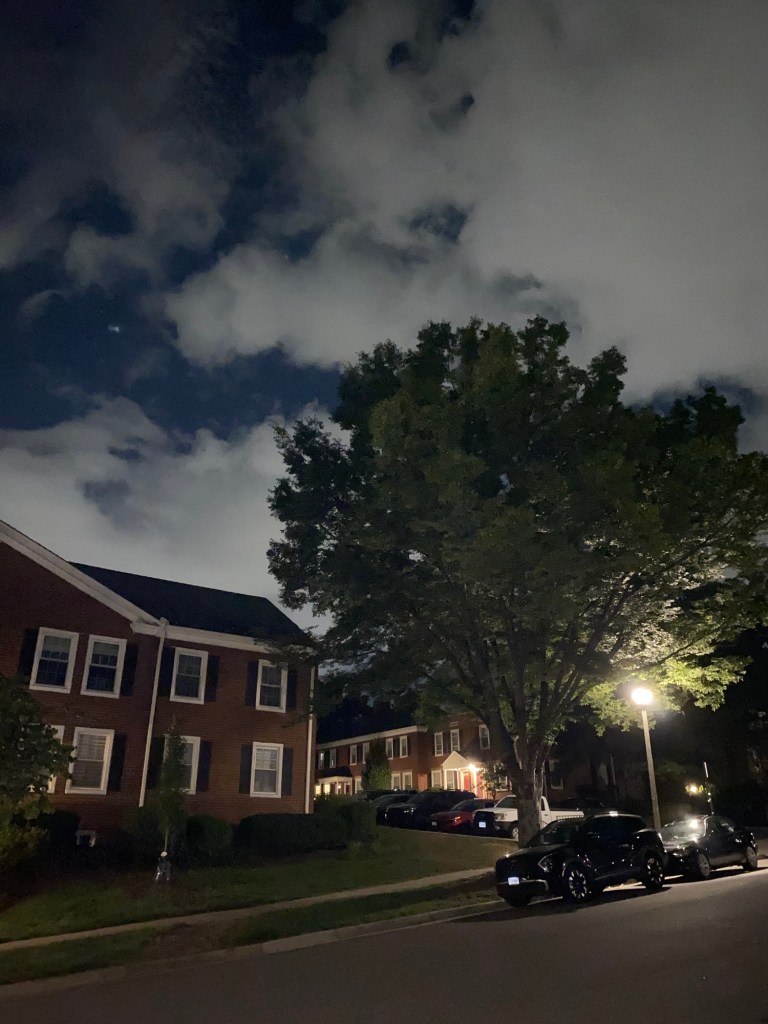
I like to take advantage of the program when I’m eligible for it. It eases the burden of having to search for and furnish my own housing during a relatively short training stint. That period can be less than a year—and it flies by! Participating is also like hitting the easy button: you bring a capsule of your things, set up house quickly, and get down to the business of training, generally in a neighborhood with lots of colleagues and friends who find themselves in the same transitional situation.
In many senses, it’s perfect: free housing, generally in an urban area, and mostly fit for purpose. What’s to complain about? Despite my gratitude for the housing benefit, there are some downsides as well.
The program may not work as well for people with multiple children of opposite genders or large dogs. I don’t have a dog, but I imagine not having a yard could be a drawback. People make do with walks in parks and common areas, I guess. And there just aren’t that many three-bedroom or larger apartments available, especially during this period when many posts are on ordered departure status because of the war in the Middle East. As a result, many families have been evacuated and are in limbo occupying local apartments.
You can’t select your own housing, although you can rank your top few buildings when applying to the program. Sometimes you get your second or third choice – I’ve never gotten my top choice.
Frustratingly, the program won’t confirm which apartment building you’ve been assigned to until 14 days out, presumably in case something changes with your orders. This seems more applicable to people who are hoping to pass their end-of-training test so they can depart for post than to those who are already overseas and have firm home-leave and onward-training dates. They even told us that the apartment number is subject to change up until the day of arrival.
That created some issues for me because I didn’t have a known forwarding address. I ended up having to file multiple USPS Change of Address orders to route my mail first to my mom’s house and then on to Arlington.
You’re not allowed to arrive until the day before your training starts, which is often a Sunday—or, in our case this time around, a federal holiday Monday. Sometimes they will let you arrive early, but you pay nightly out of pocket. And if you’re ever in annual leave status during training, such as over the holidays, you’re required to pay the rent out of pocket.
Not to mention that, on the front end, many FSOs’ spouses work full-time and aren’t entitled to paid home leave the way officers are after an overseas assignment. For example, V had to return to work in-person within 48 hours of our return stateside from Burma. However, we hadn’t technically moved to Arlington yet and didn’t have anywhere to live. I had to pick up my car on the west coast and see my family. As a result, we were each paying out of pocket to live on opposite ends of the country during that time.
You also have to navigate the lodging program’s bureaucracy for maintenance issues and questions rather than dealing directly with the staff at your apartment building.
Perhaps most annoyingly, with PCS lodging, you can only be assigned a property size that corresponds to the family size listed on your orders. My orders list “self and spouse,” so we’re limited to a one-bedroom apartment. Due to housing availability and other program constraints, there’s no flexibility to upgrade to a larger apartment, even though we’re willing to pay the difference out of pocket.
This especially frustrates me because I can’t host any visitors, like my parents, or my stepdaughters. This is the only circumstance I think we’ve ever lived in where we literally live somewhere so cramped we can’t have anyone come stay. It’s not the way we would otherwise organize our living situation. Even in our first DC apartment together (2007-2009), we had a one-bedroom plus den.
I think there’s an option to go completely out of pocket, select your own housing on the local market, and then apply for reimbursement. However, that seems like too much effort and paperwork. We’ve generally been able to make a one-bedroom apartment work for periods of less than a year.
You don’t send more than 450 pounds of UAB to PCS lodging from your prior post anyway, and the Department won’t ship thousands of pounds of your HHE by sea freight when you’re assigned to PCS lodging. That’s probably a good thing, since there’s no way we could fit everything from post into this apartment, let alone the additional effects we stored in 2025 when we left our former three-story house in Alexandria.
A lot of these inconveniences aren’t a big deal in and of themselves, but in the aggregate can feel unnecessarily frustrating and overwhelming. It’s part of the death-by-one-thousand cuts that wear you down and that I’ve come to know well since joining the FS in 2014. But at the end of the day, I still think the idea of the program and the entitlement to it is good, and I was looking forward to being in Arlington again.
The Arlington Airbnb where V stayed for nearly a month after leaving Rangoon was on the third floor of a brick rowhouse in a quiet neighborhood near FSI. Rents in that area tend to exceed $4K per month, so in addition to gas and lodging during my 13-state road trip, home leave was fairly costly for us this time. However, we were prepared for it and had enough time to plan reservations ahead and avoid last-minute decision-making.
On Labor Day Monday, I made a run over to my private storage unit, where I’d kept most of my purse collection during our year in Burma, and offloaded a car full of luggage to make room for the overnight bags, our cat, and the groceries we were moving into our PCS lodging apartment later that day. Carrying all those things down three flights of stairs and packing them into and out of the car was not fun. I’m still recovering from my accident and find it hard sometimes to carry loads on stairs or walk on uneven ground. In addition, V had pinched a nerve in his shoulder during our PCS travel, but we still muscled our way through it.
We arrived at the apartment building and had the usual confusion and miscommunication about keys, mailboxes, and parking. The person at the front desk told us they didn’t deal with this, that, or the other questions we had, and we’d need to contact the program. After five tours in the FS, we just laughed it off and went out to dinner. Later that evening, I retrieved most of the immediate things in my private storage and brought them to the apartment, completely vacating the storage unit within a week.
And the very next day, after language class orientation, we accepted our UAB. It took numerous emails and phone calls and a great deal of triangulation among the PCS Lodging Program staff, Department shipping contractors, the moving company, and the people at our building who coordinate reservations for the loading dock and freight elevator, but it all worked out.
At last, we were “home!”

