In March, the embassy’s Community Liaison Office (CLO) organized a weekend day trip to ride the Yangon Circular Railway.
Often called the “Circle Line,” the train travels on an approximately 28-mile (45 km) loop track around the city. It is supposed to be one of the most atmospheric and socially revealing railways in Southeast Asia. It’s not only a commuter railway and a relic of British colonial infrastructure, but also an informal street market, a lifeline for people who need to travel inexpensively, and a beautiful way to understand how the city is laid out.
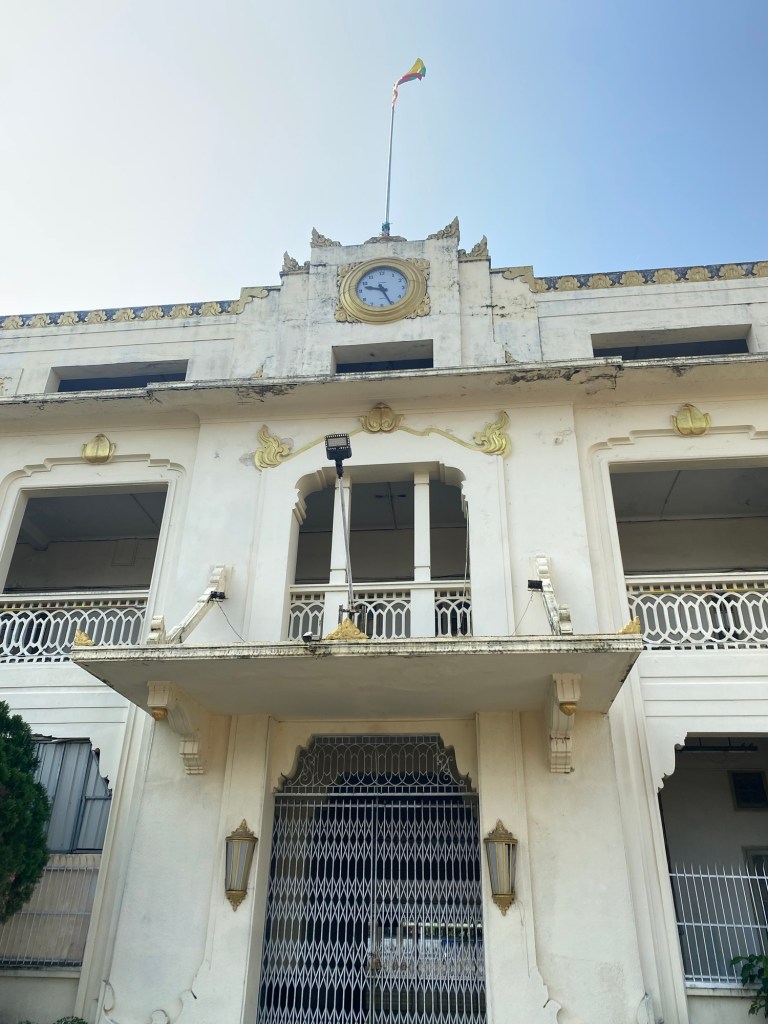
Originally built by the British in the 1930s, the train’s entire route used to take around three hours to complete. It opened in its modern form in the 1950s.
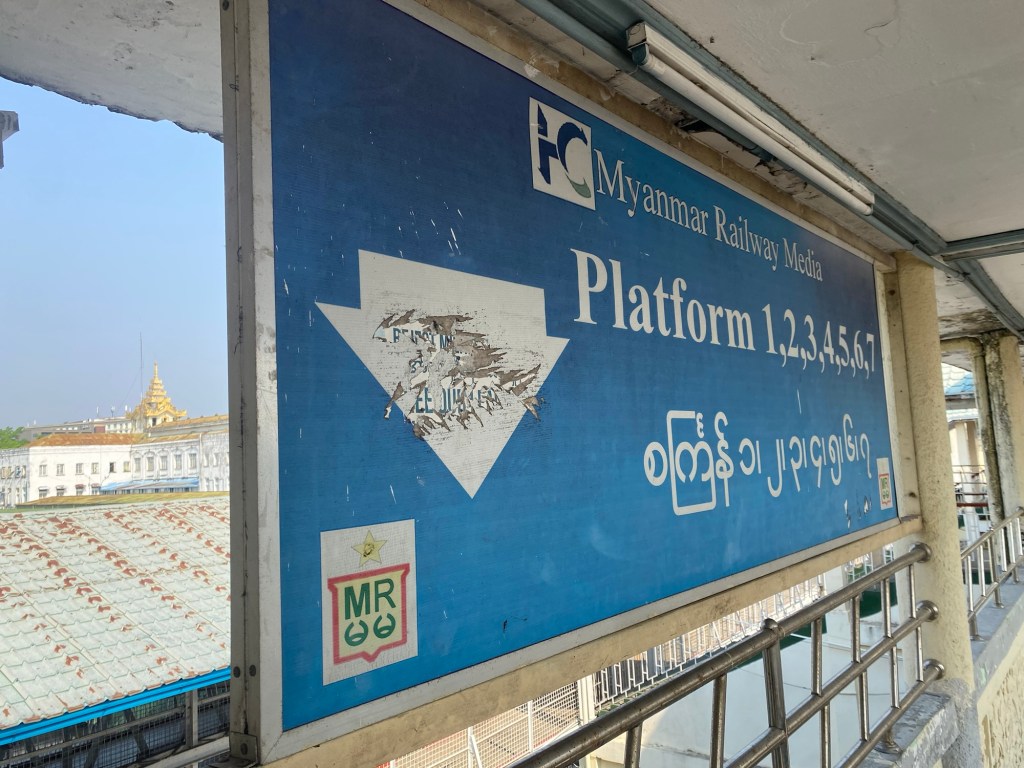
The rail backbone still has 39 stations and connects downtown Yangon with industrial suburbs, satellite towns, markets, and working-class neighborhoods. I can imagine that it was particularly indispensable in the era before widespread car ownership and app-ordered taxis.
Incredibly, we paid 800 kyats each for a ticket, or approximately 20 cents USD. It’s important to remember the relative context: the average annual salary on the Burmese economy is around $1,200 USD.
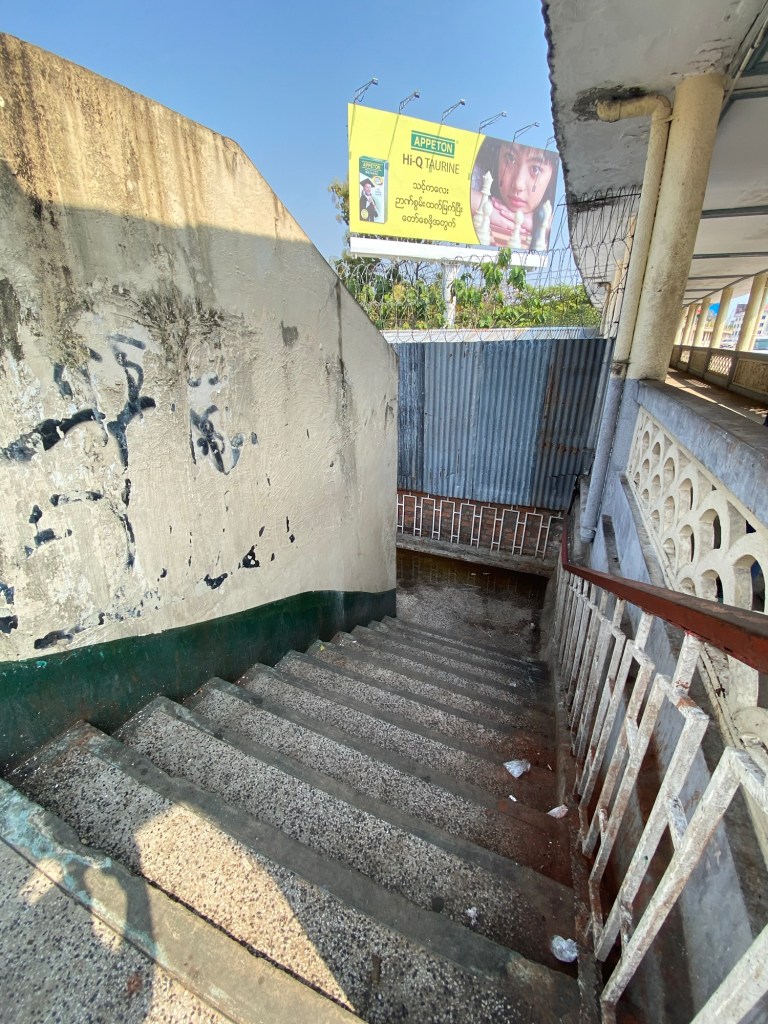
Unlike tourist railways elsewhere, the Yangon Circular Railway was never designed as a “heritage attraction.” It caters to its core ridership: students, factory workers, food vendors, civil servants, and those with low incomes. Tourists began riding it alongside locals because it offers an unusually intimate look at everyday life in Yangon.
I wasn’t totally ready for the train station bathroom, with squat toilets you had to step up on a platform to use, no electricity, and an open sewer gutter running right through the middle of the room. I didn’t get any photos because I was trying to keep the cuff of my pants out of anything yucky.
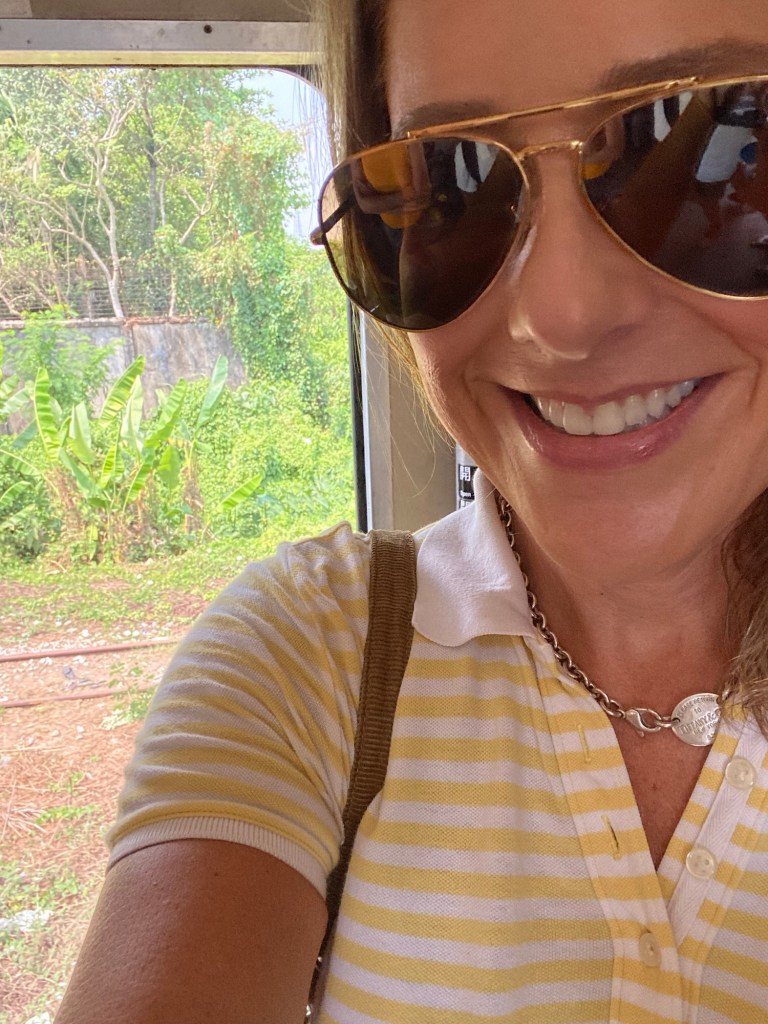
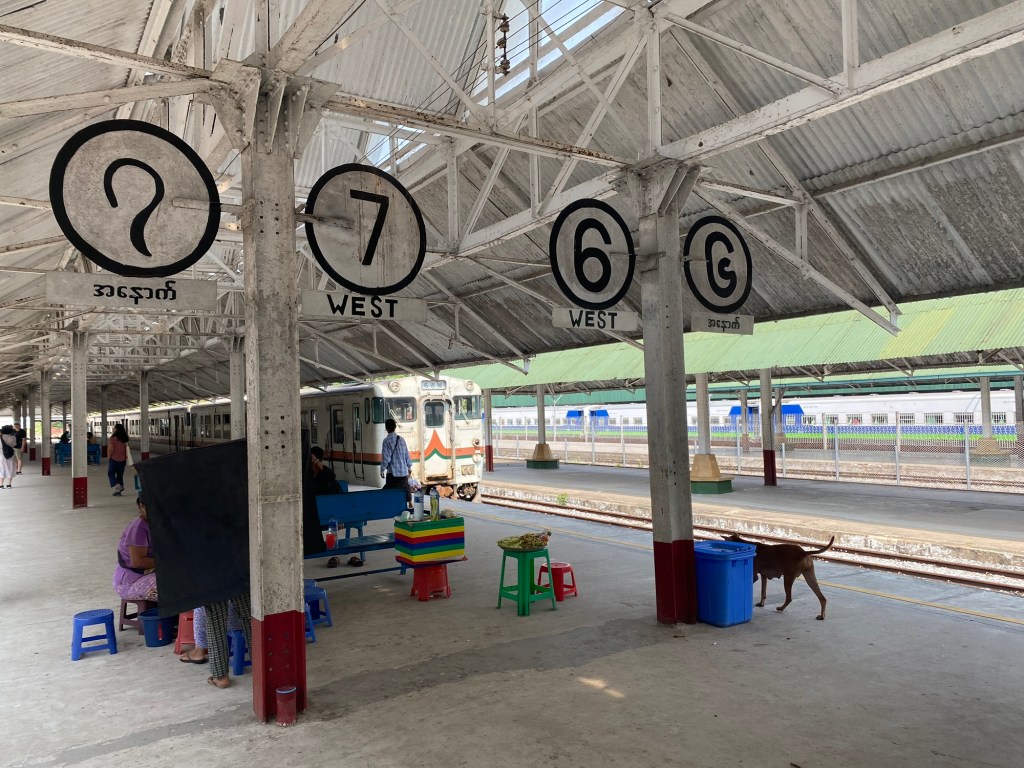
But I was impressed by the old station and amazed by the sensory environment inside the train. I had seen videos of the train on YouTube in my language class prior to moving here. So I had an idea of what to expect: open windows, fans, hard bench seating placed in rows and along walls, betel nut chew stains on the floor, and vendors walking carriage to carriage selling everything from prepared food to produce and live animals. But seeing it in real life was 10 times more interesting and special.
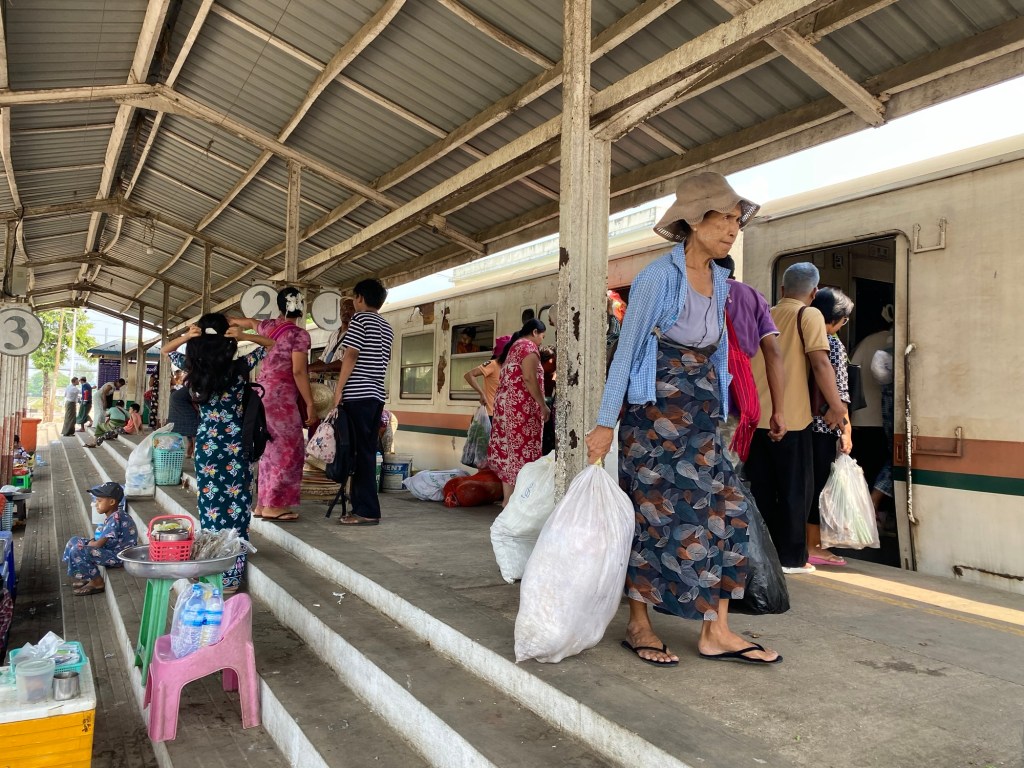
And my other senses were activated; too. The sights inside the open-air train were accompanied by strong breezes, a variety of scents, passengers calling out to each other between compartments, and a constant metallic rocking sound. A ticket-taker wandered through the train, seemingly unconcerned about punching tickets. He kindly showed us how to use the mounted fans that were operated by a switch we hadn’t noticed.
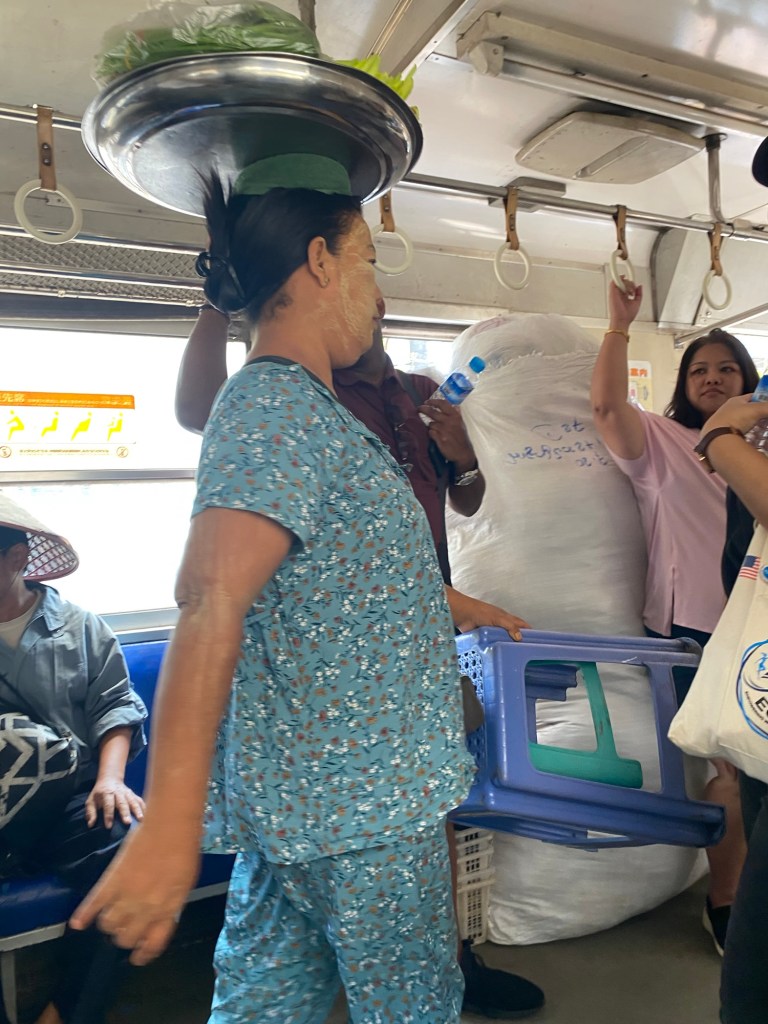
I tried to avoid taking direct photos of anyone without their permission, although people certainly snapped photos of the obvious group of western tourists! Many on the train wore Thanaka, a yellowish paste people here use as a natural sunscreen with a mild antibiotic component.
I have never tried it, but I heard it offers a cooling protectant factor from the sun, as well as skincare and antioxidant properties. It also has a strong connection to culture in Myanmar; people here have worn Thanaka for well over 1,000 years to protect themselves from discomfort and burns caused by the tropical conditions.
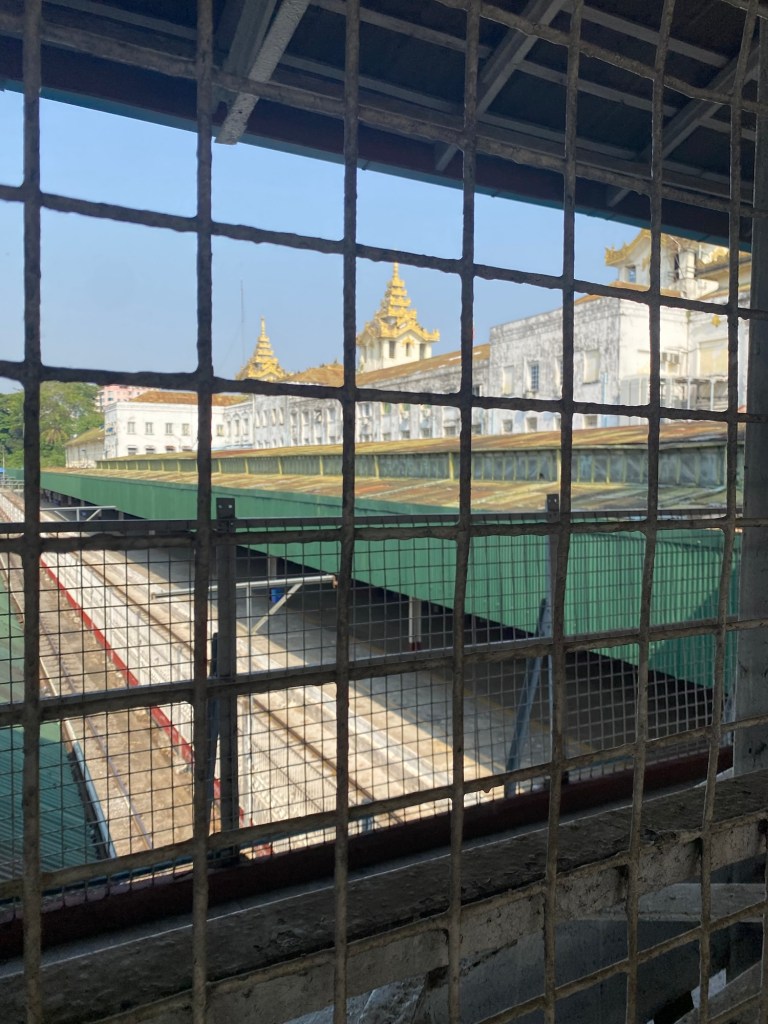
What I experienced disembarking from the Yangon Circular Railway was less a case of people being intentionally rude and more the result of a transit culture shaped by decades of overcrowding, unreliable infrastructure, and commuter urgency. I was warned a stop or two in advance to get to the door, but I wasn’t totally ready for the chaos that ensued when the train stopped.
Evidently, the Circle Line has historically operated with short stops, narrow doors, inconsistent schedules, and enormous numbers of working-class passengers trying to get to jobs, markets, and connections on time. At one point, the railway was selling 150,000 tickets per day.
In that environment, people learn that hesitation can mean missing the train entirely, so boarding and exiting often happen simultaneously in one continuous surge rather than in the logical and orderly “let passengers off first” pattern common in places like Singapore, Japan, or the United States.
I admit I prefer logic and order over a free-for-all any day. This surprises no one, I’m sure. I would argue that in most circumstances, order facilitates a fairer and more efficient process for both the greater and the individual good.
But what felt aggressive and confusing to me was probably less an individual decision than it looked like, and more a collective crowd momentum everyone instinctively moved with. In many settings Burmese social interaction is notably gentle, restrained, and considerate, but traffic and crowded transit spaces are two situations where I’ve been left marveling at the (very real) scarcity mindset — and my own bruised ribs.
I am determined to ride the train again before we leave, soon.
I made an accompanying reel for this post on my public-facing Instagram documenting our train trip. That account focuses specifically on my life through the lens of handbag collecting, but the reel provides more atmosphere, video, and context than photos alone can capture. You can view it here:
https://www.instagram.com/reel/a/?igsh=MXFwbGF3OWVtd282Zw==

