March in Canberra signals two things: the official start of Australia’s autumn harvest season, and the annual Enlighten art and community festival. The Australian Capital Territory (ACT) government sought to attract tourists and encourage people to see Canberra “in a whole new light” with the first Enlighten in 2011; since then, the events have become increasingly larger and more popular for both locals and out-of-towners. Over Enlighten’s two and a half week run time, Canberra is awash with roving light installations, film screenings, outdoor activities, special exhibitions, kids’ activities, cultural and musical performances, and special ticketed events like outdoor dinners and dawn hot air ballooning. Enlighten’s centerpiece, though, is the nightly illumination of Canberra’s cultural institutions, all of which come to life after the sun goes down.
California Love… in Sydney
Earlier this month, my husband and I took a weekend trip to Sydney that I’d planned last October. The impetus for the trip was to see my favorite band, Incubus, play at Sydney’s Hordern Pavilion. The guys hail from southern California, but tour worldwide a fair bit. Their Australia/New Zealand tour announcement had absolutely lit my inbox on fire; although I haven’t been to a concert for years, I bought my tickets online literally two minutes after sales opened. To make things even better, the show fell nicely on a three day weekend for Canberra. Although my husband had made a quick work-related trip alone to Sydney already, I hadn’t been back since I finished postgraduate school there in 2006 and flew home to California via a Balkans vacation. I made a list of things to do on our first trip together: Royal Botanical Garden, Taronga Zoo, Sydney Opera House, visiting my old apartment, and road tripping instead of flying or taking the train. I’m happy to say that we did all that, and more.
Road Trip to Blue Mountains
Towards the end of February, we celebrated my husband’s birthday and his new embassy job with a weekend escape to Katoomba in New South Wales’ Blue Mountains. We also visited Featherdale Wildlife Park, located about an hour from Katoomba in the equally charmingly-named town of Doonside. On balance, even with weather extremes and about nine hours in the car over two days while only a month out from my back surgery, it was still very well worth the trip.
Foreign Service Cars: Buyer Beware
Since our first month in Canberra, our Australian car has been a money pit and an ongoing source of dread. I’ve procrastinated writing a post about the situation for months because it had no clear resolution, and every time I thought about it, I felt too angry and frustrated. Truthfully, I’ve also had many other…
Pick a Card, Any Card
At the end of January, I had back surgery to correct two herniated discs. One of them had been pressing on a nerve for more than a year, but it couldn’t be operated on due to an older bone infection in my foot. A month after I finally beat the infection with six weeks of intravenous antibiotics, I was cleared for the back surgery and it was booked. I was ecstatic. When I packed for the hospital, I packed three books, not realizing that I wouldn’t crack a single one. The first 36 hours were a bit of a harrowing experience, but I tried to right-brain my way through it by reminding myself that it would end. I needed no reminder that it was for the best. I’m only about ten days into my recovery now, but I feel like my fortunes are starting to turn for the better.
South Coast Beaches
While most people we know are experiencing winter, summer is going strong here in the southern hemisphere. As I watch snowfall on my friends’ social media posts, Australians are looking to beat record heat, and with about 15,000 miles of coastline and a population of less than 25 million, Australians are spoilt for choice when it comes to beaches. And although Canberra is inland, as opposed to Australia’s other major cities found on the coast, it’s only a 2-3 hour drive from Canberra to most beaches of Australia’s famed south coast. Before Christmas, I started exploring south coast trips once I realized that beautiful beaches and inexpensive AirBnB options abound.
Tidbinbilla
On New Year’s Day, my husband and I decided to go for a walk at Tidbinbilla Nature Reserve. The reserve, located about 11 miles from our home, is 34 square miles of protected land on the north edge of Namadgi National Park. It’s also part of the Australian Alps, a series of parks and reserves spanning south-eastern Australia. Full of wildlife, nature trails, and picnic areas, our first Tidbinbilla excursion was a perfect way to kick off a healthy and adventurous 2018.
Year in Review: 2017 Blog Stats & Recap
In my 2016 yearly review and blog statistics recap, I bid 2016 adieu while commenting that it wasn’t my favorite year. I’m not mad at 2017, but I am excited to say goodbye to it. In 2017 I made some fond memories, experienced perhaps my greatest professional challenges and growth yet, and as usual, took recreating pretty seriously. While 2017 brought me a chance to pull out my passport on four continents, it also brought me tedious, ongoing health problems, some of which unfortunately I must carry forward into 2018. As I welcome the new year with a hopeful heart and mind, I’m thinking about where I’ve been and what I have to look forward to in 2018.
Beyond the Sticker Shock
When I first moved to Australia in 2005 and exchanged my U.S. dollars and euros for Australian dollars, the first thing I noticed was how beautiful they were. Australian paper money looks and feels different than American paper money for three main reasons: the denominations are different colors, they vary in size, and for approximately the last thirty years, all the notes have been polymer. The plasticization, clear windows, and other security features make these banknotes almost impossible to counterfeit or rip. Currently an Australian dollar is worth 78 U.S. cents. When deciding whether or not to make a purchase, I mentally do the currency conversion by slashing 25%. That helps me see if the item’s price is fair or “worth it” to me. Despite the sticker shock that Americans legitimately feel with the smaller dollars and generally higher prices here, the colorful money is delightful.
On the Road to Wellness
This past week, I took a big step on the road back to good health with a toe-straightening operation. Now that I’ve conquered the bone infection, it’s time to get my foot into a condition to resume wearing shoes without scraping and reinfecting my toe. In the ongoing saga of how-much-trouble-can-one-toe-cause, I am continuing along a trajectory toward wellness. And despite how un-Christmaslike southern hemisphere December weather feels to me, the season of gratitude is in full swing.
It’s Different Down Under, Part II
In a previous post from last month, I talked about how I first came to Australia in 2005 and figured out that there were some differences in U.S. vs. Australian English. I promised that the second edition in the series would be about food, so in this post I’ll talk a little about some of the differences between eating in the U.S. and Australia, and share some Aussie food-related vocabulary.
All the King’s Horses and All the King’s Men
Wednesday afternoon Canberra time I walked into the consultation room of my orthopedic surgeon’s office and sat down on the elevated, paper-covered examination bed. Through the window behind me, Telstra Tower stood on tree-covered hills in the distance, looking like an omen from some futuristic society. I swung my legs slowly, looking left and right at my doctor’s diplomas, medical books, and family photos. In a few minutes, I expected him to walk through the door and tell me the prior day’s MRI results, followed by the date for amputation of my toe.
It’s Different Down Under, Part I
On the afternoon of July 22, 2005, I flew into Sydney’s coastal winter for the first time, having left behind a European summer. I was moving to Australia to study for a master of international relations at Macquarie University, and one of the things that had attracted me — besides the obvious perks of living in Sydney and MQ’s solid academic program, of course! — was the ability to study in English. I’d been living for a couple of years in the non English-speaking world and I was keen to study in my mother tongue again. After a few memorable, unintentionally offensive, and head-scratching moments, I realized: the mother tongue has gone in such delightfully different directions over the last few hundred years.
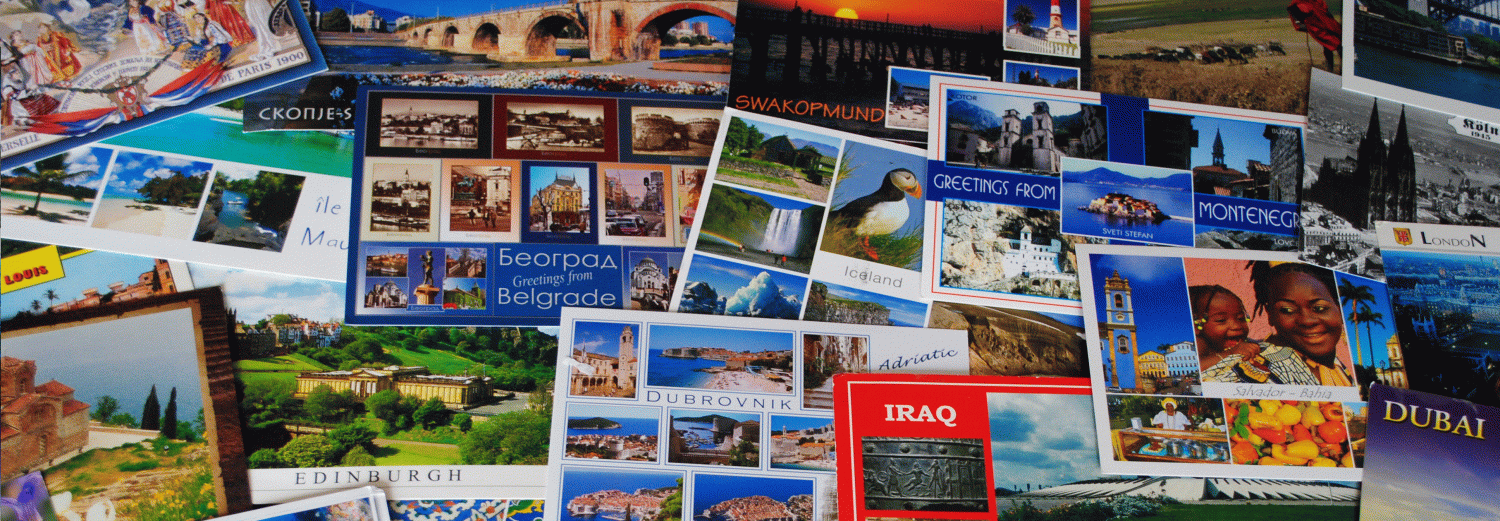
Postcard Flashback: Leaving for Peace Corps
It’s a little hard for me to believe, but November 11 marked fifteen years since I left my home in California to become a Peace Corps Volunteer (PCV) in the Republic of Macedonia. Me and 19 other trainees attended a two day Staging workshop in Washington, DC before heading overseas, arriving in Macedonia’s capital, Skopje on November 15, 2002. I had pursued my PCV candidacy at that point for about fourteen months: during my senior year in college, beyond the September 11 attacks, and through a bewilderingly bureaucratic set of recruitment hurdles. Being brave enough to get on the plane and leave for the Peace Corps started a process that forever altered the trajectory of my life.
Postcard from USMC Ball
Friday, November 10 was a federal holiday in observance of Veterans Day, and it was also the 242nd anniversary of the founding of the United States Marine Corps. At U.S. embassies around the world, it’s the Marines who protect our embassy facilities and everything in them. We owe them (as well as our diplomatic security partners and our host country guards) a debt of gratitude, and everyone in the Foreign Service knows that November means the Marine Ball.
 Collecting Postcards