
I heard someone say the other day that during this U.S. government shutdown—now the longest in history—federal employees are being treated like the rope in a game of tug-of-war. It made a lot of sense to me. Neither my husband nor I have been paid for our work for almost six weeks.
The federal government entered a shutdown on October 1, 2025, after Congress failed to pass a continuing resolution to keep agencies funded for the new fiscal year. As a result, almost one million federal employees are either furloughed (my spouse), working without pay (me), or some rotating combination of the two.
It’s hard to imagine anything more ridiculous and unfair than carrying out some of the U.S. government’s highest-priority work in a war zone—while not being paid for it, yet that’s exactly where we are.
On the news, the same stories recycle as the pressure and discontent build: federal workers in line at food banks, air traffic controllers exhausted from working side gigs to make ends meet, and hungry families losing supplemental nutrition assistance benefits. I hear nothing about Foreign Service Officers (FSOs) serving at our embassies and consulates around the world without pay—but we are. We’re staffing high-level visits, informing policy in Washington, and protecting U.S. citizens. All while we hear we “may not” be entitled to back pay when the government reopens, as was legislated in 2019.
A large portion of the American public sadly lives paycheck to paycheck. Although we personally do not, everyone has a breaking point. The current situation is wrong—and not what I signed up for. I took this posting to earn extra money after my untenable experience in Juárez screwed me out of tens of thousands of dollars of service need differential and I then spent over three years domestically in one of the most expensive parts of the United States.
Work is dignity, independence, autonomy. Work and the ability to earn a living is the freedom to make your own choices. Expecting people to work for free in paid positions for an ambiguous length of time is patently absurd. Frankly, and I say this as a constituent and citizen: this whole shutdown is embarrassing and unpatriotic. I’m sure America’s enemies are loving it.
I have always been intrinsically motivated in this career. External rewards—or the absence of them, such as awards, bonuses, public recognition, or even promotions—have never been a major factor in my decision to pursue or continue this work. Knowing that I am doing what I want to do for my own reasons is my north star, and has kept me going through some very difficult times.
And, it’s a natural expectation that when you go to work, you are paid for your time, in both pay and benefits, such as health insurance and retirement contributions.
I think we all know the shutdown situation is temporary, and has nothing to do with us or the quality of our work (despite the trolls we see online who rejoice and say “Fire them all!” in a misguided expression of frustration towards a government that has lost its way in serving its own people). The general lack of awareness on the part of the American public about what FSOs do, what we sacrifice for our country, and how we are being affected by this shutdown, stings.
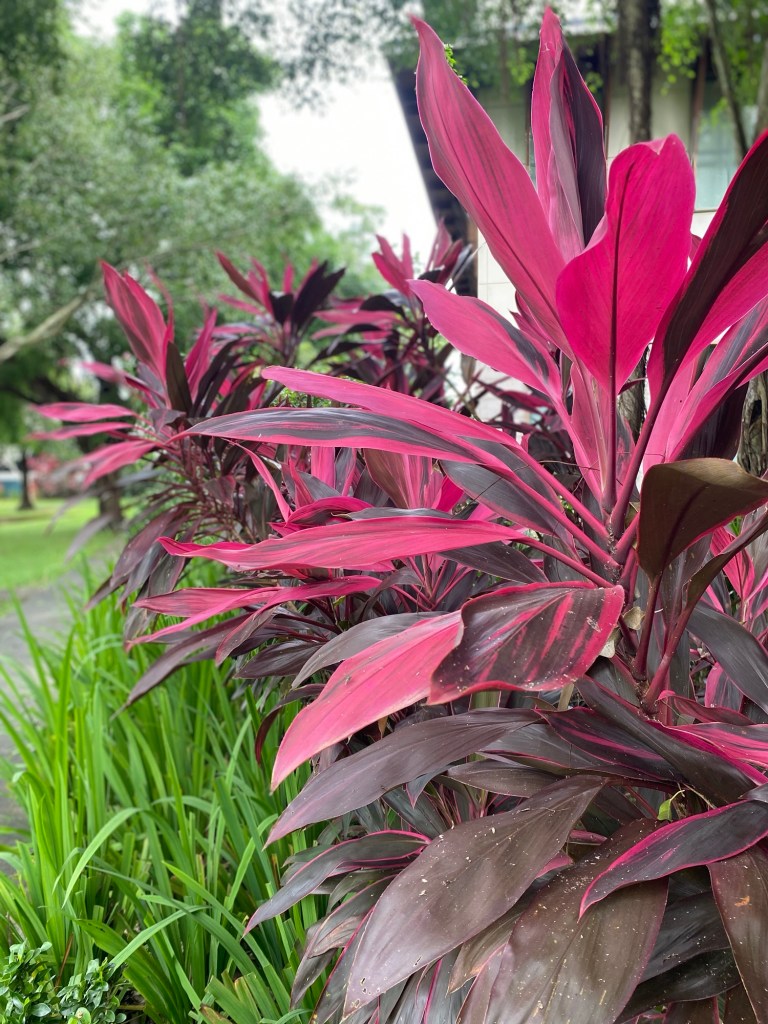
One could be forgiven for looking at my social media posts since we arrived in Rangoon—filled with palm trees, dinners out, our spacious house, and sightseeing trips—and completely miss where the sacrifice is. I’ve even had friends suggest to me in the past that I’m on vacation… while being on vacation. Ah yes, the life of an FSO as a nonstop vacation, while working over 60 hours a week.
That curated social media view of our lives is incomplete at best and totally misleading at worst. For example, I’m currently sitting by a pool after eating a lunch someone else prepared.
But in order to get here, I had to wait 30 minutes for a taxi that was supposed to come in 7 minutes and I got eaten alive by mosquitos as I waited despite having used repellent. When the taxi arrived, I had to cross four lanes of traffic to reach it (holding my hand up to confront a driver on the wrong side of the road while doing so) because there was no chance in hell my driver could have made the U-turn across the chaos of stacked up traffic to get to our driveway. And the real reason I came wasn’t to swim, because it’s pouring rain, but because internet across the country hasn’t worked, including at our house, since eight days ago; at this pool, wifi always works. I don’t think anyone believes the reason being reported for the outage.
Life in Burma can take a gradual toll on even the most resilient expats and diplomats. The daily realities of living in a developing country often chip away at comfort and patience — not through any single hardship, but through a steady accumulation of inconveniences and discomforts.
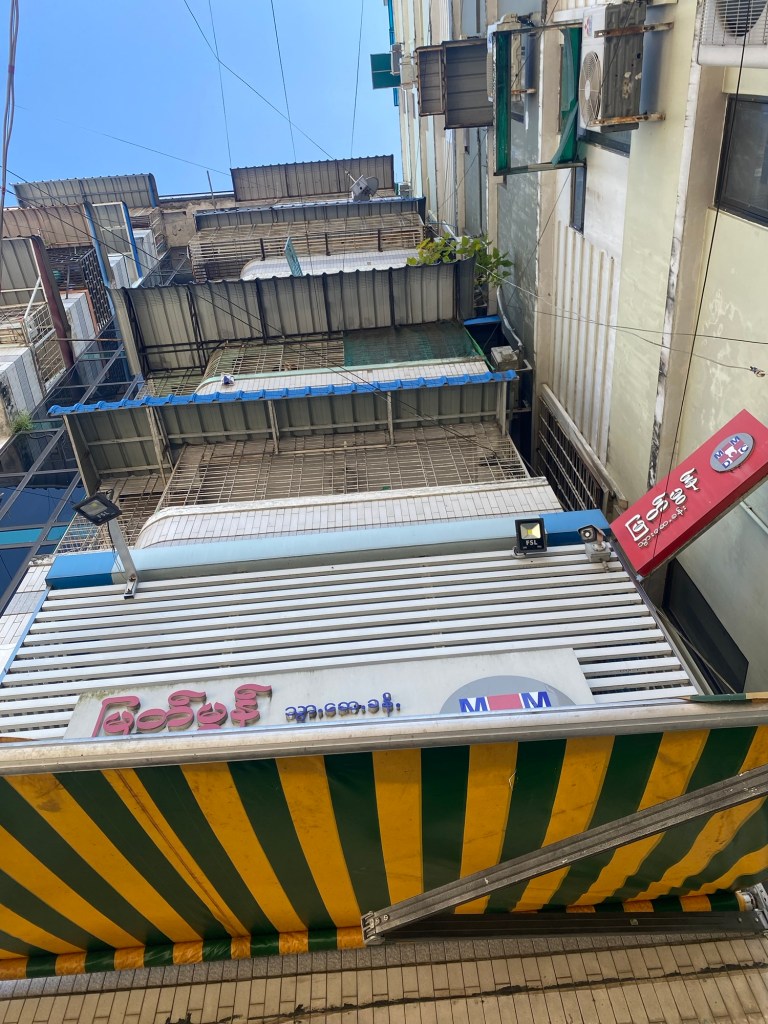
Gastrointestinal illness is nearly unavoidable; even careful eaters find themselves sidelined by bouts of foodborne illness. Last Thursday night, our housekeeper made me dinner. I don’t know what exactly happened, but unfortunately, I got so violently ill afterwards from food poisoning and fever that it took from 4am on Friday until nearly lunchtime to recover. And yes, I came to work on time, and vomited in the embassy bathroom several times between meetings, my eyes glassy, my face streaked with sweat. One of my colleagues did a double-take when I walked by, probably because I looked insane. On Friday: me 1, Burma 0.
The infrastructure, while improving in some areas, remains unreliable — frequent power outages, limited medical care, and erratic internet can make simple tasks feel like small battles. Several times per day, the power goes out and nearly a minute passes before our generator blessedly kicks on. All the digital clocks in our house flash the wrong times, and it’s not worth trying to reset them. I have a bill due today, and I’m hoping the internet and my VPN will work long enough to pay it. Otherwise, I’ll walk to the embassy.
Walking through neighborhoods, one often passes open drainage ditches and raw sewage, a visual and olfactory reminder of how far removed this environment is from the sanitized predictability of home. Every day as I walk to work I have learned to invisibly stop breathing in one spot as the stench of human and animal waste becomes overwhelming, and when I get back in the clear I take a big gulp of relatively less polluted air, stepping around the random spit that’s all over the ground.
Even in diplomatic housing, life can feel more like endurance than luxury, despite outwards appearances. Our house dates back to the colonial era, charming from the outside but stubbornly impractical within. Plumbing and wiring are temperamental, humidity seeps into everything, and kitchens often carry the faint but inescapable scent of sewage. I like our house, and I’m grateful for the badass trifecta of air purifiers, air conditioners, and dehumidifiers in most of the rooms. We have been able to deal with the electrical and plumbing issues by ourselves so far.

But the absence of modern conveniences like a dishwasher or garbage disposal have been reinforcing my general sense of “yuck” when I walk into the kitchen. In Rangoon’s old colonial houses, installing a dishwasher is often more trouble than it’s worth. The plumbing systems, many dating back to the 1930s or ’40s, were never designed for modern appliances that discharge large volumes of gray water under pressure.
Kitchen drains typically connect to narrow, unvented pipes that can’t handle the load, leading to backflow and the unmistakable odor of sewage wafting up through the sink. Water pressure is unreliable, and the lines that carry wastewater often tie directly into the main sewage system rather than a separate gray-water drain. The result is that even a simple convenience like a dishwasher risks flooding the kitchen or worsening the ever-present plumbing smells — an unglamorous reminder that “charm” in an 80-year-old Rangoon house comes with its limits. Thus, we usually hand-wash everything twice. Sometimes I wash things again right before I use them because I just see missed debris or catch a faint whiff of… something that puts me straight off my food.
Add to that the ever-present security restrictions, which limit spontaneous movement and social freedom for many, and the physical discomfort begins to blend with psychological weariness and isolation. Over time, what was once an adventure can start to feel like attrition — a slow grind of the senses and spirit in a place both fascinating and exhausting in equal measure. When you have no money coming in, after a while, irrespective of the strength of your intrinsic motivation, you start to ask yourself, Why am I doing this? Or just simply: This is bullshit.
For me, I think the bad smells in our kitchen and the GI problems are the worst. In the positive column, I’ve lost a significant amount of weight and presently have no clothes I can’t fit into (maybe a first in my post-college life?).
And of course, there is the ever-present knowledge that were one of us to need critical or trauma care, it would not be available. Last weekend was the 250th United States Marine Corps Ball held at a local, five-star hotel.
But instead of getting ready with me for the ball, my spouse went to a Burmese emergency room with an inflamed gallbladder. Three days later, he went on a medical evacuation to Bangkok for surgery, organized by medical teams at our embassies in Rangoon and Bangkok. He will probably be gone for two weeks.
And for this I feel the double-edged sword of gratitude and regret — I’m so grateful he had what he needed despite the shutdown and difficulties, and I’m also so sorry he had to travel internationally, and alone at that, to get it. If we were in the United States, this could have been handled right in the town where we were living. (We still attended the ball, too—just not for as long as we would like liked.) The whole medevac situation was one more indication that FSOs around the world are working, handling problems as they arise, and supporting one another as colleagues—even if we’re the only ones doing so.
Even as we acknowledge the frustrations of daily life here, we’re acutely aware that our situation remains far more comfortable than that of most people around us. We have secure housing, reliable access to clean water, and the privilege of leaving when our assignment ends — advantages that many local families can only dream of. Yet everything is relative. The stress, exhaustion, and sense of isolation we feel are still real, even if they come from a place of relative comfort.
Our sense of what’s “normal” or comfortable is still anchored in the United States, not here — and that frame of reference inevitably shapes how we experience daily life in Burma. Living with constant low-level discomfort — the smells, the illness, the restrictions, the sense of disconnection — takes a quiet but steady toll. Gratitude and struggle coexist here, and it’s possible to feel both deeply at the same time.
The ongoing government shutdown has only magnified these strains. Life here already demands constant adaptation — to illness, discomfort, and distance — and the shutdown adds another layer of uncertainty and frustration to an already fragile balance. What might have once felt like an inconvenience now feels personal: a reminder that even as we navigate the challenges of representing our country abroad, the institutions we serve can falter in supporting us. Whether it’s an exacerbating factor or simply the final straw depends on the day — but for many of us, it’s the moment when accumulated weariness gives way to a deeper sense of disillusionment.
 Collecting Postcards
Hope everything is better for you soon! It seems they proposed at least something in Congress yesterday. I hope there is at least some sort of “emergency fund” for shut downs.
LikeLiked by 1 person
You might enjoy reading my book, Echoes of a Global Life by Kathleen Gamble. I started out in Burma and went from there.
LikeLiked by 1 person