In the first half of my Samarkand travelogue, I talked about our visit to the Amir Temur Mausoleum and Registan Square. In this follow-up companion post, I will describe our visit later that day to the Shah-i-Zinda (“Living King”) complex, a masterpiece lined with tombs.
The complex was founded between the 11th and 12th centuries, named for Samarkand’s patron saint, Kusam ibn Abbas, a cousin of the Prophet Muhammad. A serious list of rules greets all visitors just past the ticket booth, where I paid barely two dollars for V and I to enter.

I am happy to say that we did follow all of these rules, except for Koran reading.
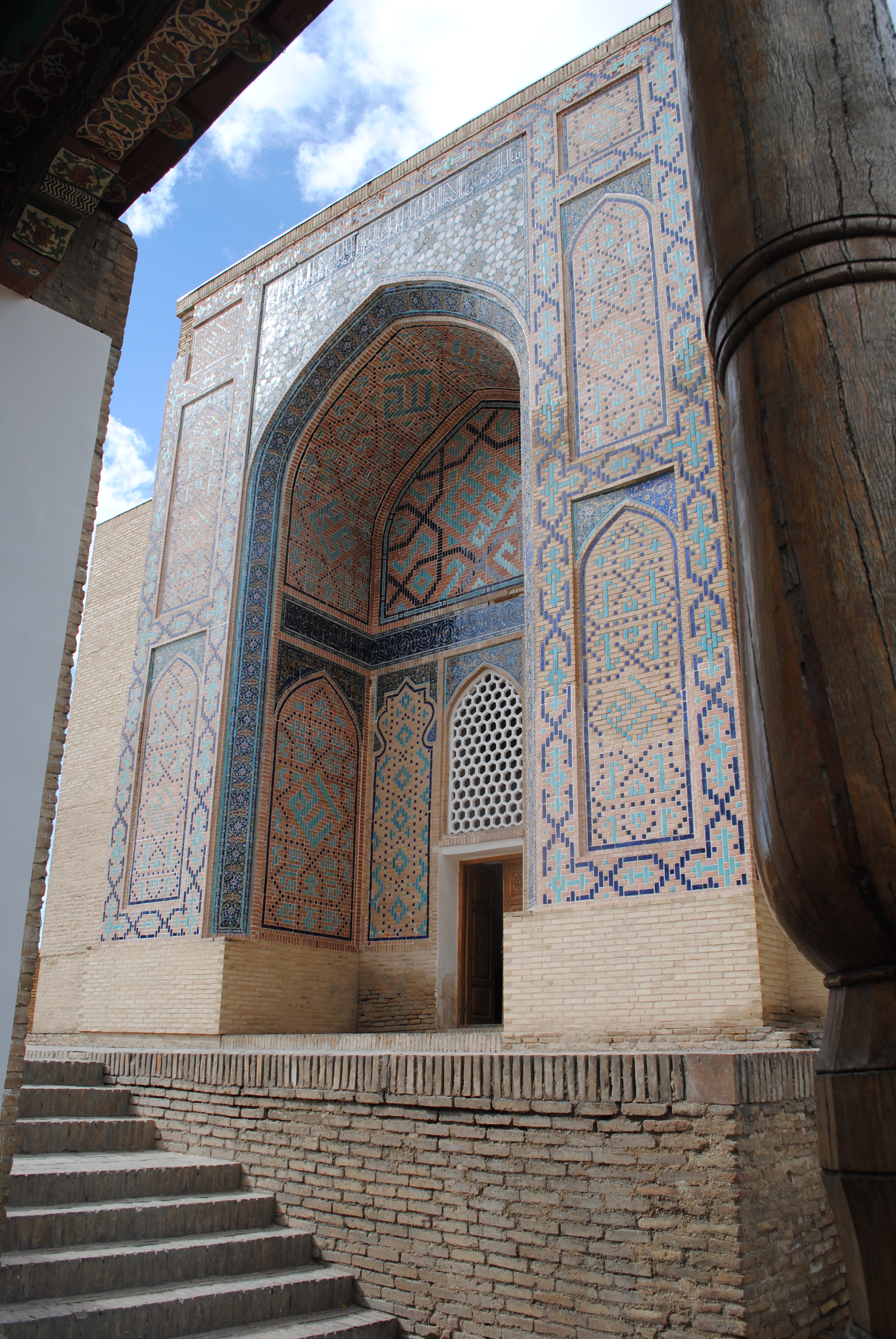


Below, V ascends the stairs to the first main cluster of tombs.

The tombs at the complex are loosely grouped. Kusam ibn Abbas is said to have come to Uzbekistan to preach Islam, but was wounded and died underneath the city walls. He achieved the status of saint and martyr afterwards, and, as the legend goes, he continues to live underground, hence the name of the complex. During the following centuries from 1100s to 1400s, mausoleums and tombs for Amir Temur’s relatives and associates sprung up leading to Kusam’s mausoleum.
In his tomb there is a middle-aged man, according to excavation records, but no one can be certain who it is. Apparently the northern end of the necropolis contains the earliest tombs, dating back to the 14th century when the site was revived after a ruthless sacking of the city by Mongol hordes.


Don’t ask how we got up there! There actually is a staircase; it’s just a little hard to see in the photo.

The central group of tombs in the complex apparently dates to the 1380s and 1390s and was built on top of an 11th century madrassa (Islamic school).


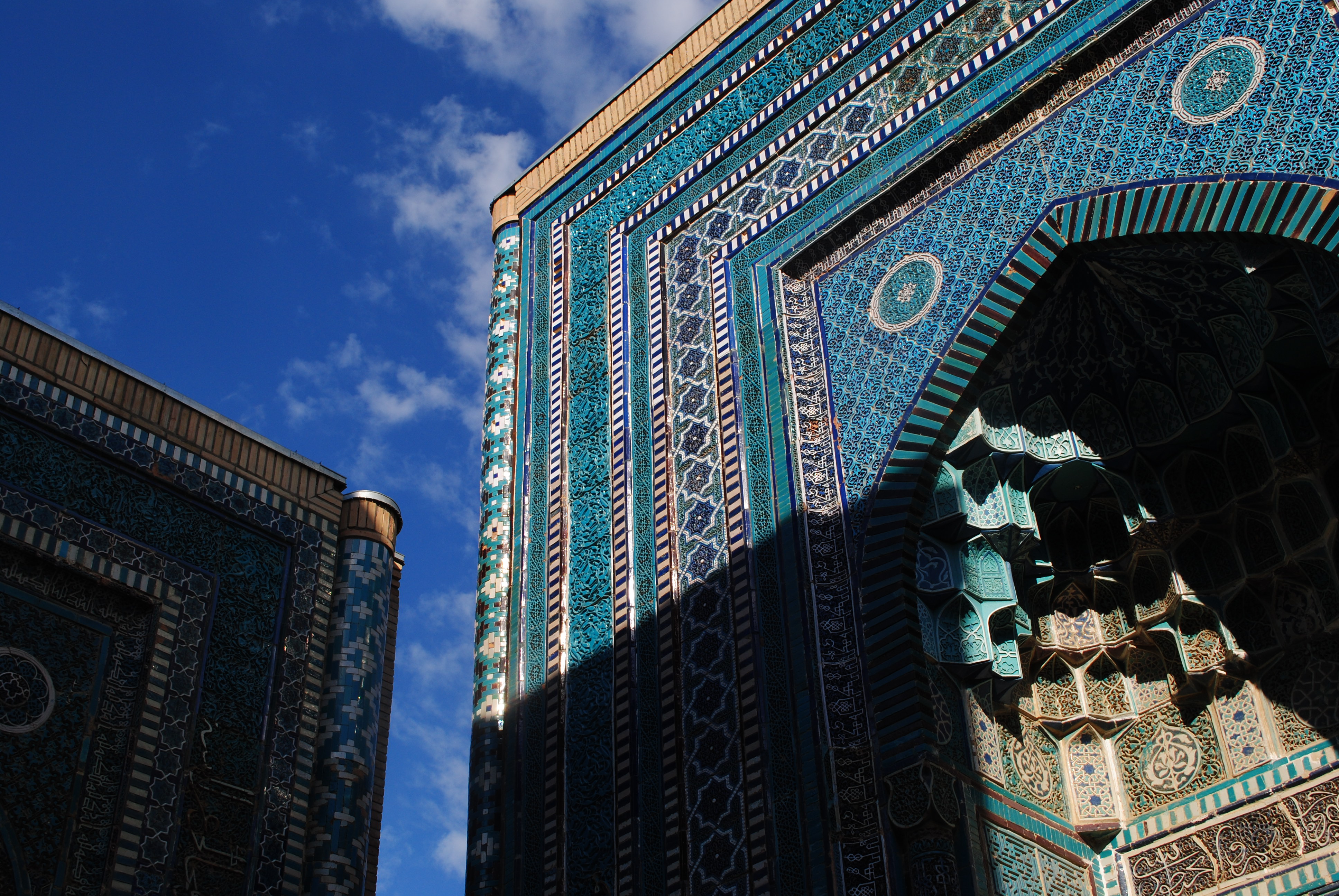
If I am not mistaken, the above is either a sixteen-sided tomb dedicated to Amir Burundek or the slightly later octagonal mausoleum built by Ulugh Bek.

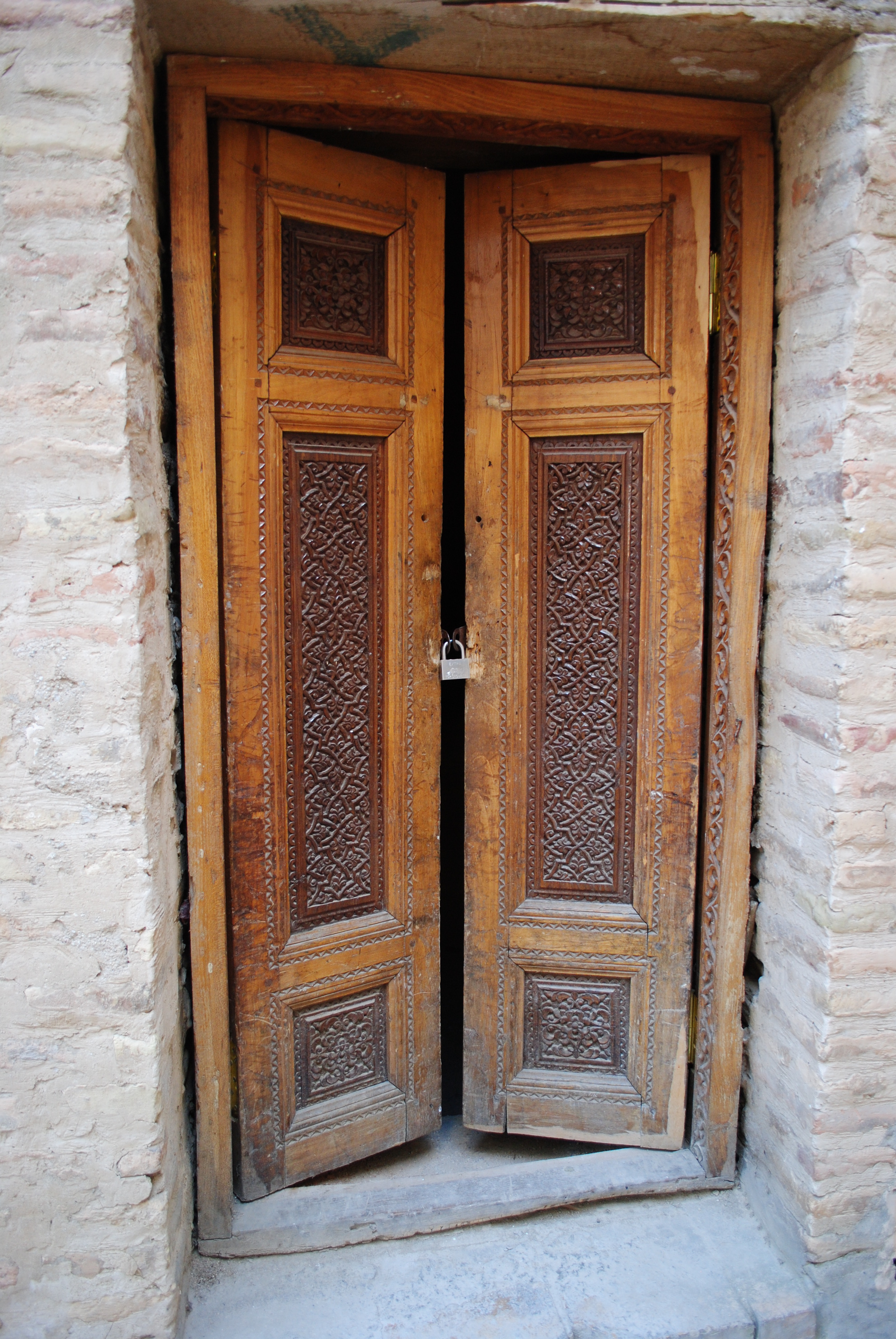
I am in love with the architecture and detail of the doors.
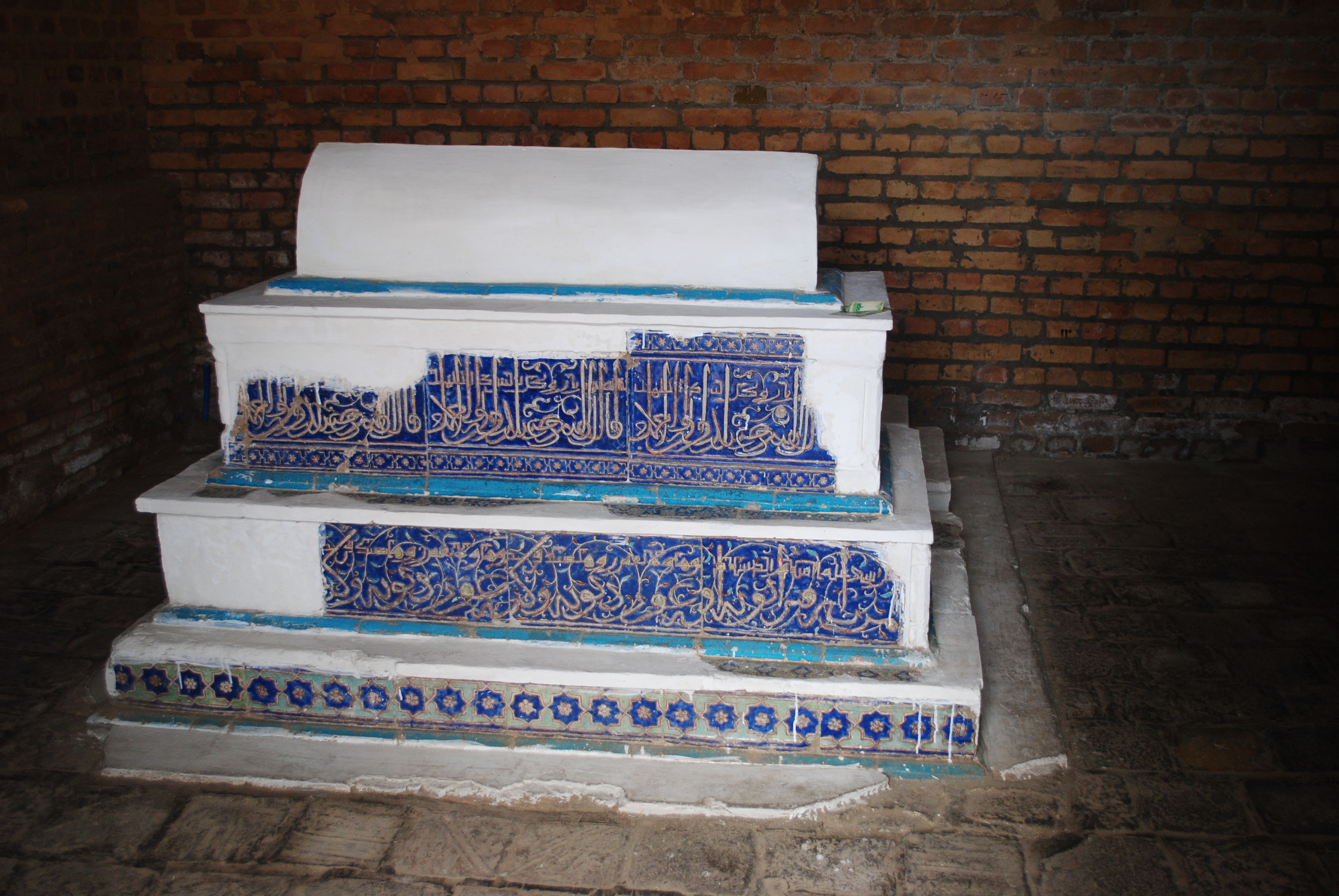
Example of what the inside of a tomb looks like.

My recollection is that many of the sapphire tombs are for Amir Temur’s female relatives. His niece Shadi Mulk (died in 1372), sister Shirin Bek Ata (died 1386) and (if I am not mistaken) a couple of his wives are all buried in the complex.

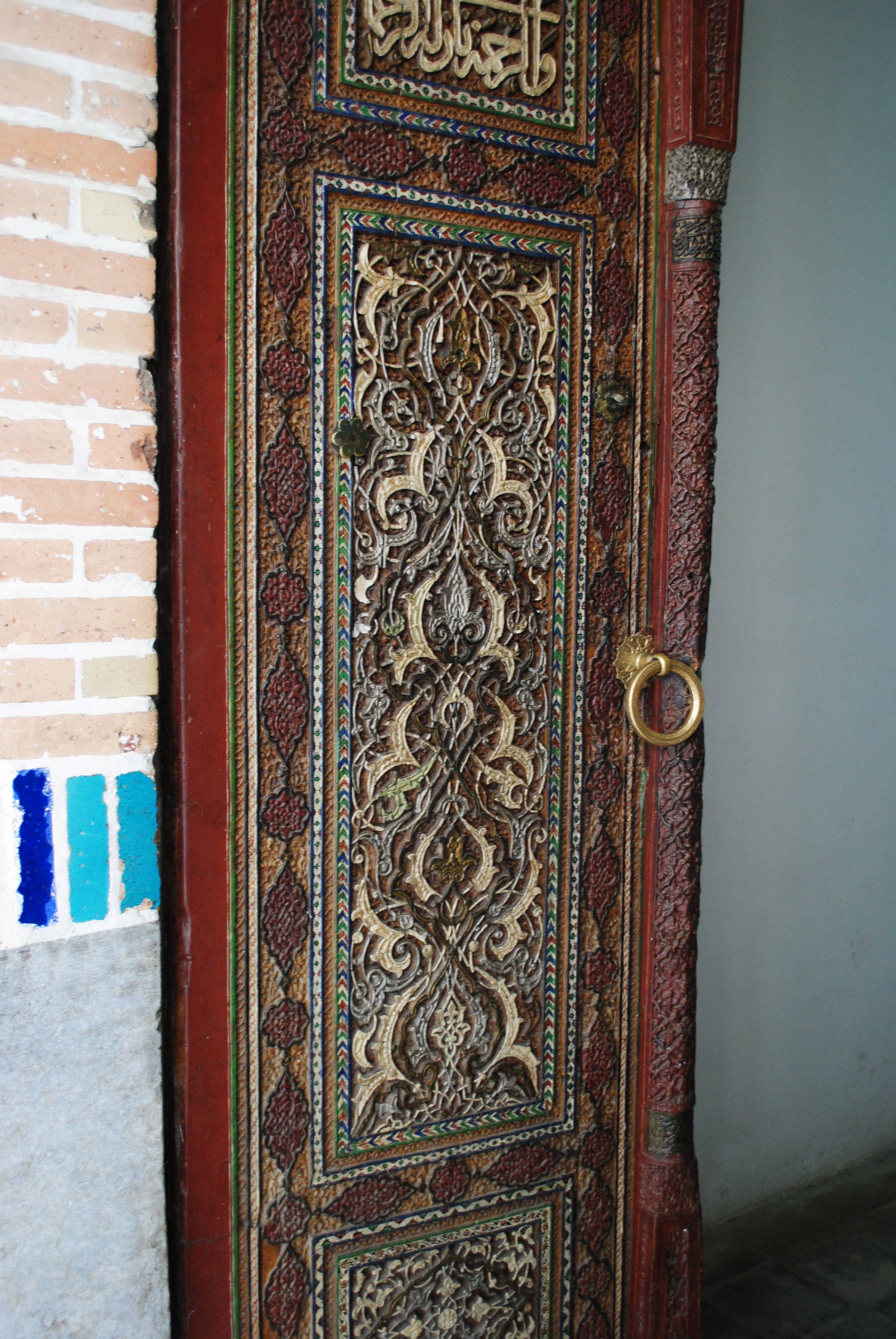
Another beautiful door, above.

Traditional funeral mosque, above.

After we left the complex, we visited a street in Samarkand called “Tashkent” known for its souvenirs. My husband bought a linen shirt, and we drank sodas from glass bottles, returning them to the counter before we left for reuse. Shopkeepers loitered near us as we browsed, anxious to sell me traditional Uzbek ceramics, tea sets, and even gigantic wedding dresses.
As we exited and strolled along the sidewalks on the last weekend of summer, a nearby elementary school released its students from school (apparently Uzbek children attend school on Saturdays). They ran through the streets in their little uniforms, giggling and eating snacks.
We returned with our group to the train station and departed for Tashkent. We were again facing backwards, so I strolled through all six cars looking for a forward-facing seat in which to sit. However, there wasn’t a single one available. One of my native Russian-speaking colleagues advocated for me to a couple of different ticket collectors, but they never asked anyone to switch with me. People who overheard stared blankly forward, not making eye contact with me.
I went and stood in the breezeway, and for some reason, my head cleared and the sensations of motion disappeared. An employee of the train passed me and asked me if I needed something. Not having the language skills to explain fully, I mimed, turning my back to him and saying, “I can’t go like this!” Then whirling forward, I said, “I need like this.” He said, “Ah, I understand,” and then promptly disappeared for the remainder of the trip.
I returned to my seat, somehow feeling better, ate my own snacks, donned headphones, and listened to news podcasts. I watched people outside picking cotton in the fields as the sun fled the sky. The remainder of the trip passed without incident. We slept like rocks that night upon returning home, and on Sunday did literally, absolutely nothing!
 Collecting Postcards
Looks like a great trip.
LikeLiked by 1 person
Hello! I’ve been following your blog for awhile now – thank you for your posts. I’m an FSO currently posted in the Dominican Republic and have a blog, too (vintagediplomat.blogspot.com). I hope you don’t mind – I’ve included your blog on mine as a “blog I follow.” Cheers, fellow officer!
LikeLiked by 1 person