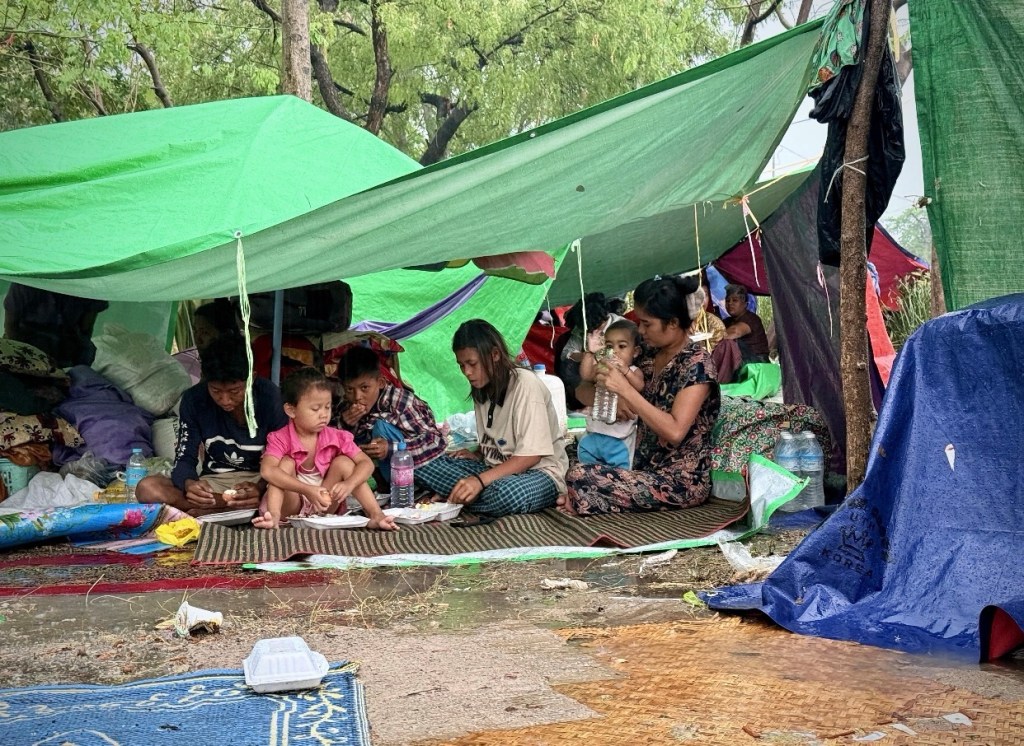
It was a year ago today (March 28) that a 7.7-magnitude earthquake struck Burma (Myanmar), leveling buildings, destroying infrastructure, and killing and displacing thousands.
A few hours later, on the other side of the world, March 28 dawned in northern Virginia. I arrived at FSI early in the morning before Burmese language class and sat down to do my homework. Checking the news for any Myanmar-related stories I could do a report on, I stumbled upon news of the disaster that had happened in Sagaing, near Mandalay, while I was sleeping.
Myanmar is one of the most seismically active countries in the world, its territory sitting atop the convergence of four different tectonic plates. Shifts of these same plates historically have caused massive events, including the 2004 tsunami in SE Asia and even the formation of the Himalayas.
A nearly 750-mile long fault line cuts through the middle of the country, and the 2025 earthquake happened near its heart: in Mandalay.
Earthquakes are not new for Burma. Major earthquakes around 7 on the Richter scale have previously hit various parts of the country in 1839, 1930, 1946 (twice), 1975, 2011, 2012, and 2016.
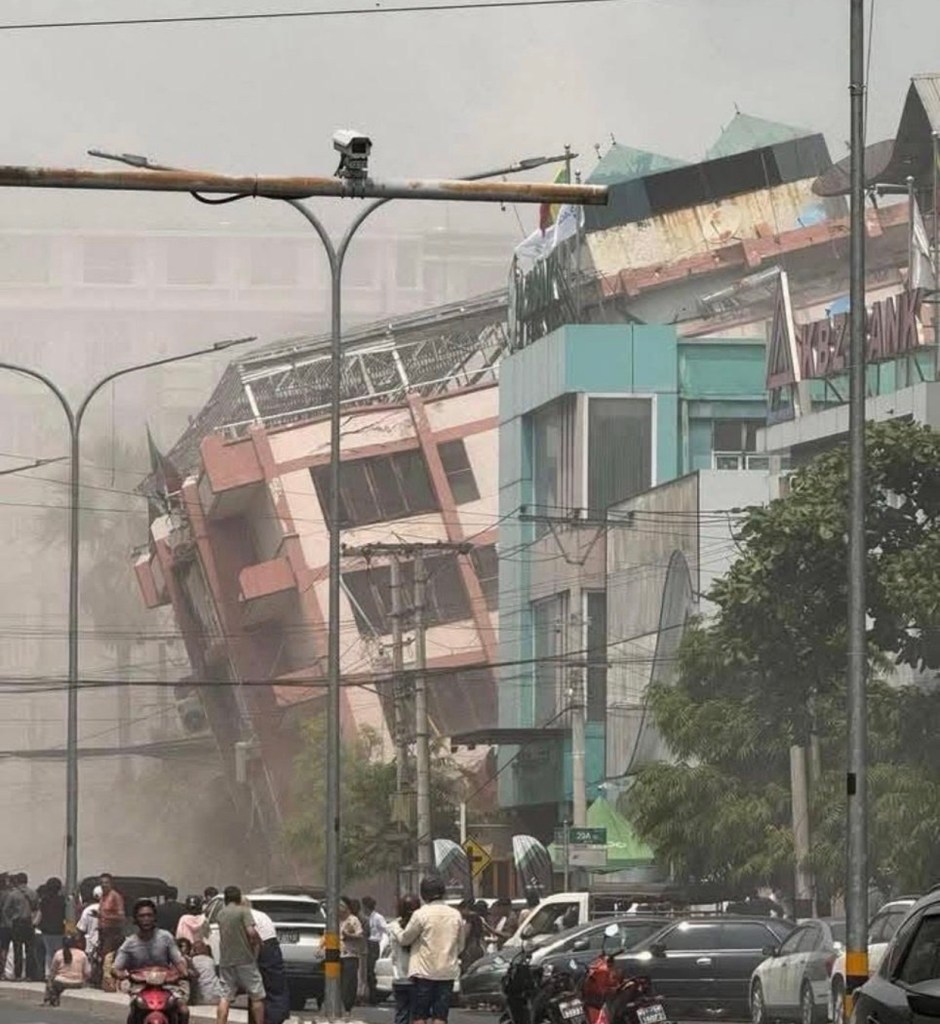
But this was the strongest earthquake in over a century here, and the worst in terms of combined scale and human impact. It struck the central part of Burma hard — populated, urban areas in particular.
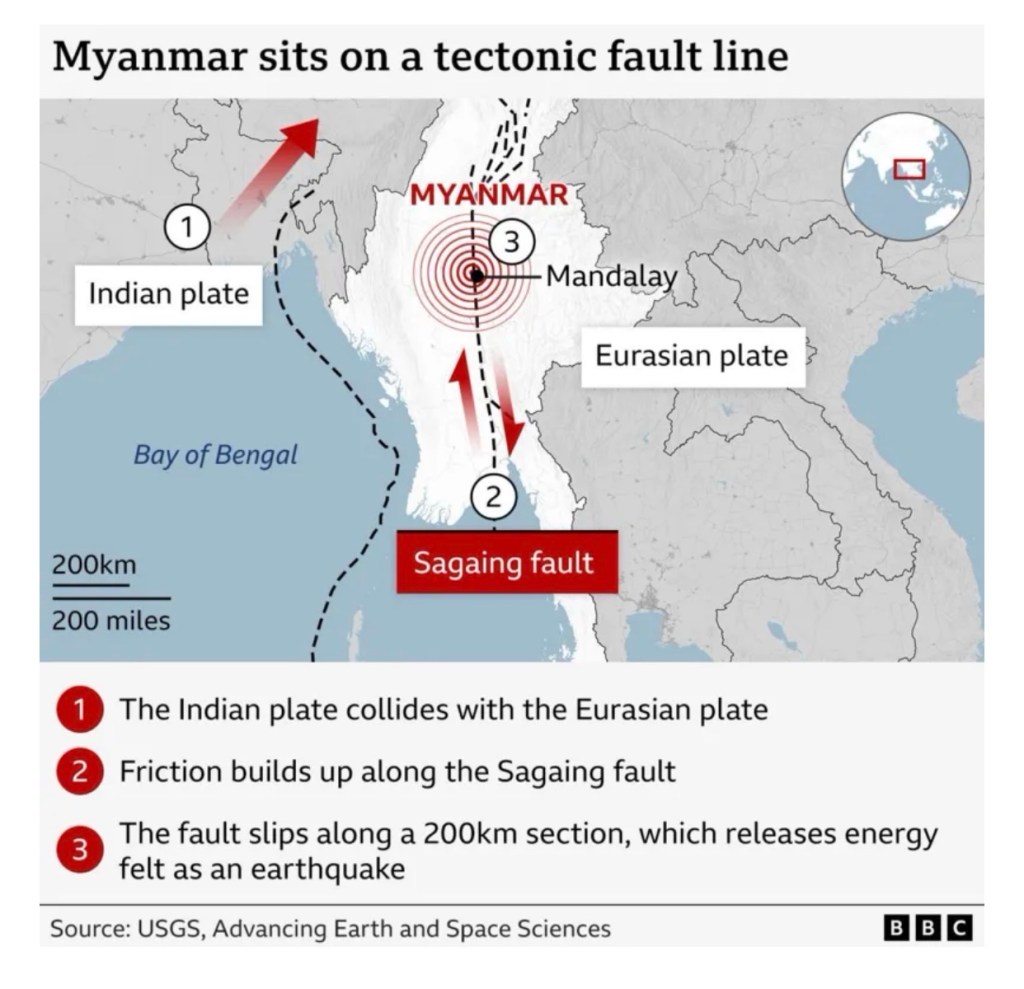
According to the BBC, earthquakes can be as deep as 435 miles below the earth’s surface. But this particular earthquake occurred less than seven miles from the surface; shallow earthquakes dramatically increase shaking and damage above the ground.
The earthquake was felt as far away as Thailand and China (including wiping out an unfinished skyscraper in Bangkok). It also released more energy than the atomic bomb the United States dropped on Hiroshima in 1945.
That was simply a force that buildings in Mandalay — many dating to the British colonial era — were unprepared to withstand. The Jefferson Center Mandalay (JCM) is a U.S.-supported cultural and educational space in central Mandalay that was also affected by the earthquake. JCM is a historic building but functions as a library and community hub, offering English-language resources, study-abroad advising, and public programs like talks, workshops, and youth engagement activities.
In a country that has experienced years of armed conflict and a military coup five years ago, news about the impact was slow to trickle out. Initial reports stating that only a couple hundred people had died seemed highly unlikely.
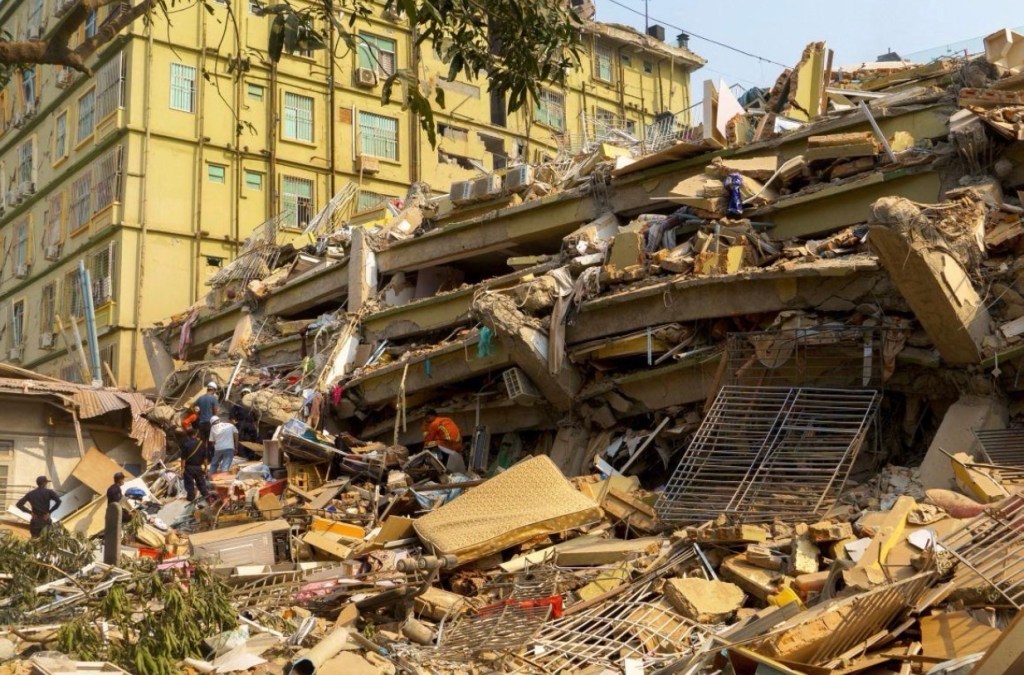
But within just a couple of days, the BBC was already reporting over 3,000 deaths and the displacement of tens of thousands more. I saw the stress and worry on my Burmese teachers’ faces, thinking of loved ones and fretting about international news reports outlining a lack of domestic response.
Of course, as consular officers, we worry about natural disasters too. In the immediate aftermath of such an event, we shift quickly into crisis response mode, focusing first on accounting for the safety of U.S. citizens in affected areas.
This includes sending out alerts, responding to welfare inquiries, and working with local authorities, hospitals, and partners — to the extent possible — to locate, assist, or evacuate Americans who may be injured, missing, or displaced. It also involves dealing with inquiries from U.S. citizens whose identification documents, money, and passports have just been lost or destroyed — along with their Burmese visas.
Crisis response is all the more challenging in a volatile, resource-constrained environment where we have limitations on where and how quickly we can travel. In such cases, the embassy is also concerned about ensuring the safety and operational continuity of embassy personnel and programs: Is anyone in the affected areas? If so, what is their status and what are our options for getting them to safety?
As a native Californian, I’ve been in more earthquakes than I care to recall. My dad’s house in the San Francisco Bay Area even sustained minor damage in the Loma Prieta earthquake of 1989.
This afternoon, the embassy took a moment of silence to remember earthquake victims, and reaffirm our shared commitment to the recovery of affected communities. It is truly heartbreaking how a year on, there is still so much suffering and grief for those already beset by poverty and uncertainty.
If you have 25 minutes to explore this further, I highly recommend the below Al Jazeera documentary, which did an excellent job capturing the scope and more context around the Mandalay earthquake than what I can provide here. I will caution you that it is a difficult watch, but a very important one.
 Collecting Postcards