I came home to Burma the Friday before Christmas and stepped back into my Rangoon life from the before times. Only I didn’t look the same on the outside, and I didn’t feel the same on the inside either. I had been medically evacuated and hospitalized in Thailand for over a month after being unexpectedly hit by a truck while crossing the street in front of my house. I’d broken my pelvis in three places, along with cracking two ribs, breaking a toe, and suffering a bilateral concussion and extensive road rash.
My traumatic injuries were still healing when I returned, and I was only 50% weight-bearing on my left side. Returning to my house and my work, nothing fit quite the same—it was like trying on someone else’s clothes. I had to contend with other people’s reactions to my visible injuries and the shock of what had happened to me, while sorting out my own feelings and struggling with my new limitations in real time. And as I settled back into post and the external cuts, wounds, and bruises slowly began to fade, I heard one thing over and over again: “I’m so glad you’re OK.”
Within a few days of my return home from Bangkok, V also returned from visiting his mother in Macedonia. Much to his dismay, I had spent that time alone in our house, learning—through trial and error—how to navigate the stairs on my crutches, how to carry a tumbler of water (or wine!) from one room to another in a tote bag while using my walker, and how, painstakingly, to bring laundry downstairs in a backpack. I soldiered on stoically through each challenge, determined to gut it out and telling myself it would be temporary.
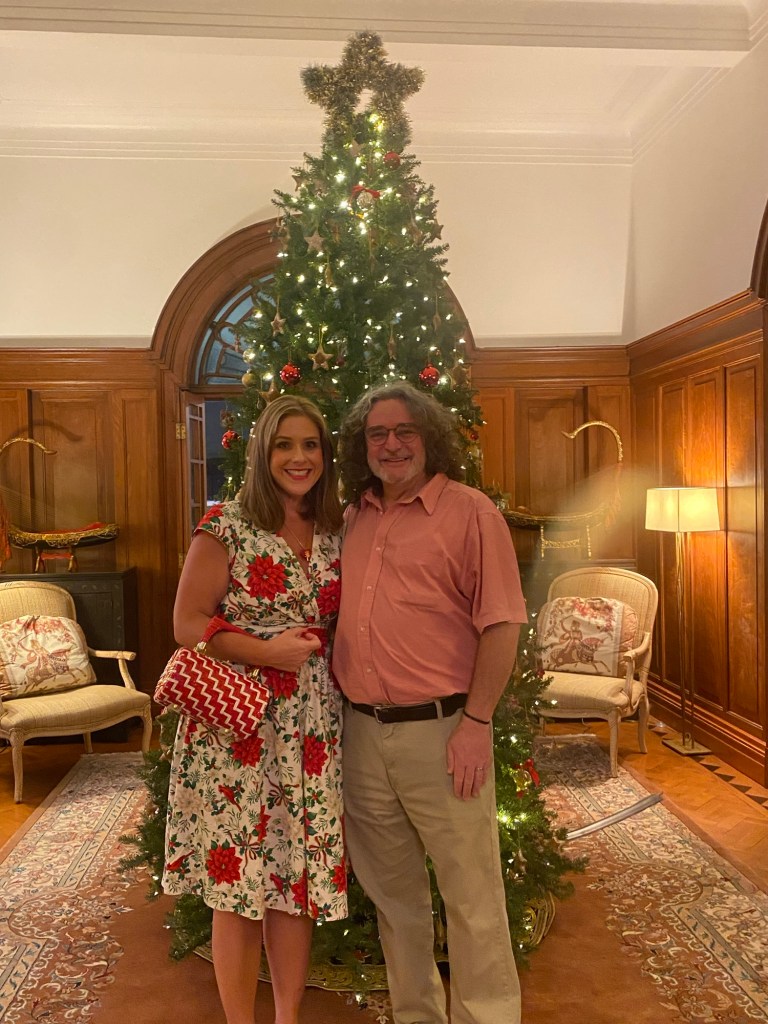
To be fair, I had received many offers of help from colleagues and friends. I was glad two friends were at the house the afternoon I arrived home to help me settle back in. Walking back upstairs again and seeing my bedroom for the first time since the night of the accident — when I’d dashed back upstairs to spritz on perfume right before leaving the house, unknowingly putting myself on a crash-course trajectory with the truck — was as emotional as I’d expected.
But one thing this accident and the resulting loss of mobility has taught me is how stubbornly I resist asking people to do things for me. Sometimes I need things but am simply too mortified by the inability to take care of it myself, or don’t know what to ask for. Other times people try to help in ways I don’t need. The communication piece is mostly my responsibility, but it isn’t easy when my default has always been, “I’ll take care of it.”
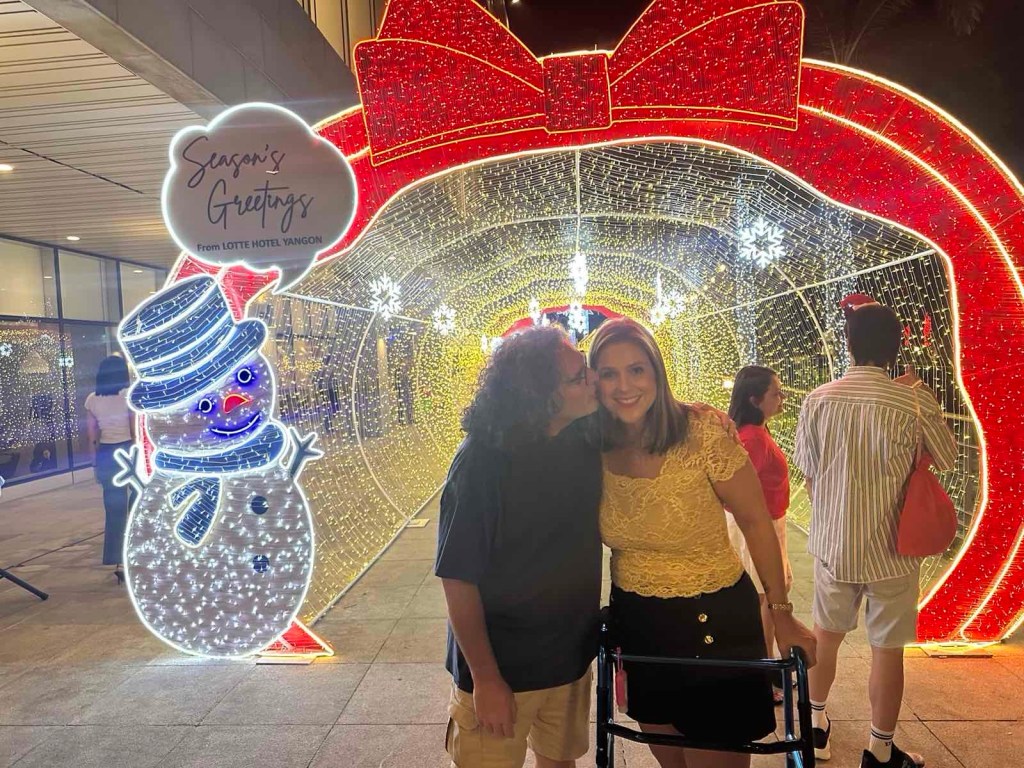
Even so, I tried not to avoid social situations once I got back to post. On the one hand, I didn’t have a lot of energy or emotional bandwidth for others. On the other hand, I had an overwhelming sense that I didn’t want the accident to take anything more from me. I’d already missed Thanksgiving, our section’s holiday party, the embassy award ceremony (where I was supposed to have been presented with my 20-year length of service award), a work trip to Mandalay, and countless other opportunities.
Although part of me dreaded seeing everyone again for the first time post-accident, I decided to rip off the band-aid as quickly as possible. The first weekend I was back, I attended a holiday brunch at our neighbor’s house. I was surprised by the incredible kindness I received and the way people looked past my injuries and still saw me. I went on to accept every invitation I received between Christmas and New Year’s, including two on Christmas Day and a New Year’s Eve party at our chief of mission’s residence.
I was in my “saying yes” and reclaiming my life era. And it was somewhat comforting to tell my accident story from my own perspective, and talk through the details of what happened with people I liked and trusted. Some people incorrectly thought I’d been run over. Others incorrectly thought I’d had surgery. Still others hadn’t heard about my broken bones.
It was not important that everyone know everything, or even necessary. But I viewed talking about my accident as a public service announcement about pedestrian and traffic safety in Rangoon. I wanted to raise awareness about street crossings and help prevent this kind of accident from happening to any of my colleagues.

Despite being out there, I was easily exhausted by routine activities. We live in a house built in 1945, with lots of stairs, in a country with limited trauma care and very few wheelchair-accessible public spaces. I also returned to work on day one to cover my boss’s well-deserved holiday leave. The exhaustion was real, but largely invisible. I felt a physiological response every time I saw the type of truck that hit me; unfortunately, such trucks seem to be every fifth vehicle in Burma.
During the initial few weeks I was back, it took me almost 15 minutes to do tasks that used to take two minutes. I was still months away from making a full recovery, and weeks to months away from leaving my wheelchair and walker behind for good. It is also possible that I will have ongoing chronic pain as a result of someone else’s decision to drive on the wrong side of the road. Additionally, my family was still dealing with the trauma of not knowing early on how severe my injuries were and what the long-term impact would be. The people who said I would be better in a month or two did not have to live in my body.
Inevitably, people expressed surprise that I was already walking around with my walker six weeks post-accident. Naturally, people congratulated me on my quick recovery. They would tell me how lucky I was, and how good it was to see me up and around and doing better.
I appreciated these sentiments and knew they were kindly and well-intended. It’s true that I was very fortunate not to be catastrophically hurt or even killed by this incident. I’m lucky the driver who hit me braked and didn’t run over me, or try to flee. I’m lucky I wasn’t hit by oncoming traffic as I lay unconscious in the street. It’s true that I have seen the progress week by week as I consistently get stronger.
And what are people supposed to say? Of course they’re glad it wasn’t worse. Of course seeing me up and walking is an improvement over being immobilized in a foreign hospital.
But it also feels important to say that I was injured because I was the victim of someone else’s criminally reckless driving—speeding and driving on the wrong side of the road—not because I was irresponsible, inebriated, or lacking situational awareness. I have been furious about what happened to me: about what I lost, and about the pain I continue to endure. To be clear, there was absolutely nothing OK about what happened to me, and the road ahead to recover physically, mentally, financially, and administratively will be long and burdensome—for me.
I wanted people to understand that photos of me trying to get back to normal on social media, or of me standing at a party without my walker, or laying in the sun at the pool, did not mean that everything was fine or that I had fully recovered. Taking a few steps without my walker did not mean I did not “really need” the walker anymore.
And I wasn’t making progress because the accident wasn’t serious—quite the opposite. Any progress I made was a testament to my fitness, strength, and determination to heal, not a revision of how severe the accident truly was.
It was my choice to serve in Burma, and I came with my eyes open. I also came in good physical condition ready to work and had not chosen to be there injured and vulnerable. Every time I got in a taxi the lack of seatbelts and feeling like I was in a real-life video game made me fear getting hurt again, or seeing someone else hurt.
I feel fortunate and most of the time I am in a positive and cheerful place as usual. And I truly appreciate all the love, support, and well wishes from everyone. It is especially great when someone holds space for my anger, realizes I won’t be at full strength for a while, and says this should NOT have happened.
 Collecting Postcards
This was a really insightful post for those of us who mainly only see what you choose to share. As you documented your time in the hospital, I literally thought – this kind of recovery wouldn’t be possible for everyone because not everyone has your willpower and grit! That’s all on you (and your wonderful hospital staff) for the speed of your recovery, even if the road ahead is long.
LikeLiked by 1 person