
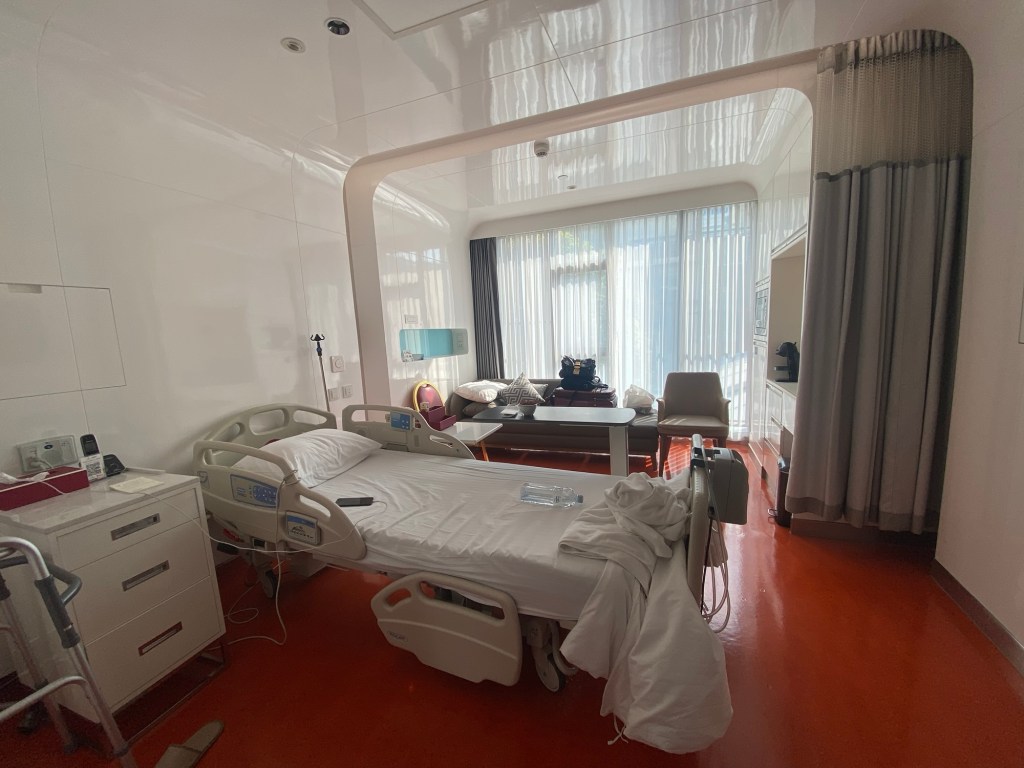
Four and a half weeks after my accident, I was discharged from the hospital. That was one week ago. After being released, I spent a couple nights in Bangkok on my own, flew back to Burma, and returned to work.
In the days leading up to my release from the hospital, I felt a shift. The monotony of being mostly stuck in bed began to ease as I started minimal weight-bearing on my left leg. I got up to make my own coffee—even though I technically was supposed to hit the call button for anything I needed. I turned off the alarm the nurses had set on my bed and went in and out of the bathroom without telling them. I still had to use my walker to take even a single, halting step. But I could do it. In short, I was starting to see a light at the end of the tunnel, and the level of care began to feel like more than I needed.
The American medevac doctor from Embassy Bangkok and I discussed the conservative posture the Thai hospital had adopted towards my recovery, and I started to realize that although I was seriously hurt, I could do more then they expected. I was ready to move forward.
After four weeks of asking to be taken in my wheelchair to one of the hospital’s inner courtyards—spaces filled with plants and flowers—a nurse finally arranged for a porter to wheel me outside. Instead of a courtyard, I was taken to the smoking area in the busy valet zone at the international hospital wing’s front driveway.
It was a little terrifying—and not at all trauma-informed—to be parked three feet from a constant stream of trucks, cars, and shuttles whizzing past. I turned my chair away from the traffic and wiggled my slipper-clad toes in the sun for nearly an hour before having to flag down someone to come and get me.
The apparent disconnect among hospital staff about the relationship between exposure to nature and accelerated healing, as well as mental well-being, struck me as particularly strange. They wouldn’t park me in a shady courtyard—because I couldn’t be left there alone to read a book?!—but this roadside location was somehow acceptable. It was one of many cross-cultural and language mysteries I encountered in an otherwise very caring and professional environment.
I knew my discharge date a couple of days in advance. I finally was able to make a hair appointment. I let my family know, since I’d been in the hospital alone for all but the first two days. I hadn’t wanted my parents to travel all the way to Thailand just to sit in a room and do nothing, and my husband had his own family medical emergency to attend to and had left for Macedonia for a month early in my recovery.
I worked with the medevac doctor to restore my medical clearance so I could return to post, and many emails went back and forth to arrange my travel. When I learned that I wouldn’t be eligible for business-class travel at U.S. government expense—apparently, if you can’t return to post sitting in economy with three broken pelvic bones, you shouldn’t return at all—I paid out of pocket to upgrade myself.
The day of my release dragged on into the afternoon. I had packed myself up the night before, an excruciatingly slow process—I could barely hold onto one thing at a time while needing my hands for balance as I took each step with my walker.
The embassy had arranged for me to spend two nights in a nearby hotel so I could begin identifying the challenges I would face managing my needs at home. I would participate in the hospital’s outpatient physical therapy program, with the hospital arranging transportation to and from my sessions.
The hospital made me wait until 3:00 p.m. because that was the hotel’s check-in time. Nearly 15 minutes after I was supposed to have left, I was still in my room. A nurse had brought me my discharge medication, but I was still waiting to sign the invoice and receive all my medical records and discharge instructions.
After a month of advocating for myself on a wide variety of issues, often with frustration and uneven success, my impatience finally got the better of me. I walked to the nurses’ station with my walker. I had already learned that if I needed something, I’d have to politely ask and push several times.
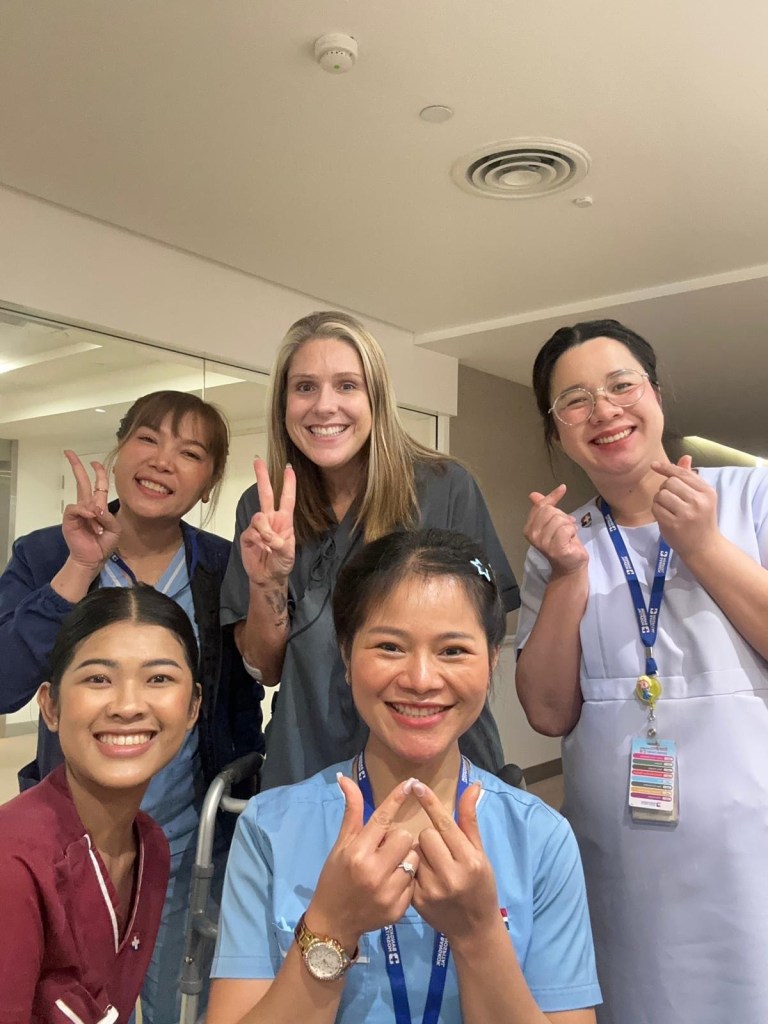
A smiling nurse asked if I was ready to go. Hello?! They reviewed the discharge paperwork with me, and before I knew it I was being wheeled into the elevator by one porter, my purse and laptop in my lap, while another followed behind with my suitcase, walker, and crutches piled onto a bellhop-style cart.
Arriving at the hotel was my first foray into the real world with a visible (albeit temporary) disability. Although I’ve dealt with invisible disability for years and am well aware of the ableist world we live in, even I don’t often notice the subtle ways our everyday lives would be impossible to navigate for someone who doesn’t move through the world on two legs. I spent a lot of time waiting: waiting for someone to push me in my wheelchair, waiting for someone to bring my baggage. I also noticed that when you’re in a wheelchair, you tend to be treated more like baggage to cart around than a sentient person with preferences and questions.
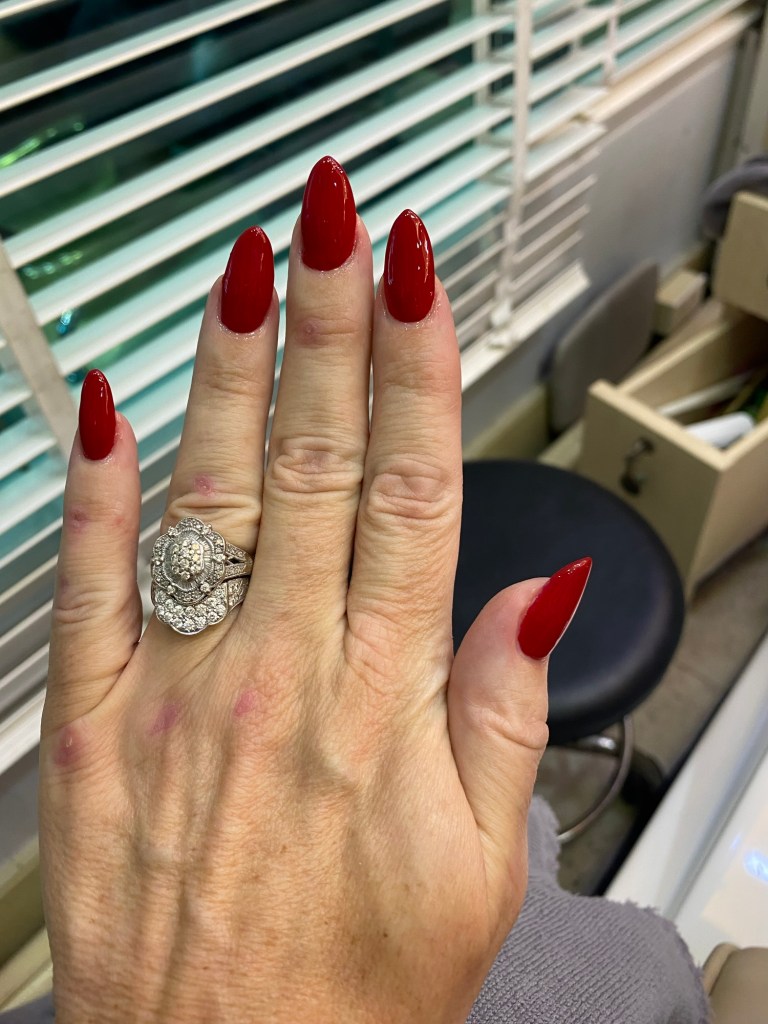
But I also became better at sticking up for myself and asking for help when I needed it. I struggled with an inaccessible bathroom, so I requested a room change. I couldn’t get breakfast at the buffet, so I pointed out what I wanted, and a helpful hotel employee brought it to me. Three different security guards helped me cross the street in front of the hotel with my walker so I could get my nails and a pedicure done at a real salon for the first time in almost eight weeks.
In a couple of days, the hospital would collect me from the hotel and escort me to the airport, where I would have door-to-door wheelchair service to return home. I had made it out of the hospital, and was finally —somewhat— on my own.
 Collecting Postcards
1 comment for “Release”