In this assignment —my fifth— I find myself surrounded by so many diamonds that it can be hard to spot the rough beneath them. Yet the rough is always there, sometimes hitting harder than expected—especially when you’ve been focused on the sparkle.
The diamonds… so far
An assignment in Rangoon (sometimes also called Yangon) is a true hidden gem. Despite the civil war and the challenges of serving here, I feel so, so lucky to have snagged this assignment.
Everyone says the same things about the countries where they serve. What a beautiful country. The shopping is amazing. The local staff are great. The cost of living is excellent. The regional travel opportunities are exciting. The people are so nice.
And I’m sure they mean it all. But unless they’ve served in Burma, I’d put my experience here thus far up against anyone else’s in the Foreign Service. Because the people are so nice, on a different level than I’ve seen anywhere. There is a genuine, sincere kindness that almost feels ethereal in its humility emanating towards me from complete strangers in the street. I don’t know if it comes from Buddhism, but I suspect that’s part of it.
And that doesn’t even begin to describe the community feeling at the embassy itself. We have a great team in the consular section where I work. I genuinely like and get along with all my colleagues. So many people have gone out of their way to make us feel welcome and to help us settle in. And when you walk into the cafeteria, it feels like everyone is one big welcoming group vs. a series of cliques you need to navigate.
The cost of living here is wonderful. We can afford a part-time housekeeper, shopping for imported American items at the commissary, and eating out often. We can also save money while still splurging on treats like pedicures and massages – particularly when they’re top-notch and only cost around $20 USD.
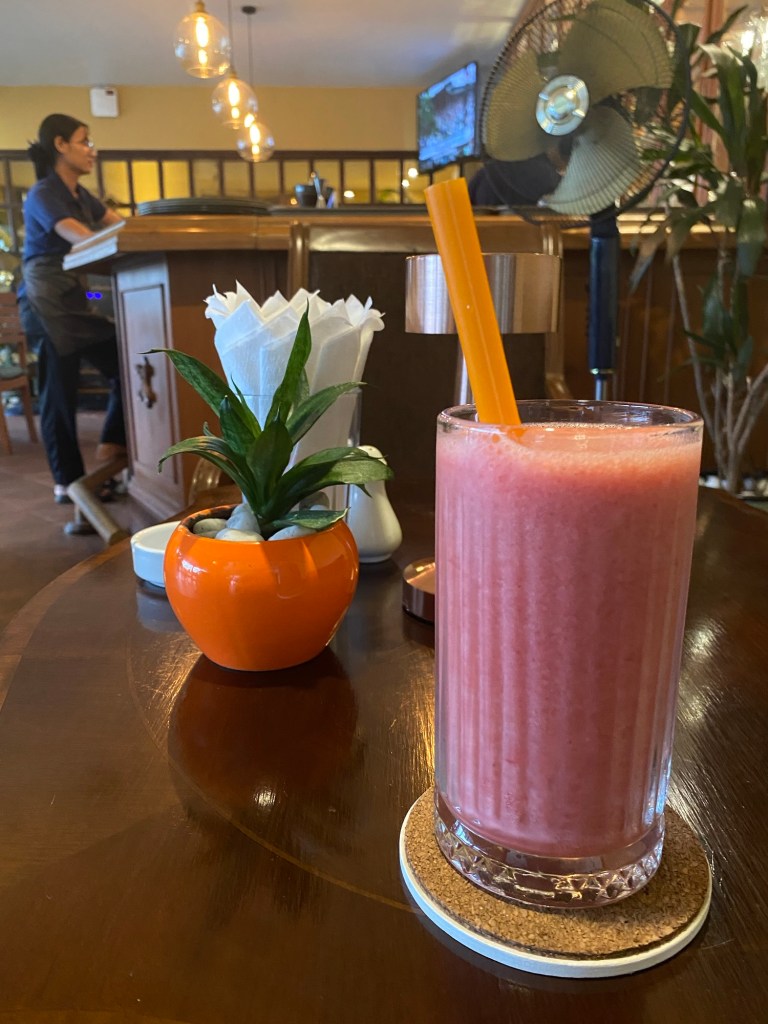
I have found myself delighted by so much in Burma. The ease of getting a Grab (Burmese Uber) for only a few bucks to go all over town. Endless new restaurants to try. A couple of different pools to help us beat the humidity and heat of monsoon season, and at least two gyms we can access to maintain our fitness levels.
The country straddles the Tropic of Cancer and its tropical foliage is lush and dense. Frangipani, orchids, plumeria, and bougainvillea are common sights, along with teak trees and bamboo. Hibiscus, coconut palms, and mango trees are also plentiful, all while golden pagodas peek out of the jungly treeline. Visually, it’s just an absolutely beautiful place. Bananas are my favorite fruit, and I was amazed to see a banana tree loaded down with fruit in my own front yard.
And speaking of our yard, we hardly need a sprawling, 4,000 square foot house for just the two of us. However, the embassy has owned it for almost 80 years. Someone needs to occupy it and look after its upkeep, so why not us?

The rough…
If you’re waiting for the big “but,” there really isn’t one. But of course, every place has its challenges.
My mosquito bite woes, for example, are real. I probably have two dozen active bites on my legs right now, some weeping, despite the significant efforts I’ve made to avoid being bit. I carry insect repellent like some people carry their keys. Not only are the bites aggravating, but they carry real health risk. Mosquitoes here can transmit Japanese encephalitis, dengue, and chikungunya— all nasty illnesses I don’t want to contract.
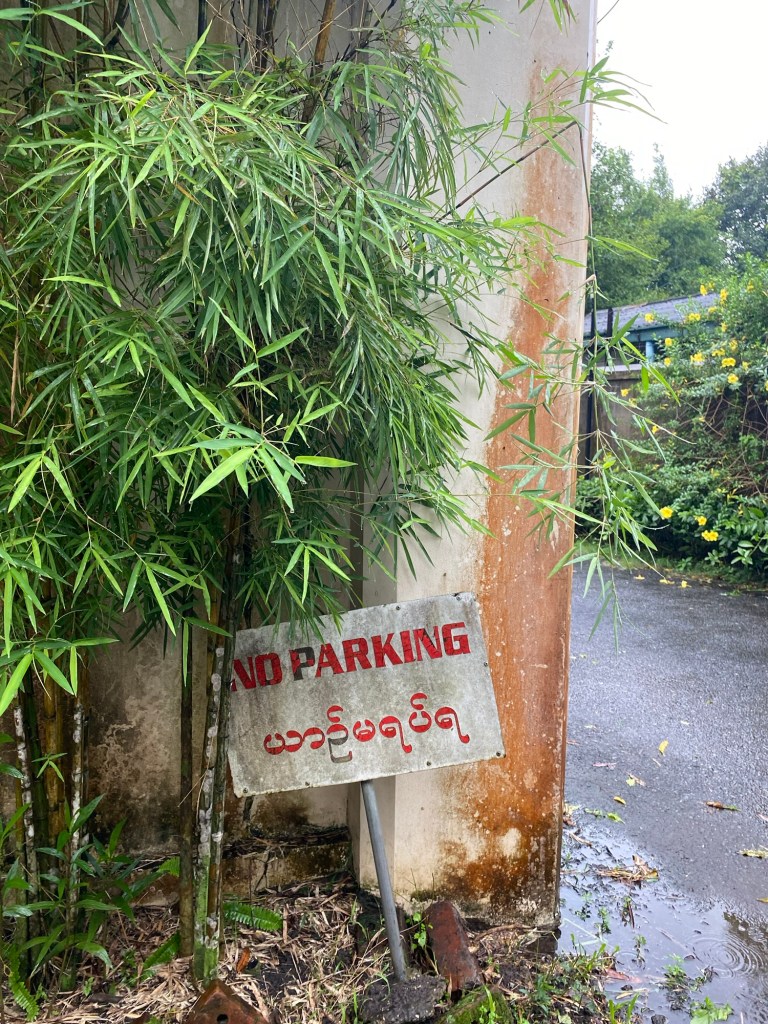
In addition, Rangoon sidewalks in rainy season are terrifyingly slick. The algae and mold build up during the months of downpours and can be as invisible —and treacherous— as black ice on a northern California highway. One of my colleagues fell and broke their wrist earlier this year, necessitating an unplanned medevac to Bangkok for surgery.
Every morning when I step out of the house to walk to work, I feel extra dread if it’s raining — not because I’m going to get wet, but because every step will be a calculation and half the time I’m holding my breath. A couple of weekends ago I was heading to the embassy gym. The guard opened the sliding gate in our driveway and I walked right through it and promptly slipped and fell right on my tailbone. Fortunately, I was OK; I didn’t even skip my workout. But I was shaken, and I asked the embassy to come power-wash the area until we can hire a gardener.
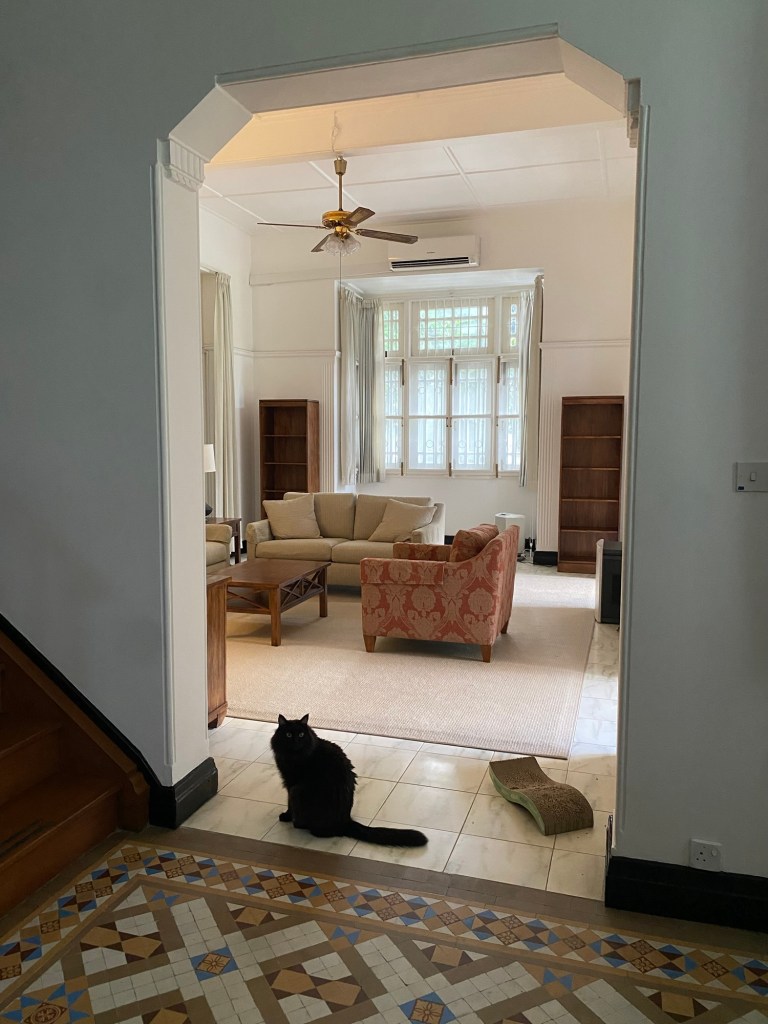
You also have to watch your step indoors. Since we moved into the house, we’ve encountered several geckos, two large cockroaches, a variety of flying bugs, and of course, ants. We also had a dehumidifier leak because the drainage pipe wasn’t properly aligned, but we didn’t notice until the water leaked from the second floor to the first. Just this week, V happened to pass by the fuse box at the exact moment he smelled burning wires—likely preventing a fire.
Despite all of the overtures made by embassy colleagues to help us settle in quickly, we’ve had our small share of bumps in the road. We didn’t receive the welcome handbook until we’d been here nearly seven weeks, and thus had no idea how trash collection worked, what the deal was with the unplugged landline in our house, or how to manage a wide variety of administrative and logistical aspects of settling in.
We didn’t have internet for the first couple of days in our house because someone unplugged our router during the make-ready. After resolving it, we later had a four-day outage—right in the middle of V’s overnight work “day”—to realize the embassy doesn’t provide any internet support for those of us in the standalone houses. My colleagues in the serviced apartments get free internet included in their tenancy and there is someone on-site to help when it goes out.
On the other hand, we not only pay out of pocket but it’s our problem when it stops working. At about $100 a year, the cost isn’t significant, but troubleshooting all the technical problems has been a time-consuming and tedious chore. It’s 2025, and being online is essential to both our work and our daily lives. Between the language barrier and the fact that our internet cable is literally strung down the street and looped a couple dozen times around a tree branch, what could possibly go wrong?
This week I overheard a colleague lament that so many people here speak English, leaving him with few chances to use the Burmese he worked so hard to learn. It struck me that he—like I— is a Returned Peace Corps Volunteer, now grappling with the contrast between serving as a PCV and serving as a diplomat.
As a Volunteer, one integrates fully into the community, with personal well-being more intertwined with that of the locals; as a diplomat, one is always, to some extent, both inside and outside—interpreting the local environment and steering a path through it, yet also living within a bubble. So when something temporarily pierces the bubble, I remind myself that we’ve still got it really good here.
 Collecting Postcards