
Shortly before we arrived in Rangoon, we were a little disappointed to learn we would be in temporary housing for approximately four to six weeks. Although we had known for a long time that the housing board had assigned us a house near the embassy, our short-term home would be an apartment.
Our disappointment stemmed mainly from wanting to settle into this tour as quickly as possible — a feeling tied to the idea of setting up our own home. We had not expected such a lengthy make-ready of our house; the previous occupant departed over three weeks before we arrived. Yet, this isn’t totally uncommon during the busy PCS season when the embassy has many officers moving in and out simultaneously.
Since this is the first time we’ve done a one-year tour, each week represents a surprising 1.92% of our total time in Burma. Spending up to one-tenth of such a short assignment in temporary housing felt less than ideal. But as it turns out, the experience has had its benefits as well.
Pros of temporary housing
- Housekeeping. Our temporary apartment is like a hotel with daily housekeeping service (we’ve limited housekeeping to twice weekly to minimize stress to our cat).
- Amenities and convenience. The building also offers a concierge, a gym with a dry sauna, massage services, two attached restaurants, a convenience store, and an outdoor pool. We won’t have any of these amenities once we move into our permanent housing, so we’re making the most of them while we can. They’ve provided an unexpectedly soft landing—especially in the beginning, when we didn’t yet have Burmese SIM cards and getting around was more challenging.
- Transportation. The embassy provides a shuttle service between the local apartment buildings where officers live and the chancery before and after work. New arrivals can use it free for their first two weeks; afterward, it operates on a prepaid ticket system costing less than $20 USD per week. This means that if you live in an apartment, your daily commute between home and work is simple and hassle-free. If you need more flexibility in your comings and goings than the shuttle schedule offers, you can use Grab (very similar to Uber) on your own for the cost of a dollar or two.
- Generator. Despite the city experiencing multiple power outages each day, the apartment building’s generator switches on within 10–15 seconds of the apartment going dark. If the dishwasher or washing machine happen to be running, they need to be restarted—but that’s a minor inconvenience compared with the reality many others face: being left completely without power during a blackout. Speaking of dishwashers, our temporary apartment has one, but our permanent housing will not, so we’re appreciating it while we can.
- Procrastination? I guess this is a pro or a con, depending on your perspective — but being in temporary housing delayed some decisions until we could get our bearings. For example, how to continue the in-progress internet service at our house, and whether we would employ a housekeeper, helper, or gardener were not day one problems when we arrived after 27+ hours of travel. Those are things we haven’t had to deal with as long as the house was still an abstraction. The flip side is that there are still basic things we haven’t ripped the band-aid off of yet, so to speak.
Cons of temporary housing
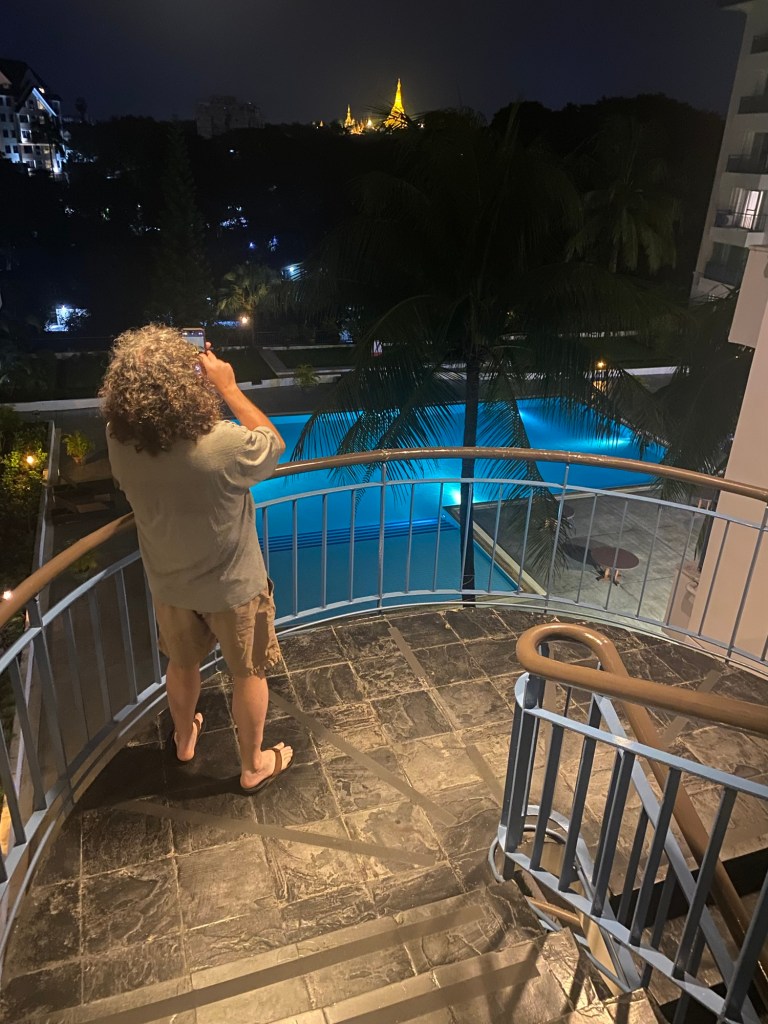
- Noise and sleep disruptions. There are certainly strong arguments in favor of community apartment living. That said, I’m a homebody who values my quiet time. I haven’t particularly enjoyed the construction in neighboring units, the shrieks of children in the pool, or the late-night gatherings in the café beneath our balcony. To be fair, the noise hasn’t been constant or overwhelming—but it’s still a reminder of how close other people’s lives are to yours. Every thump from my upstairs neighbor’s footsteps, or the scrape of a chair being dragged across the floor at odd hours, drives the point home and makes me excited to be in a stand-alone house again. Between 3:00 and 5:00 a.m. recently, for example, I was repeatedly awakened — first by a pack of howling stray dogs that was actually a bit frightening, then by pounding upstairs that sounded like someone doing Jazzercise on the balls of their feet, then by chair-scraping and dish-clanging sounds from down the hall, and finally by a loudass rooster crowing next to our building. At that point, I gave up on sleeping and went down to the pool (back to the pros list!). And to be fair, some of these noises can happen if you’re in a house too, where you may also experience more street noise.
- Smaller space and no welcome kit for a month. The temporary apartments are different than the permanent apartments to which officers are assigned, even within the same building. The permanent apartments are appointed with a welcome kit, a water distiller, nicer furniture, and they have more rooms. Our apartment is fine for a short stay, but is a little spartan for longer-term living. We wouldn’t be able to entertain in it; there’s essentially very little furniture other than two beds with nightstands, two desks, a kitchen table for four, and one couch. The kitchen is small and lacks a pantry. The typical bookshelves, armchairs, and storage space found in standard embassy housing aren’t found here. We were only assigned a couple of plates, two cups, two bowls, one pot and one pan, and limited silverware. There were no kitchen towels, so V bought two from the grocery store. There is a kettle and a rice cooker… but no coffee maker. In addition, the closets are small, with only a couple of clothes hangers each, and drawer space is limited. I have piled all my tops and dresses onto the closet’s lower bar and must iron daily. I wouldn’t have a clue where to put away UAB had it arrived, let alone all the things coming in our HHE shipment. But the apartment is clean, and safe, and it’s ours for now, so that’s something.
- Energy is finite. Settling in more than once can be draining. Having to spend energy figuring out systems and routines that will only matter for a short period of time is frustrating and can pull focus away from longer-term goals. For example: learning the temporary building’s processes with its staff, troubleshooting Wi-Fi issues, figuring out where to take out the trash and where to get drinking water (since even brushing your teeth with tap water isn’t recommended here), operating unfamiliar appliances, realizing the cat food attracts ants, trying—and failing—to make outbound calls (but still getting charged for them), or figuring out what’s nearby and whether recycling exists at all. Soon enough, all of this will be scrapped and we’ll have to start over. The problem isn’t so much the actual inconveniences of the place itself, but the disproportionate effort required to settle in—especially knowing we’ll move again before we’ve had much chance to enjoy the results.
- Delayed settling in. And perhaps the biggest drawback is the delay in truly being able to call a place home. Once we finally move into our house, we’ll still face plenty of setup work—but with one month less to enjoy the results. It’s already been nearly three weeks since we found a nursery we’d like to buy plants from, yet we’ve held off, not wanting to haul them up to a fourth-floor apartment only to move them all over again. These may sound like petty complaints—and perhaps they are, on balance—but they point to something deeper: the need to address basic comforts for yourself and your family before you can focus on the things higher up Maslow’s hierarchy. In practical terms though, unfortunately, there often isn’t much time or mental space to deal with these basics when they collide with the demands of starting a busy new job and tackling its steep learning curve.
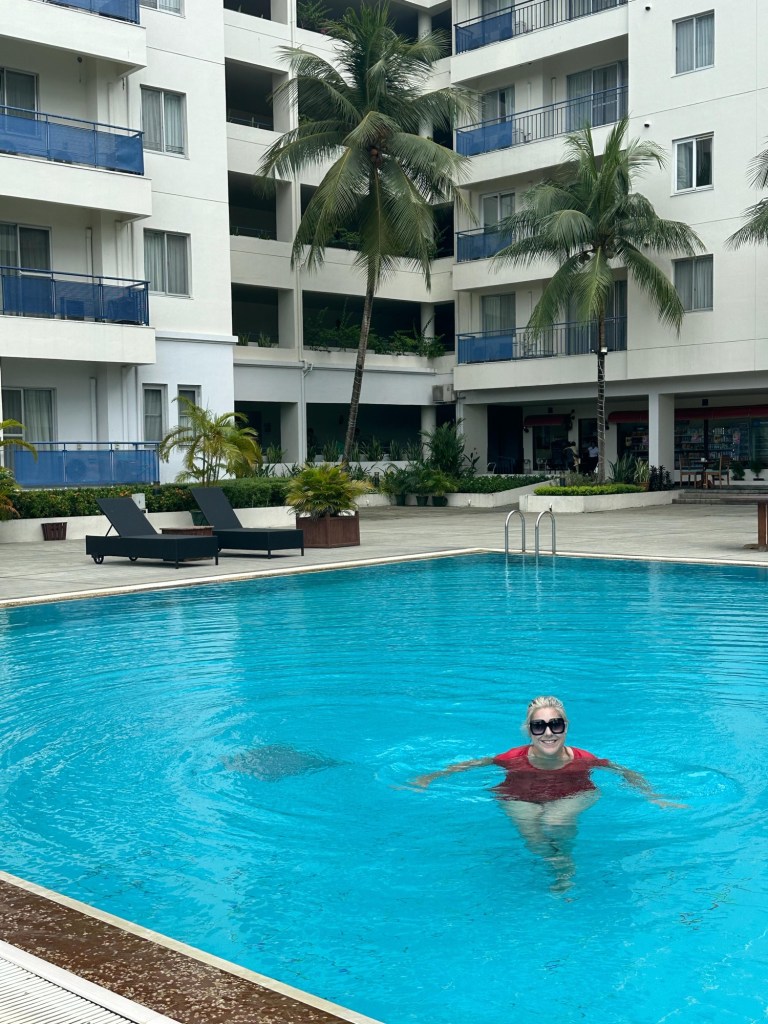
For all my whining, I must say that this apartment building and everyone who works here is lovely. I will genuinely miss many aspects of this place once we move out. And for two people who decided long ago that home is where the heart is, we’ve learned how to approach the more challenging and ambiguous aspects of moving so often with flexibility, a sense of humor, and most of all, with a desire for adventure.
We don’t have the luxury of delaying our settling in, regardless of where we do—or don’t—live. We’ve said yes to nearly every invitation and social event, embraced the unknown, and ventured out to explore. Not only have we jumped headlong into being part of the community here, but V has gone fully remote as a domestic employee teleworking overseas. He has had to establish a new schedule and routine with his boss and colleagues, who are 10.5 hours behind us in Washington.
Although some days have been easier than others for us (and there were two days in particular I wouldn’t like to repeat), every day here so far we have felt lucky and optimistic.
The other good news is that now, after arriving in this apartment a breathtaking four weeks ago, we’re finally preparing to move into our house. While I am genuinely excited about the new space, I also feel a twinge of dread—simply because it means yet another transition, even though it’s one we wanted.
I can’t say I was thrilled about packing up all my things again, even if it does mean the end of living out of suitcases for the first time since mid-July. What has kept me going, though, was the anticipation of what awaited on the other side.

The other evening, as I lay in bed, I heard an odd chirping sound I’d never noticed before. I paused the movie I was watching on my iPad and listened for a while, assuming it must be a bird outside. Then it sounded again—so loud and close that I suddenly had no doubt it was coming from inside the master bedroom.
I inspected around the window where the sound seemed to originate, but didn’t spot anything. I went back to my movie, but the chirping became more insistent. Not wanting to retire for the night and turn off the lamp while a potential mystery animal was in the room, I eventually located a scared gecko hiding on the ceiling near the curtain rod.
In later talking with colleagues, I learned it was common to find geckos in the apartments and that they chirp at night. I wasn’t totally surprised, because V and I had noticed geckos stuck all over the outside of the building.
I remember a gecko living in my friend’s shower when I visited Panama in 2013, but I don’t recall it making any sounds! In any case, geckos eat mosquitoes, so with a dozen-plus bites on my legs currently healing, the more geckos in our apartment, the merrier.

 Collecting Postcards