Calendar year 2025 has continued to present a strange mix of hardship and beauty. Over the past two weeks of Burmese class, the cherry blossoms around Washington, DC’s Tidal Basin reached peak bloom—just as a devastating earthquake struck Burma, killing thousands.
On Friday, March 28, a 7.7-magnitude earthquake struck central Burma near the country’s second-largest city of Mandalay. To date, the earthquake has resulted in over 3,470 deaths, more than 4,670 injuries, and at least 214 people still missing. Many experts predict the casualty numbers will continue rising as rescue and recovery efforts continue.
The shallow, strong quake caused widespread destruction, including the collapse of buildings and vital infrastructure. In a country of more than 54 million people, the earthquake affected or displaced over 17 million. The United Nations issued a global plea for aid, emphasizing the urgent need for tents, food, clean water, and medical supplies.

Unfortunately, heavy rains and four years of ongoing civil conflict in Burma have hindered relief efforts thus far, raising concerns about disease outbreaks among survivors. It has been hard to watch from afar, knowing how many vulnerable people are suffering. As a native Californian, stories of earthquakes give me a particular heartache because I have seen their destruction firsthand.
The Burma earthquake and its aftermath have been frequent topics in class as we report current news to practice our speaking skills. Fortunately, the people we and our teachers know, most of whom live in the capital, have remained largely unscathed.

But even before the earthquake, Burma’s economy was already in a fragile state due to ongoing political instability, armed conflict, and international sanctions following the February 2021 coup. High inflation, a depreciating currency, and foreign exchange restrictions have caused rising food and fuel prices.
Widespread job losses and declining foreign investment has strained the economy, while disruptions in banking and trade have made everyday transactions increasingly difficult for businesses and citizens alike. The New York Times reported last December about doctors and nurses turning to prostitution to supplement their cratering incomes, and the BBC recently had a story about farmers selling their own organs in India to try and feed their families. If you read these articles, please use caution because they are upsetting.
In short, this earthquake is the epitome of getting kicked when one is already down. In 2024, the World Bank reported that over one-third of the country already lives in poverty and further predicted Burma’s GDP would shrink in 2025. It’s hard to imagine a more desperate pre-existing situation, with an earthquake then added on top.
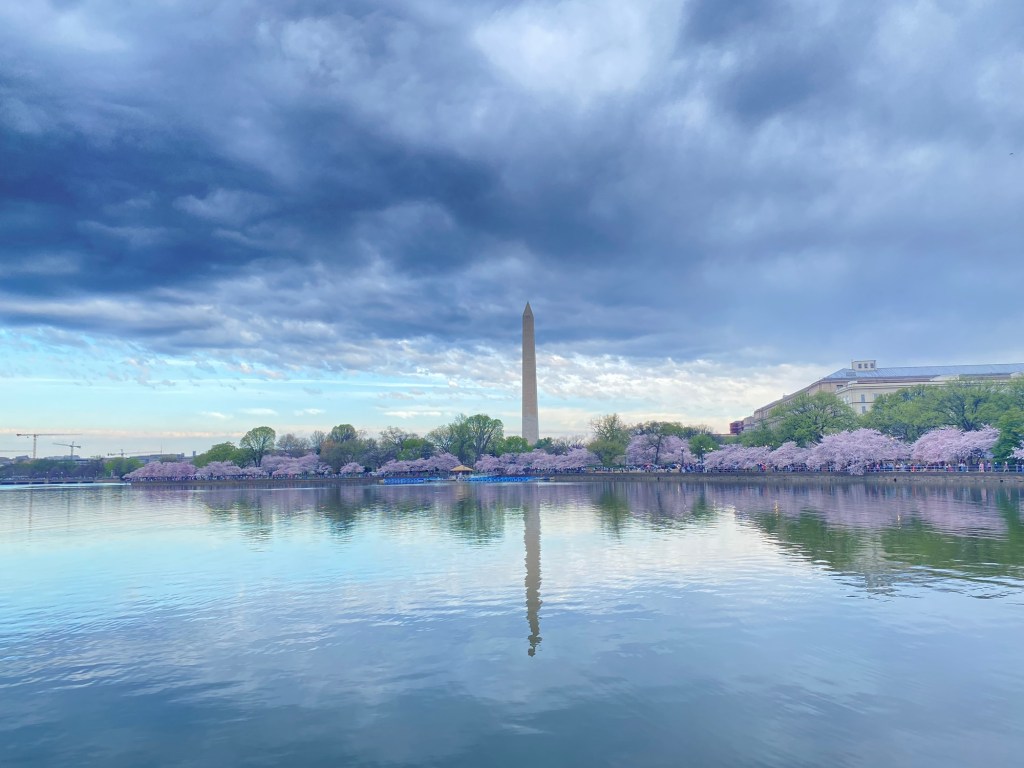
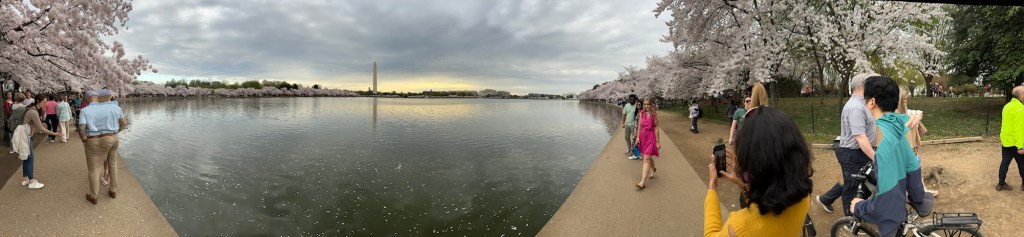
One day after the big earthquake news, on March 29, the famous cherry blossom trees around Washington, D.C.’s Tidal Basin reached what’s known as “peak bloom.”

Peak bloom refers to the point when 70% of the cherry blossoms are fully open. It marks the most visually stunning phase of the bloom cycle and typically lasts for several days, depending on weather conditions. The exact timing varies each year based on temperature and climate factors, but it usually occurs between late March and early April.
The National Park Service closely monitors the buds and predicts peak bloom to help visitors plan their trips to see the blossoms at their best.

The cherry blossom trees are widely regarded as a symbol of friendship between the United States and Japan. In 1912, the mayor of Tokyo gifted over 3,000 cherry trees to the United States as a gesture of goodwill. Workers planted the trees around the Tidal Basin, with the first two being placed by First Lady Helen Taft and the Japanese ambassador’s wife. A few years later, the United States reciprocated the gesture with a gift to Japan of flowering dogwood trees.
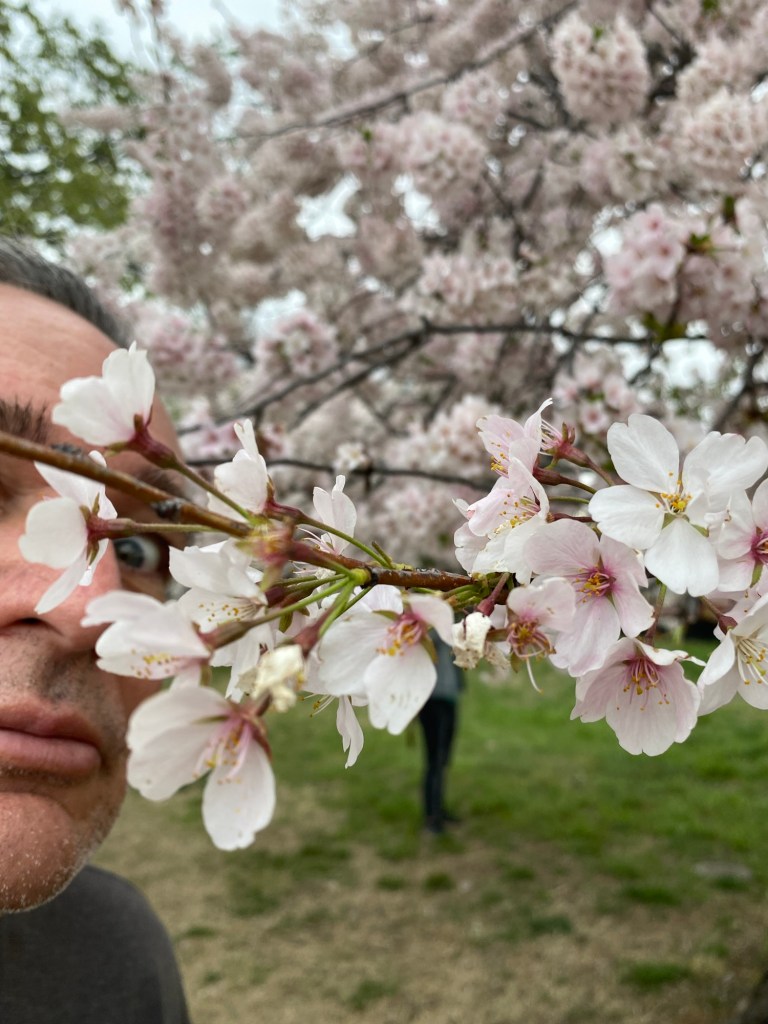
The National Cherry Blossom Festival was first established in 1934 and expanded annually in the following decades, with a brief pause during World War II tensions. The blossoms quickly became a beloved springtime attraction, drawing millions of visitors each year.
Of course, V and I are somewhat in our avoiding-crowds-and-noise era; we had no interest in going into the city on the Saturday the news projected as peak bloom. As it turns out we were right to avoid it.
Metro experienced its second busiest Saturday ever, recording approximately 710,000 rides, the highest since before the COVID-19 pandemic. Increased ridership led to delays on multiple Metro lines due to heavy congestion near the National Mall, but importantly also brought the city over $200 million in tourist spending.
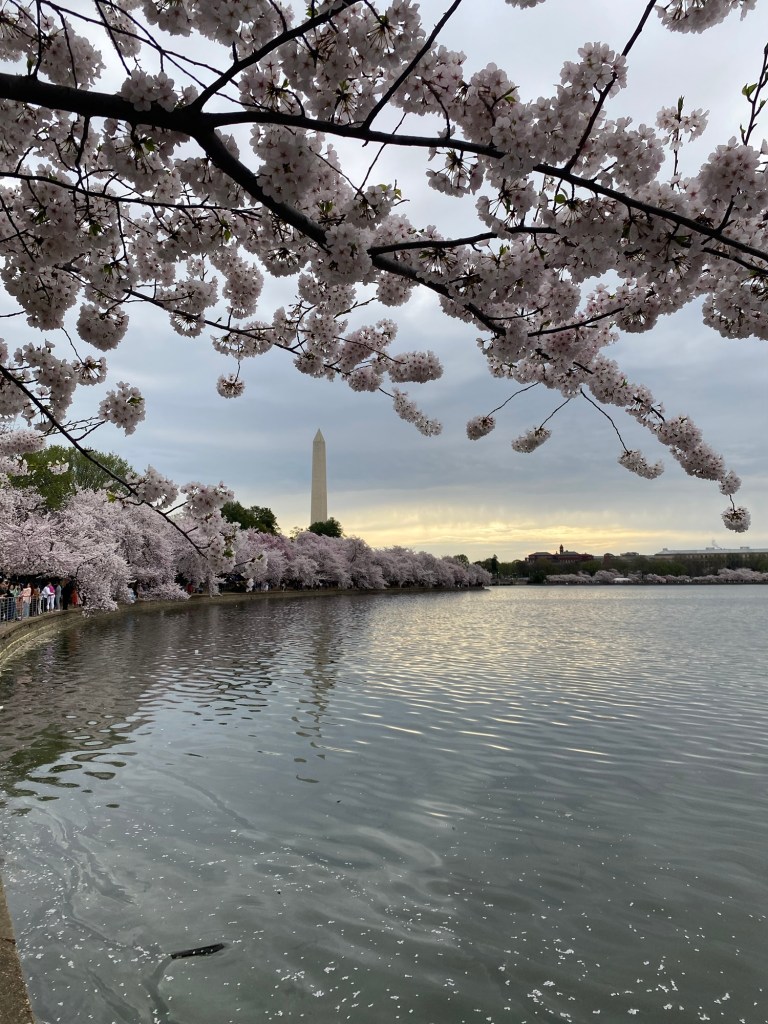
Despite the crowds and hassles, the blooms are always worth going to see. V and I have been going to see them since the early days of our relationship; in 2007 we first went together after dating only a few months. I took photos on my Motorola Razr flip phone and they’re all terrible! In 2011, V ran the Cherry Blossom 10-Miler, came home on Metro to shower, and then returned to spend hours walking around the blossoms with me and my visiting dad and stepmom.
This year, due to storms, we figured there would only be one weekend of peak bloom. So before 6:00 a.m. on Sunday we headed for the city and parked in a little-known area a mile’s walk from the Tidal Basin. (We’d attempted to take Metro as our first choice of transportation, but had arrived at the station nearest our house only to discover it didn’t open until 7:00 a.m.)
As tourists sat frustrated and honking in the small streets around the basin, we strolled through the blossoms before the big crowds arrived. It was a strange juxtaposition to the grim news cycle — but a beautiful one which we were grateful to experience once more before departing the United States this summer.
In other news, our Burmese class schedule has grown more flexible during the past two weeks, with two students who need to achieve a 2 speaking score preparing to take their End of Training evaluations later this month. Another student and myself who will go to the 3 level have been spending a couple hours a day between lunch and independent study working on our own, and then returning in the afternoons for our own class with a teacher.
Having a beginner Burmese language student join our program several weeks ago meant adding back the second teacher we’d lost last fall, since she obviously couldn’t join our class so far progressed. The second teacher has provided more options for the four of us not always being together and more customized attention and rotations.
Our eventual PCS is starting to come into focus and feel more real…
 Collecting Postcards