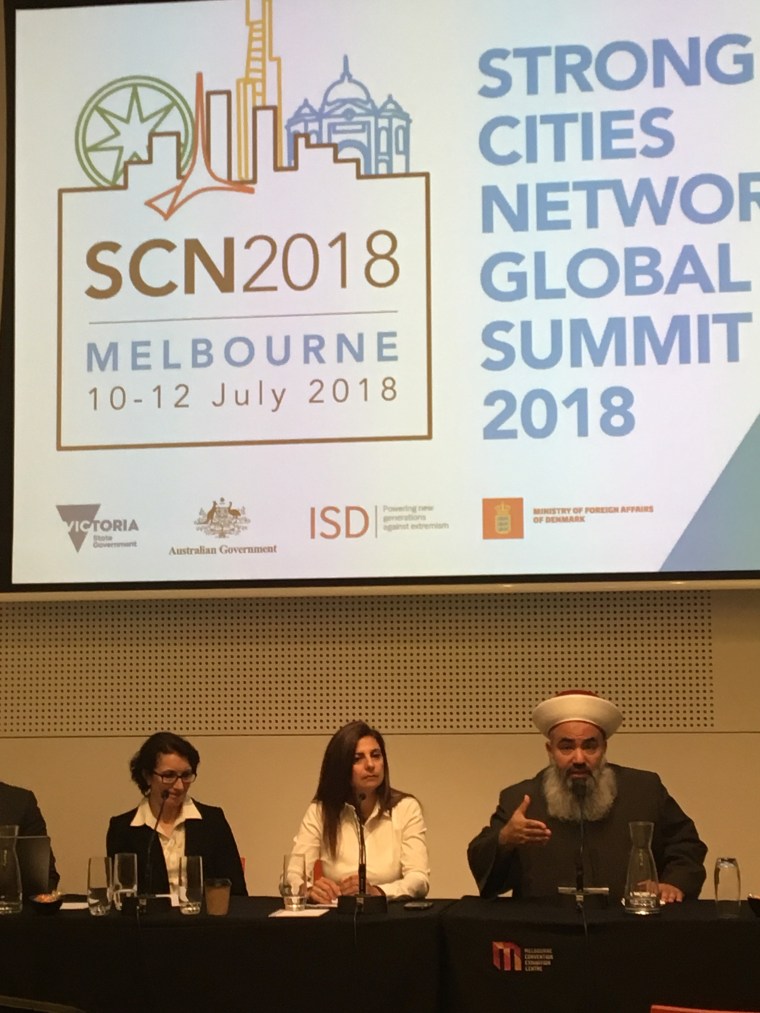
A few weeks ago, I went on a work-related trip to Melbourne, Australia’s second most populous city. Nearly thirteen years had elapsed since my prior visit, but it was evident that Melbourne still has a spirit all its own – it is definitely not Sydney, or Brisbane, or Adelaide, or Perth. Melbourne is one of Australia’s most diverse cities; often called Australia’s “cultural capital,” one-third of Melbourne’s 4.9 million residents were born overseas. Visiting the melting pot that is Melbourne to attend the Strong Cities Network conference on preventing violent extremism, amidst this year’s confluence of global politics, the threat of terrorism, and the halfway point of my tour as a political officer in Canberra, made me reflect on the immigrant experience in Australia and Melbourne’s successes in social cohesion.
Next week, Australia’s population is predicted to reach 25 million people for the first time. If you want to get really technical about it, the Australian Bureau of Statistics says the milestone should be reached on Tuesday, August 7, around 23:00! That means nearly one-fifth of Australia’s residents live in Melbourne.
More than four million (16%) of Australians speak a language other than English. Since 1788, more than nine million people have immigrated to Australia, and many Australian citizens today are descendants of those immigrants, who left homes in 200 countries to build new lives down under.
Australia’s immigration and settlement history, like that of the United States, is complicated, and some of its policies are hotly debated. However, since the end of World War II, Australia has granted more than 700,000 humanitarian visas to those seeking asylum or refugee status. Australia considers itself a richly diverse and multicultural society to which anyone can belong. This grace and welcome has been extended to me twice as a temporary migrant – first as a student, and later as a diplomat.

Immigration Museum, Melbourne
But Australia, also like the U.S., isn’t immune to complicated debates on identity and belonging, and ongoing questions about what constitutes “Australian values.” Melbourne’s renowned Immigration Museum poses the following questions for consideration:
- What kind of society do we want?
- Is Australia a southern outpost of British culture? Or is its identity bound to Asia and the Pacific?
- Is there a ‘typical’ Australian? Or does the very idea of ‘typical’ deny the diversity of our society?
- How does Aboriginal identity fit into the identity of Australia as an immigrant nation?
- Can different cultures maintain their identities while participating in a ‘national’ identity?
Living Safe Together, one of the Australian federal government’s projects to promote social cohesion and community resiliency as tools against violent extremism, recognizes that discrimination, threats to harmony, and disenfranchising migrants can have direct national security ramifications. Reduced to the lowest common denominator, it’s simple: our cities are stronger when we stand together, when we all have a chance to succeed, and when we take ownership of not tolerating violence.
But how can we live together, when we sometimes cannot even see one another for the complex individuals we are?
IDENTITY: YOURS, MINE, OURS
How well do we really know ourselves?
We all come with a life story. Our story changes as we grow and encounter different people. We grow closer to some people. We distance ourselves from others.
Identity is how we present ourselves to the world. It embodies our memories, secrets, and things we do not yet know.
Discover something new about yourself.
Question your assumptions.
~Immigration Museum, Melbourne
Melbourne is the state capital of Victoria. Tourism linked to family and friends visiting immigrants in Victoria generates nearly a billion dollars annually. The state slogan is “Victorian. And Proud of It.” It is a motto that promotes inclusion, tolerance and belonging above all else, and it reminds visitors that Melbourne’s beautiful environment, attractions, economy, innovations, and culture belong to all its residents, irrespective of their birthplace, mother tongue, skin color, or religion.

Enjoying Melbourne’s national aquarium
The concept of social cohesion takes multiculturalism to another level by promoting inclusion, and hope and belief in upward social mobility. Melbourne, aside from investing in law enforcement and counterterrorism response measures, also engages youth civil action networks, women, social media companies, and religious leaders to defeat extremist narratives before they can take root.
So, why the Strong Cities Network?
Launched at the United Nations in September 2015, the Strong Cities Network (SCN) is the first ever global network of mayors, municipal-level policy makers and practitioners united in building social cohesion and community resilience to counter violent extremism in all its forms.
Led by the Institute for Strategic Dialogue in the UK and comprised of more than 100 cities, the SCN builds collaboration between mayors, political actors and frontline teams to tackle polarisation, hate and violence in local communities in every major global region. The network catalyses, inspires and multiplies community-centric approaches and action to counter violent extremism through peer learning and expert training. It operates with a set of fundamental principles, agreed by all members, that protect and promote human rights and civil liberties in all aspects of its work to prevent violent extremism.
The risk of violent extremism – across racial, ideological, political and religious motivations – is a concern for families, communities and governments. Across the world, cities are on the frontline of building resilience to violent extremism. The SCN recognises that cities are uniquely positioned to safeguard their citizens from polarisation and radicalisation through partnerships with local communities. Mayors and municipal-level policymakers must work closely with their communities to identify and address the methods used by violent extremists to recruit, radicalise and mobilise targeted individuals.
A growing number of cities and other subnational authorities across the world have developed – or are interested in developing – local prevention and intervention programs that build social cohesion and resilience against all forms of violent extremism.
To do this, cities require a network that facilitates systematic exchange of good practice, expertise and lessons learned. The SCN fulfils this need by connecting and empowering cities through its global network, regional capacity-building, practitioner workshops and online information and training hub.
Practitioners working in the countering and preventing violent extremism space have a deep understanding of the elements of radicalization, and implement a wide variety of disengagement and rehabilitation models with some of society’s most vulnerable populations. It takes government, it takes the private sector, it takes community and religious leaders, it takes women, mental health experts, small business, youth. It takes all of us to reach out our hands to our neighbors before it comes to “see something, say something.”
In order to counter destructive narratives, we must explore trends in ideologies and deconstruct those action-oriented belief systems that serve to explain what one’s predicament is, who is responsible, and why. Ultimately, it seems that Melbourne is a progressive model for other cities to learn from: highlighting individual stories of contribution to society without allowing talk about ‘universal values’ to sow discord and disinclusion. 
To say that hearing directly from professionals working in cities around the world as they shared a variety of programs, strategies, and best practices that are making their communities stronger now, today, was inspiring would be a tremendous understatement. To watch people get new ideas they’re eager to try at home makes all the work worthwhile. This sphere is critical, and I have to admit that my definitions of terrorism and extremism were greatly enhanced and expanded by the workshops.
We can live together peacefully, and we must
Last weekend I marked the halfway point of my tour. Although it is sad to think of leaving here in a year, I also am incredibly proud and lucky to be serving in a country like Australia. Our bilateral working relationship, our people-to-people mateship, and the U.S.-Australia military alliance are tremendous, and allow so many substantive opportunities to share, to learn, and to stay safe.
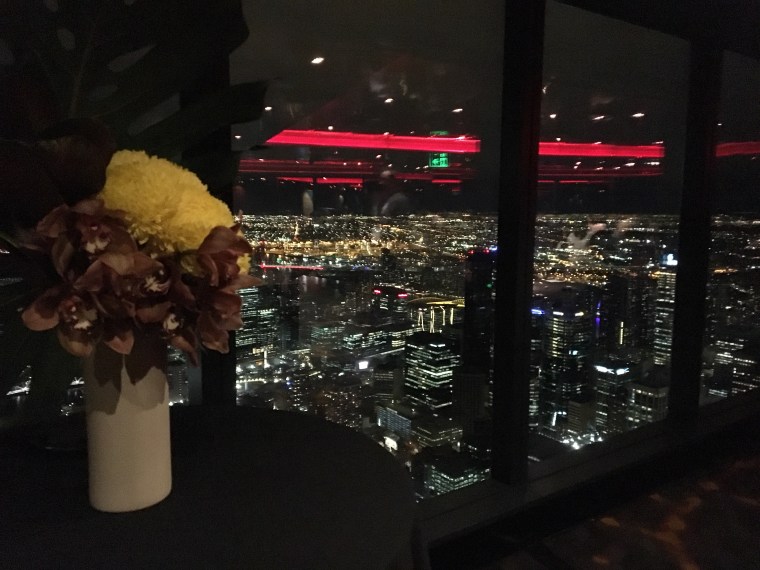
VIP delegation welcome dinner, Eureka Skydeck, Level 88
As I hailed a taxi to the Melbourne airport to catch my flight to Canberra, my Muslim cab driver asked me – between rapid phone calls in Urdu – what conference I was coming from. I told him it was a conference about living better together. He looked at me in the rearview mirror, nodding. We had a lively discussion about culture, movies, politics, his family’s quest to find him a wife in Pakistan, his uncle borrowing too much money and he, unable to refuse an elder. After 40 minutes together, he told me that I was one of his kindest, most interesting, and most sincere passengers. “Americans – some are kind of, you know,” he laughed. “But you are super.”
“We’re not so different,” I joked with him as I disembarked, leaving a generous tip. “My sister,” he replied, “Go in peace, with God.”
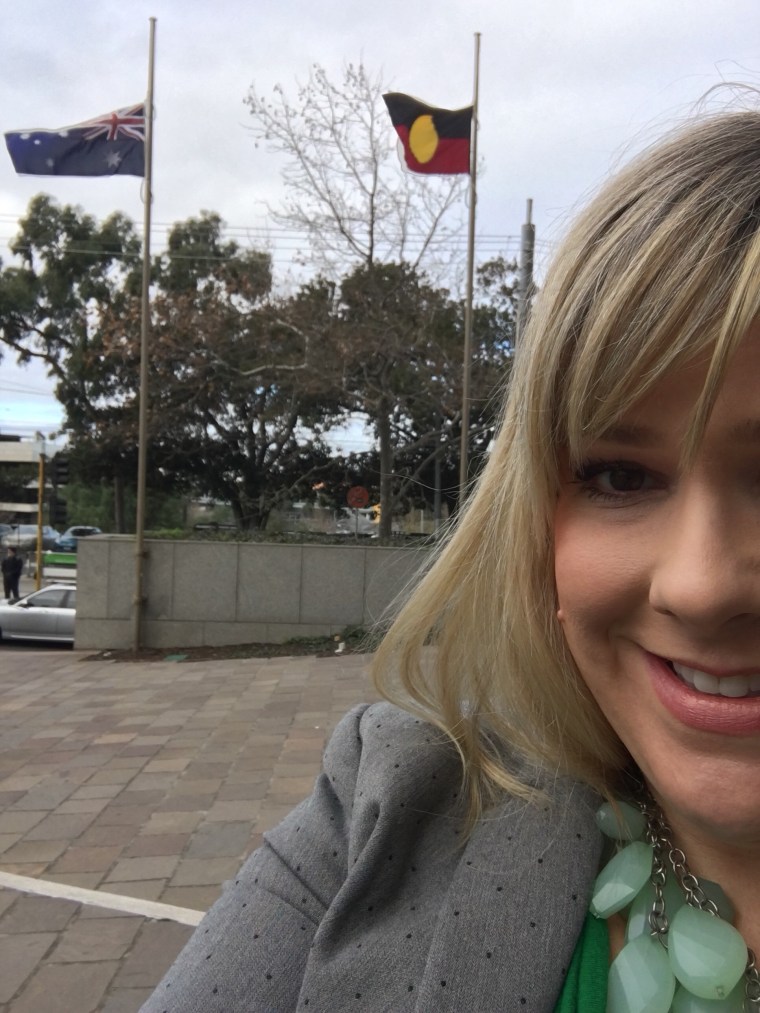
Australian and Aboriginal flags fly proudly at the Victorian State Department of Premier and Cabinet
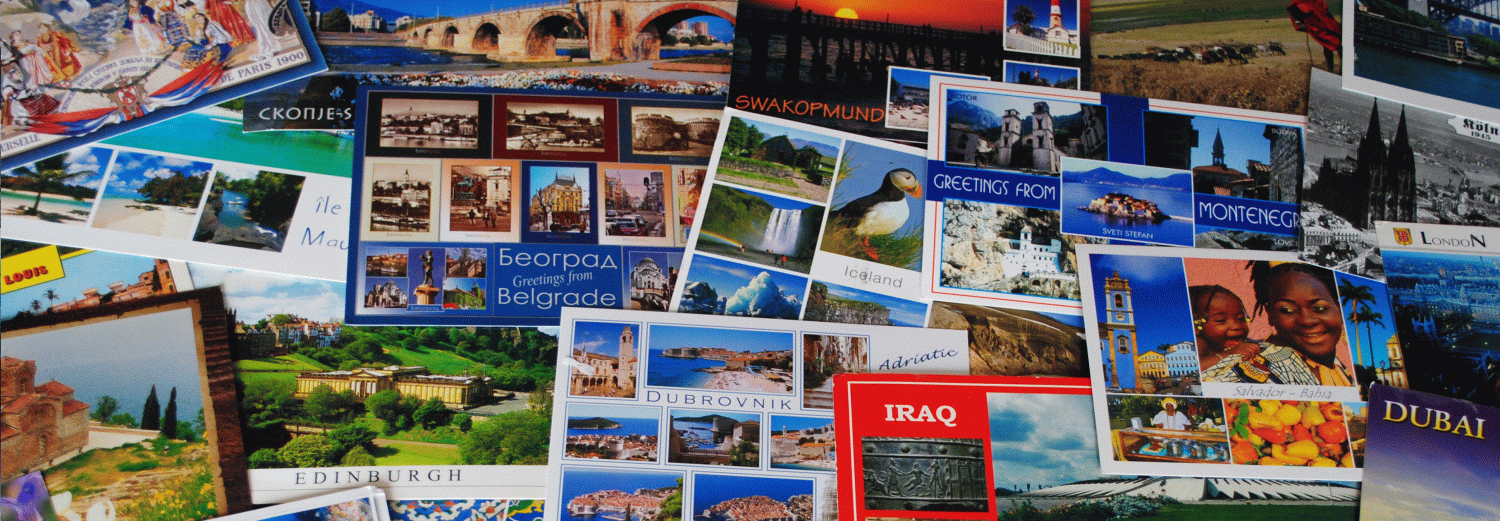
 Collecting Postcards
Thanks for sharing the Melbourne experience. I hope you’ll continue with the personal stories as well. Your taxi driver’s narrative sounds typically New Yorkish :-). The BIDS are coming up? I predict Namibia!
LikeLiked by 1 person
I try to mix up my posts – the ones about work-related topics and getting into the FS are consistently more popular over time than are the travelogues and personal anecdotes. But – a little something from everyone! 🙂 Thank you for reading.
LikeLike
*for everyone 👍🏻
LikeLike
Reblogged this on Raised in the Foreign Service and commented:
American cities would do well to move toward this inspiring model!
LikeLiked by 1 person