Two days ago marked four months since my arrival in Uzbekistan, and for that entire time, I’ve been settling in here in Tashkent. But finally, last Saturday, two weeks after my husband’s arrival at post, we traveled to the ancient Silk Road city of Samarkand along with eight others from the embassy community. It was a great opportunity to change the scenery, even if only for one day, and begin exploring other parts of this beautiful country.
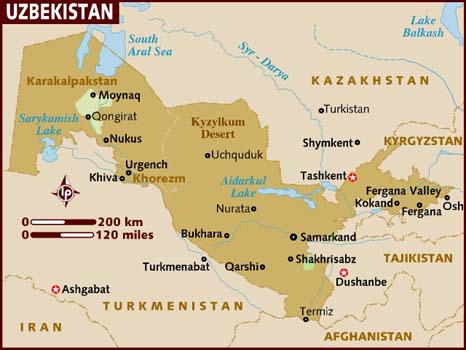
As you can see from the map below, Samarkand is approximately 275 kilometers (or about 170 miles) southwest of Uzbekistan’s capital city, Tashkent.
It took about two hours and ten minutes to travel to Samarkand by train, but it would’ve apparently taken more than three hours by car, although I’m not sure why. I understand that the road is decent, but I think it meanders through towns more so than the train tracks do.
The train was clean, modern, and arguably better than many Amtrak trains I’ve ridden through California. However, as soon as we started to roll I realized that we were facing backwards, which caused about 30 minutes of misery until I could manage to find an empty forward-facing seat. (I’ve talked about my extreme gnarly motion sickness in the past, including during my post from the first and second week of ConGen, but suffice it to say, it’s no fun.)

When we arrived, we met our guide and proceeded to the first stop on our list, the Amir Temur Mausoleum, sometimes called the Gur-i Amir. I should mention that I was stunned that everywhere we went in Samarkand, with this mausoleum being no exception, tickets cost between 50 cents and two dollars each with my diplomatic accreditation card. Obviously, we would’ve paid far more to be admitted to such precious and ancient places.
Born in the early 1300s, Amir Temur, sometimes called “Tamerlane” or “Temur the Lame”, was a Turko-Mongol ruler whose nomadic steppe conquests were both brutal and epic. He laid waste to empires in Asia, Africa and Europe, and referred to himself as “The Sword of Islam”.
This Timurid dynasty necropolis is believed to be the final resting place of not only Amir Temur, but also that of two of his sons, Miranshah and Shahruh, and one of his grandsons, Ulugh Bek.


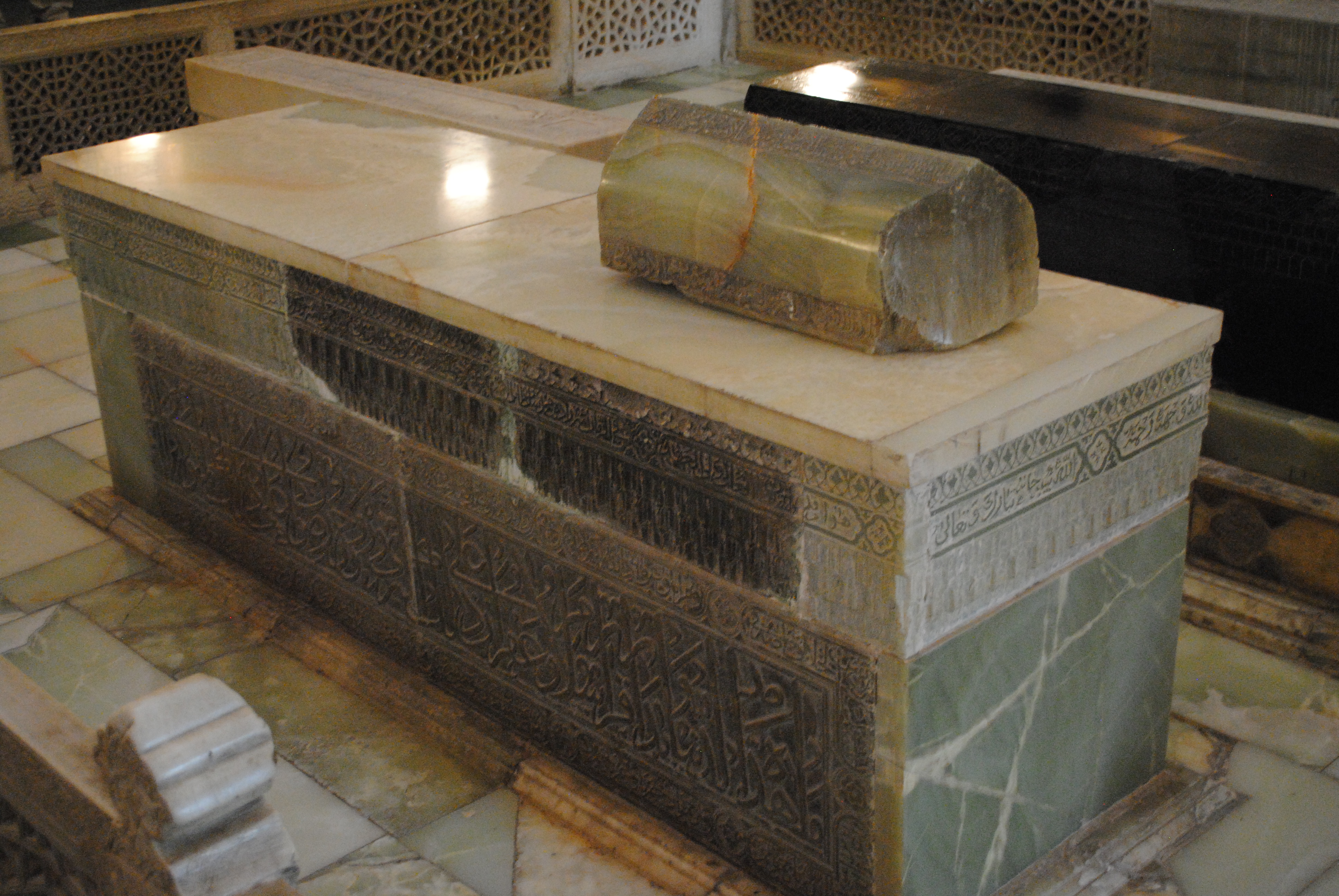
When Amir Temur died of pneumonia, Ulugh Bek apparently brought the largest piece of jade in the world from Mongolia to adorn his tomb. In Arabic calligraphy, the inscription reads, “When I rise, the world will tremble.”
In an interesting coincidence, in 1941 Russian scientists exhumed the body to determine once and for all whether it was Amir Temur; within hours Nazis began their march into the Soviet Union. It was only when the Russians’ findings were complete, and they restored the body to the tomb with full Muslim burial rites, that the Nazis are said to have been expelled from Russia. Note that although the caskets are displayed above ground, as below, the bodies are actually underground in a crypt.
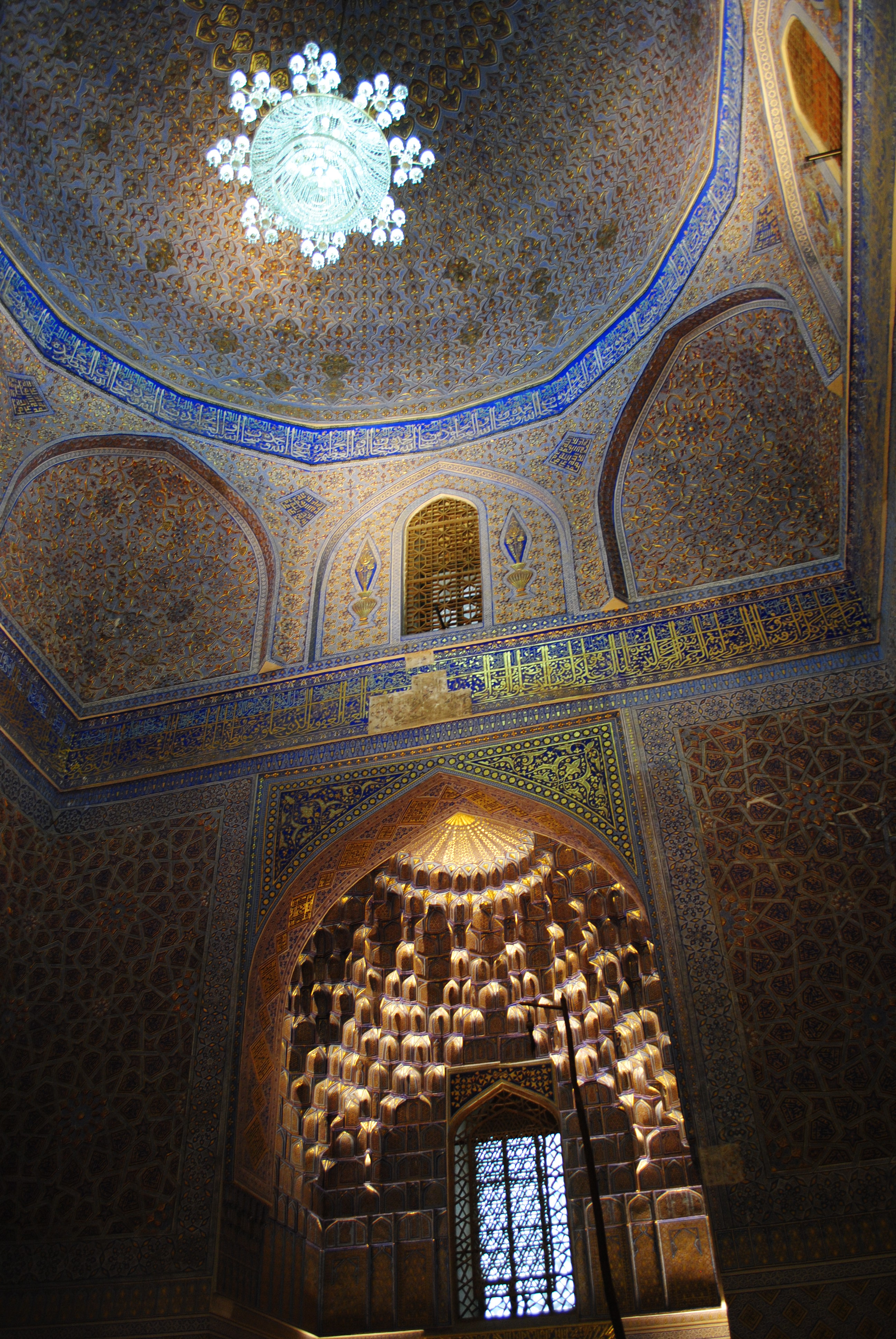
The inside of the mausoleum is simply stunning in its beauty and the attention to detail in craftsmanship.

After we left the mausoleum, we piled back in the van and headed to one of Samarkand’s most famous and recognizable attractions, Registan Square.

In this picture, you can see three distinct madrasas, or Islamic schools. The one on the left is significantly older than the others. From left to right: Ulugh Bek (1417–1420), Tilya-Kori (1646–1660) and Sher-Dor (1619–1636).

Ulugh Bek’s madrasa is the oldest, and his love of astronomy is depicted by stars in the mosiac tilework.
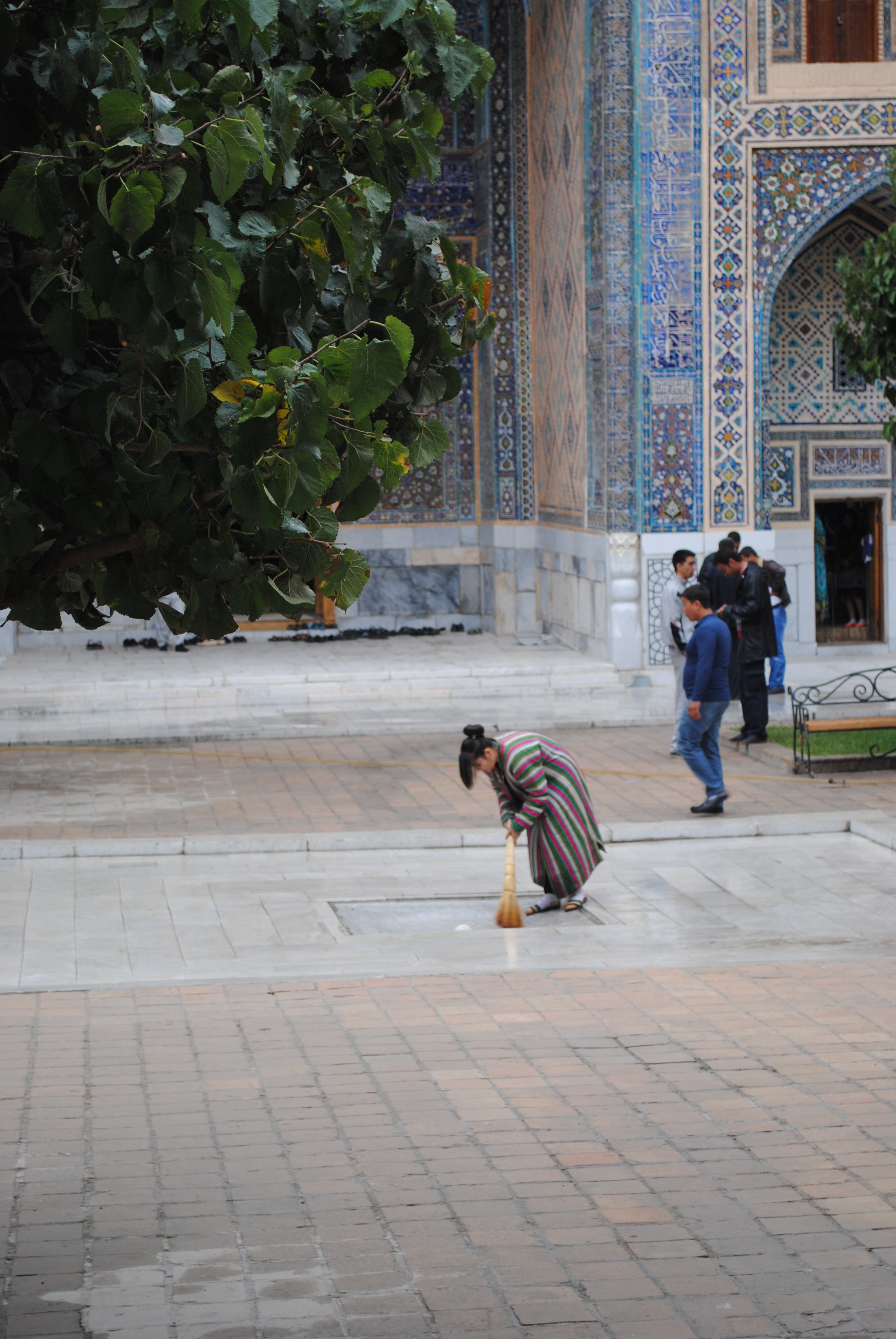
Here I attempted to photograph a woman sweeping rainwater into a drain, but in my haste to catch her leaning over, my focus was off, making a disappointing technical capture of an already fond memory.

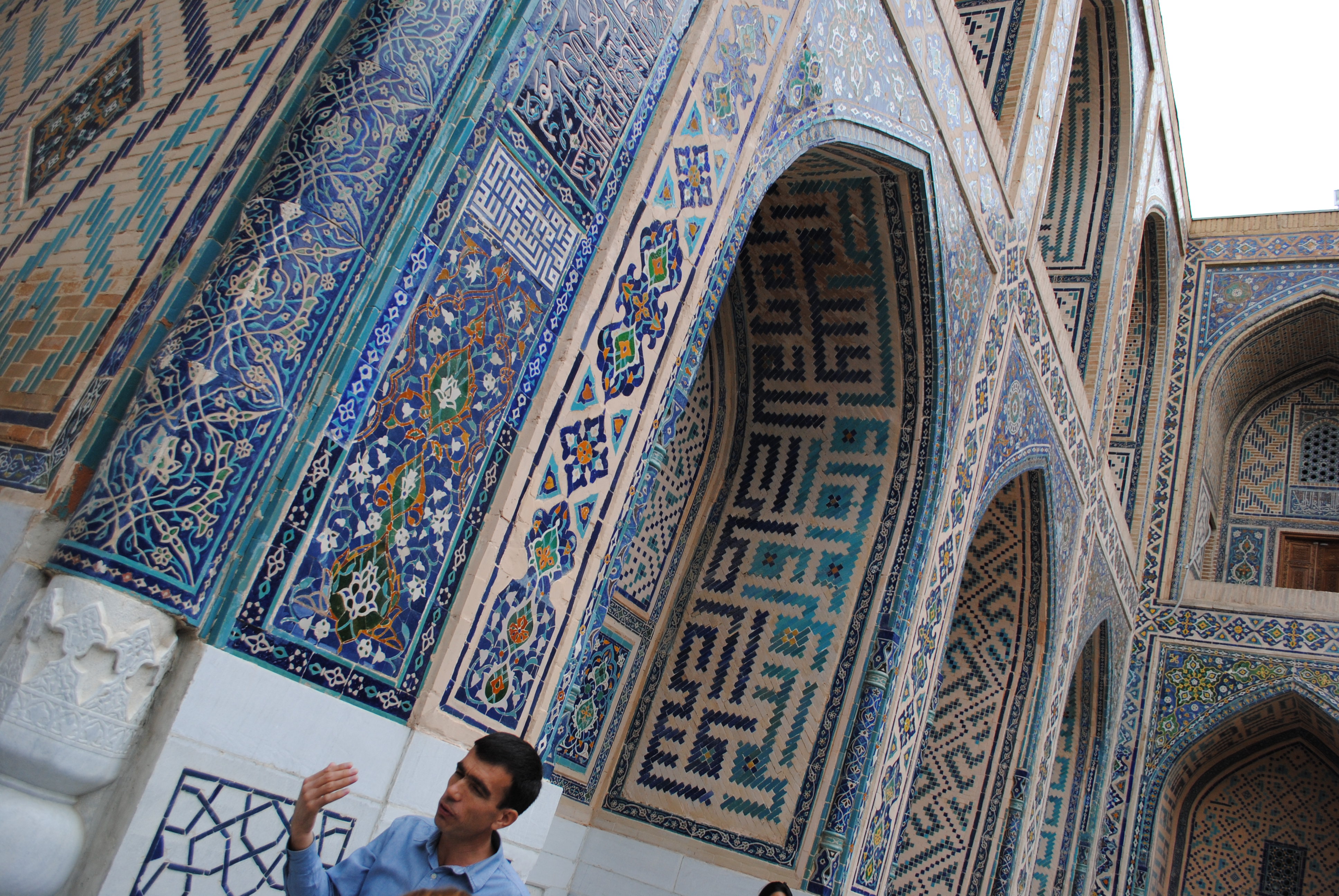

Depicted above, that awkward moment when you’re trying to get a picture without bothering anyone and don’t know how to react to someone getting in the frame.
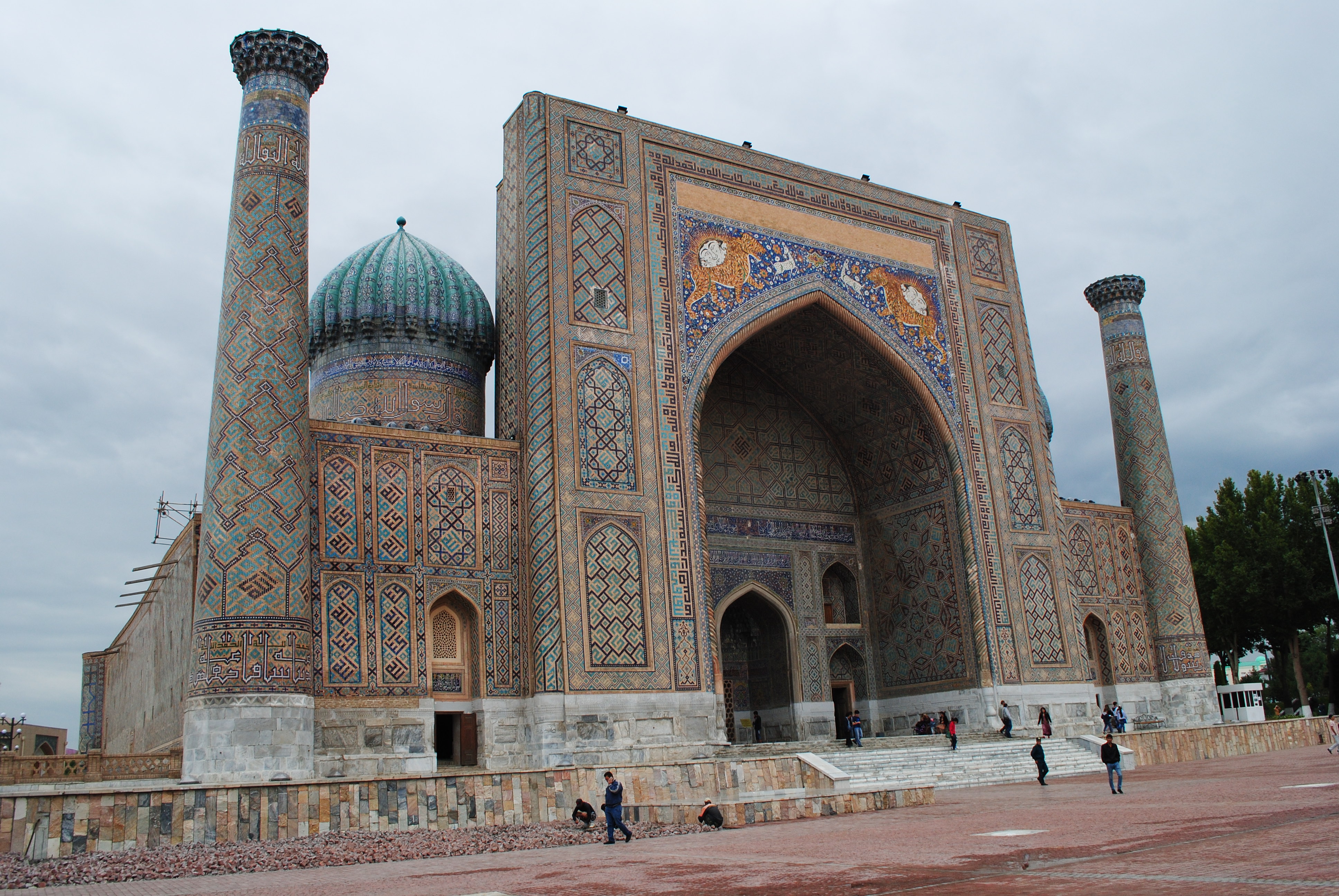
The Sher-Dor Madrasa (1619–1636) is sometimes called the Lion or the Tiger Madrasa, and is probably one of the most extensively photographed structures in Central Asia. It is also the final resting place of saint Imam Muhammad ibn Djafar.

V in front of the Tilya-Kori Madrasa (1646–1660). The original dome collapsed in an earthquake and was reconstructed sometime in the 1900s. It arguably has the most beautiful interior.

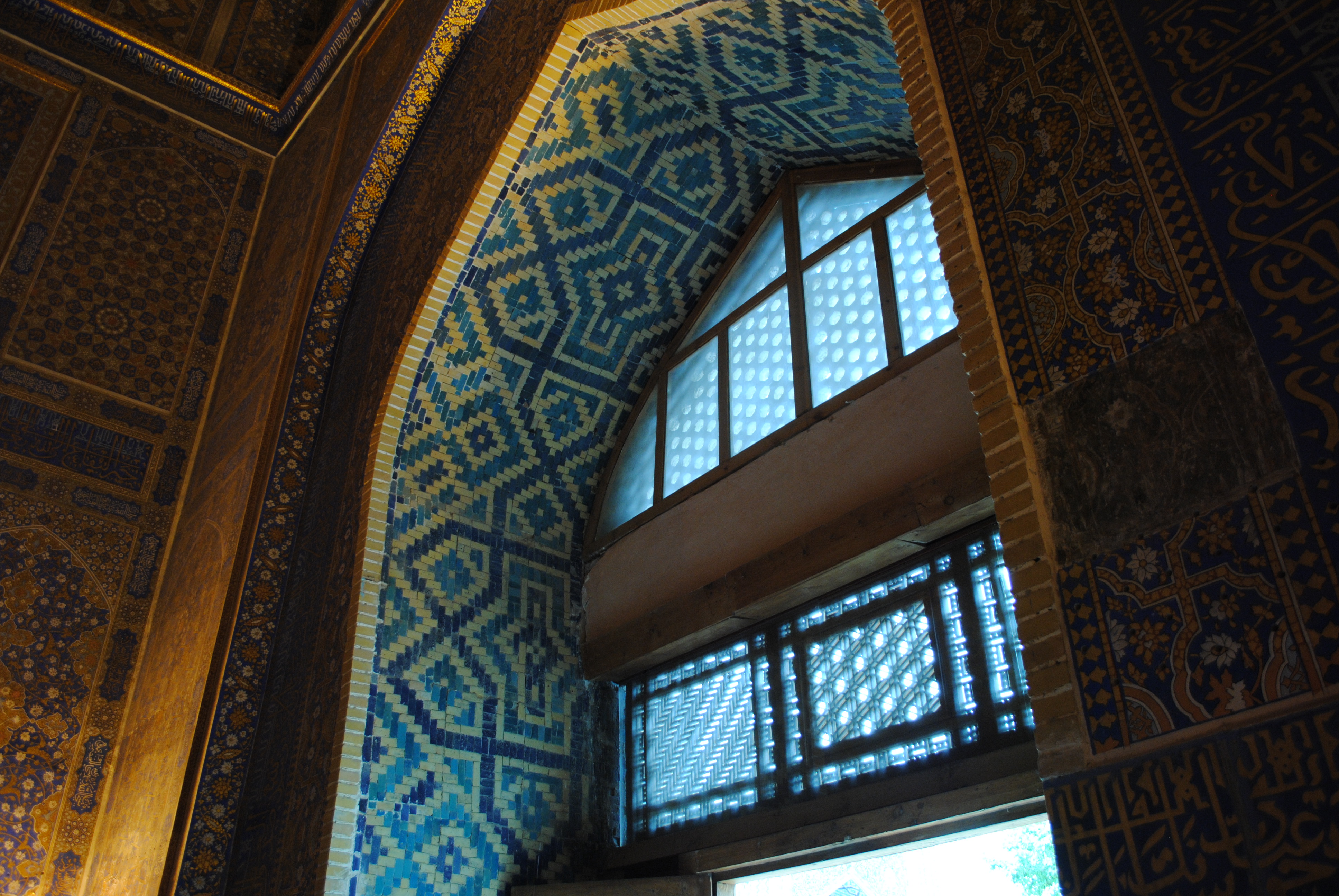

And the outside is pretty amazing, too!

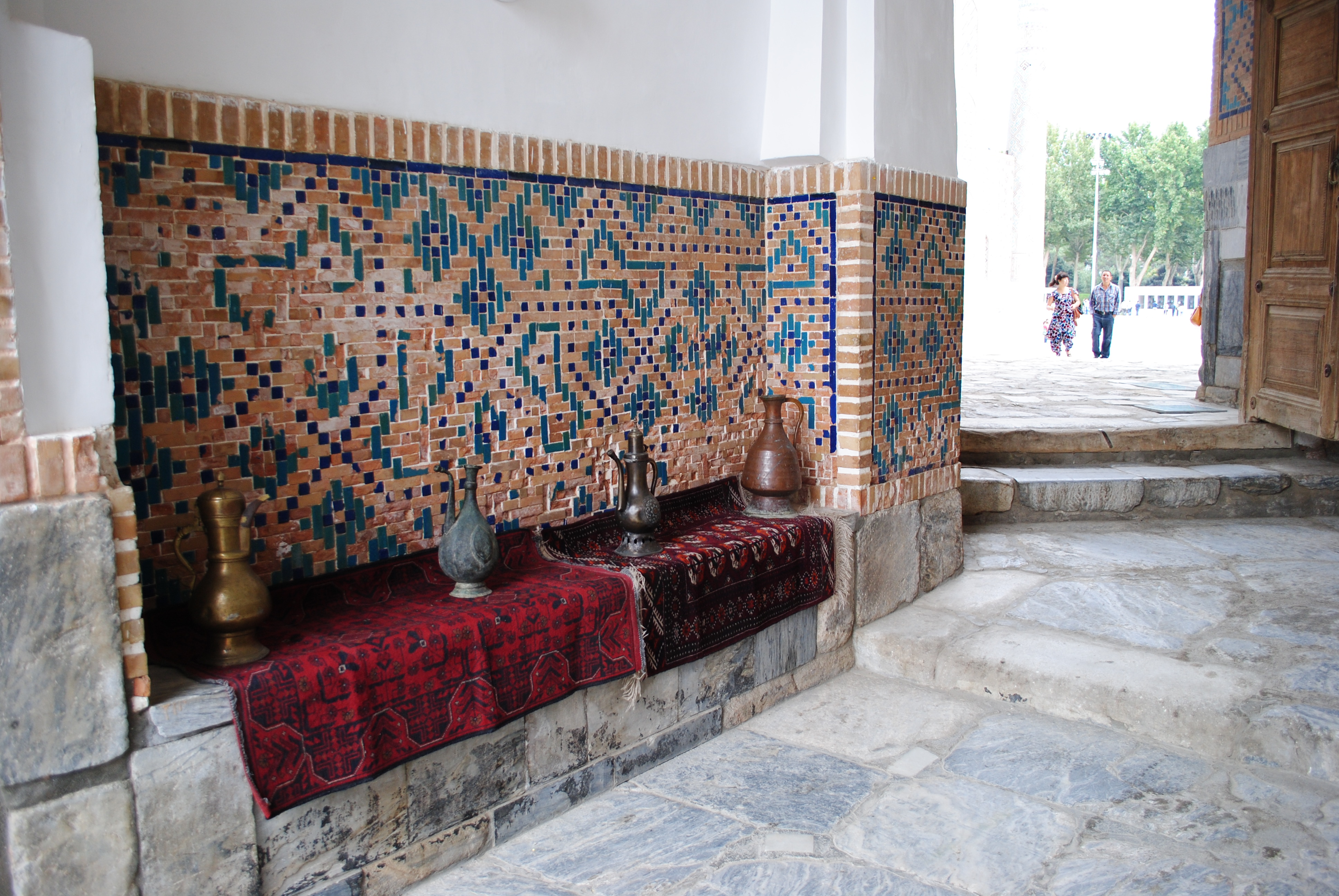
In the second installment of this Samarkand travelogue, I will show pictures from our visit later the same day to Shah-i-Zinda (“Living King”), a fantastic Muslim architectural complex filled with mosques and mausoleums.
 Collecting Postcards
4 comments for “Visit to Samarkand, Part I”